When it comes to casual conversations, emails, or even texting, people often wonder whether to use “yea” or “yeah.”
While both words may sound the same, their usage and meaning can differ depending on context, region, and formality.
This confusion drives many searches online, as writers, students, and professionals want to get it right. Understanding the difference ensures your writing is accurate, natural, and easy to read.
Yea often appears in formal settings, like voting or older texts, while yeah is the go-to spelling in everyday speech, casual writing, and online conversations.
Choosing the wrong form can make your writing seem outdated or overly informal. This guide clears up the confusion, providing a complete look at the origin, differences, and practical examples of yea vs yeah, helping you confidently use the correct form every time.
Yea or Yeah – Quick Answer
Quick Answer:
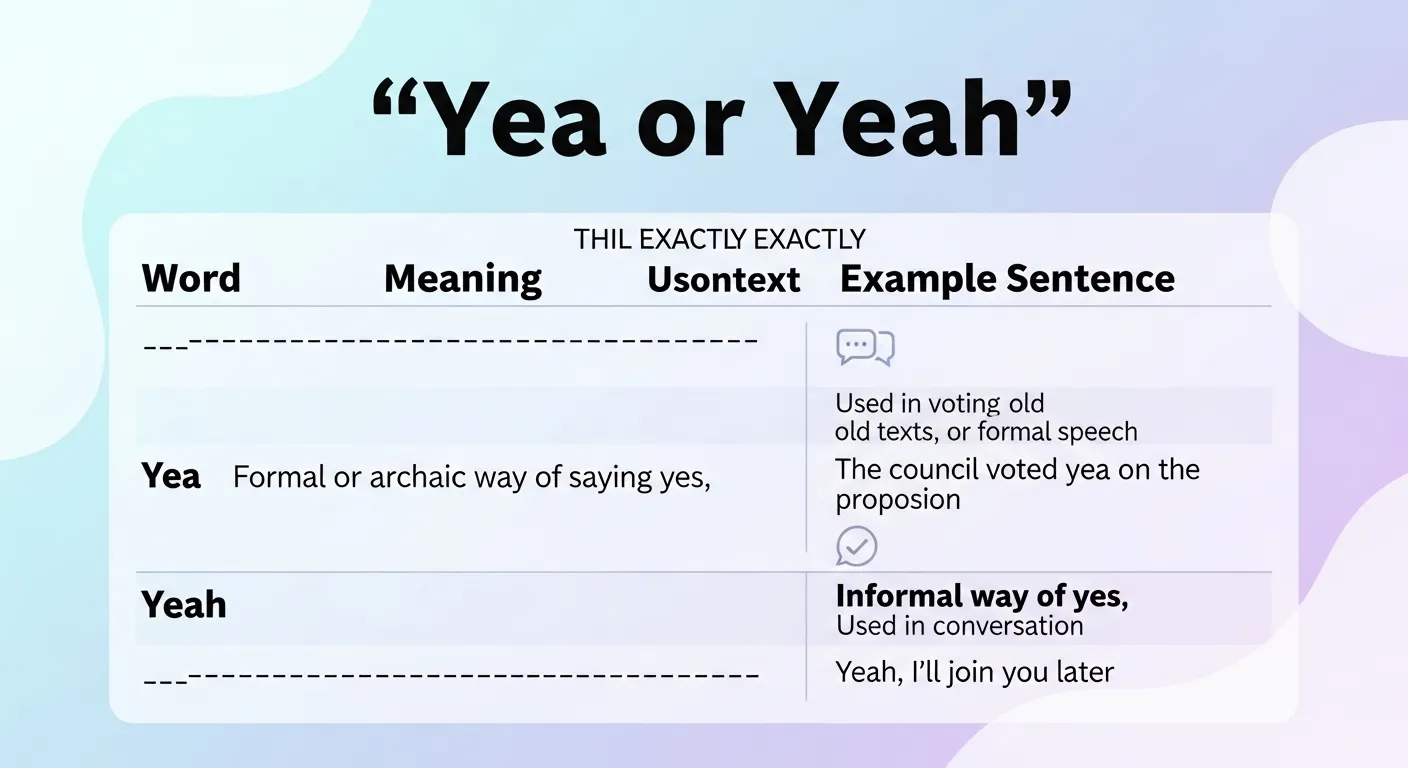
- Yea – Formal or historical usage, often in voting or affirmative expressions.
- Yeah – Informal, everyday usage in speech, texting, and casual writing.
Examples:
- All members voted yea on the proposal.
- “Do you want to join us for lunch?” “Yeah, I’d love to!”
The Origin of Yea or Yeah
The word yea comes from Old English “gea”, used as a formal affirmative in speech and legal texts. Historically, it was standard in parliamentary voting, religious texts, and formal writing. Over time, yeah evolved as a phonetic spelling of how people said yea in everyday speech, especially in casual and informal contexts.
The spelling difference exists because English often adapts formal words into a more natural, spoken form. While yea stayed in ceremonial or formal texts, yeah became the popular choice in conversation and informal writing.
British English vs American English Spelling
Both British and American English recognize yea and yeah, but usage trends differ:
| Spelling | Region | Usage | Example |
| Yea | US & UK | Formal, voting, historical | The senator voted yea. |
| Yeah | US & UK | Informal, everyday speech | “Are you coming?” “Yeah, I’m ready.” |
In general, British English also leans more towards yeah in casual writing, while formal documents may still use yea.
Which Spelling Should You Use?
- Use “yea” when writing formal documents, parliamentary proceedings, or historical texts.
- Use “yeah” for emails, social media, texting, casual writing, and dialogue in creative works.
- For international audiences, yeah is widely recognized and understood in informal contexts.
Common Mistakes with Yea or Yeah
- Using yea in casual texting – e.g., “Yea, I’m tired” → should be Yeah.
- Confusing yeah as formal approval in official votes – e.g., “All members said yeah” → should be yea.
- Spelling inconsistencies in writing – switching between yea and yeah in the same text.
Tip: Stick to one form depending on context – formal = yea, casual = yeah.
Yea or Yeah in Everyday Examples
- Emails: “Yeah, I can attend the meeting.”
- News articles: Rarely use yeah; formal reporting may use yea in direct quotes.
- Social media: “Had an amazing day! Yeah!”
- Formal writing: “The committee voted yea to approve the resolution.”
Yea or Yeah – Google Trends & Usage Data
- Yeah dominates online search and casual writing globally, particularly in the US, UK, and Australia.
- Yea peaks in searches related to formal voting, historical texts, or academic writing.
- People mostly search for “yea or yeah meaning”, “yea vs yeah usage”, and “formal vs informal yea/yeah”.
Comparison Table
| Aspect | Yea | Yeah |
| Formality | High | Low |
| Spoken Language | Rare | Common |
| Writing Context | Parliamentary, historical, legal | Casual, texting, social media |
| Origin | Old English “gea” | Phonetic evolution of yea |
FAQs
1. Is “yea” incorrect?
No, it is correct in formal or historical contexts, but outdated in casual writing.
2. Can I use “yeah” in emails?
Yes, for informal emails or friendly communication, but avoid it in formal business letters.
3. Are “yea” and “yes” the same?
Close, but yea is formal or ceremonial; yes is universal for affirmative responses.
4. Why do people use “yeah” instead of “yea”?
Because it reflects spoken English and feels casual, natural, and modern.
5. Which is better for creative writing?
Yeah works best in dialogue; yea can be used for historical or formal settings.
6. Is “yea” used in British English?
Yes, but mainly in formal or historical contexts. Casual British writing prefers yeah.
7. Can “yeah” appear in news articles?
Rarely; only in quotes or informal reports.
Conclusion:
In conclusion, the choice between “yea” and “yeah” comes down to context, tone, and purpose. “Yeah” is the more commonly used form in everyday English. It appears in casual conversations, text messages, social media, and informal writing. It conveys agreement in a relaxed and friendly way, making it perfect for modern communication.
On the other hand, “yea” is far less common and carries a more formal or traditional tone. It is often used in specific settings such as voting contexts, where people say “yea” or “nay” to express approval or disapproval. Because of this, “yea” can sound outdated or overly formal in casual conversations.
Understanding this distinction helps you communicate more effectively. If you are chatting with friends or writing informal content, “yeah” is the better and more natural choice. However, if you are referring to historical texts, formal decisions, or voting language, “yea” is appropriate.
By using the correct form in the right situation, you can improve clarity and tone in your writing. Even small word choices like these make a big difference in how your message is understood.

I am Daniel Harper is a language enthusiast and English grammar writer with a passion for making complex language rules simple and easy to understand. With years of experience studying the nuances of the English language, Daniel has helped thousands of learners, students, and professionals improve their writing and communication skills. Through Grammlyx.com, he shares practical grammar guides, word comparisons, and writing tips designed for everyday use.