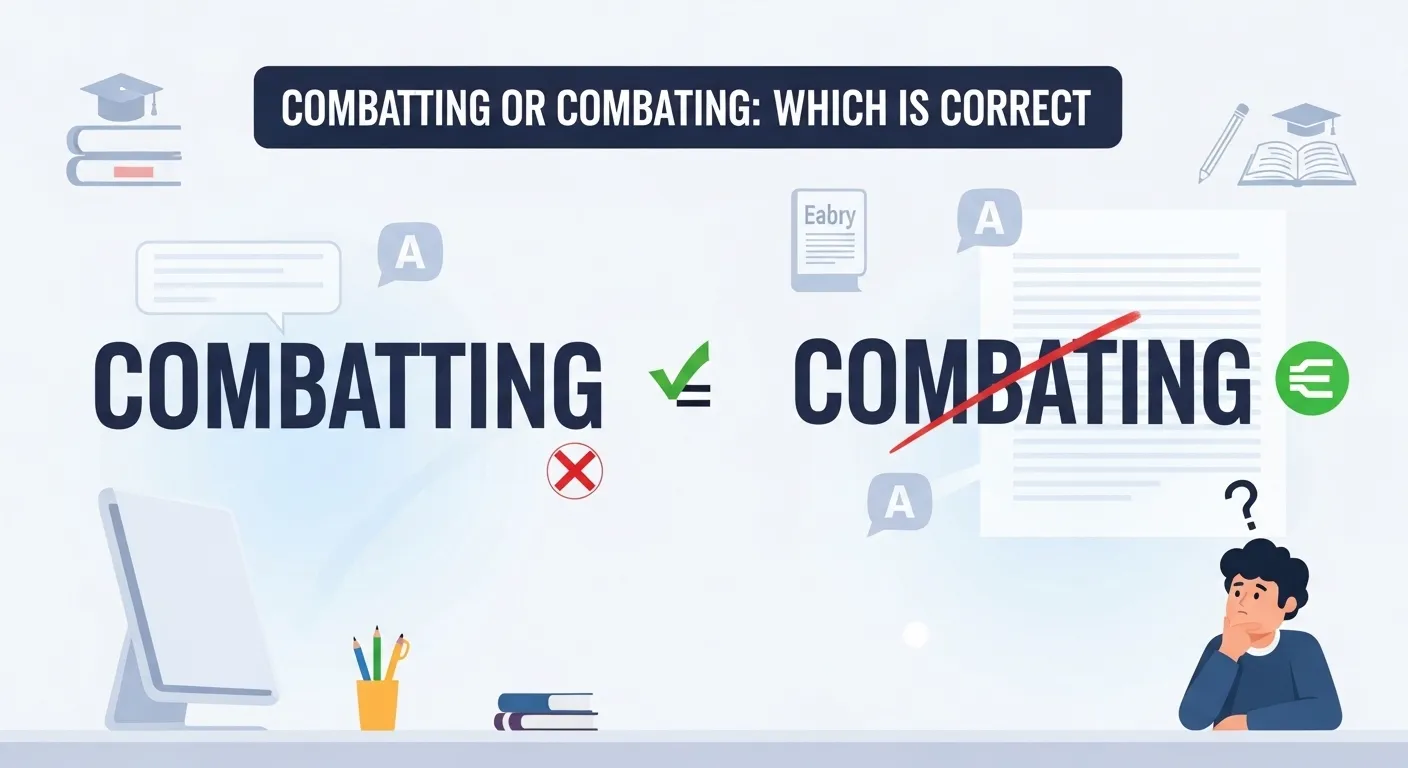
Many writers stop and think when typing Combatting Or Combating. Is it one “t” or two? Spell check sometimes flags one version, while another website shows something different. This small spelling doubt can slow down your writing.
People search for this keyword because English spelling rules are not always simple. The confusion mostly comes from British and American English differences.
Both spellings look correct. Both appear in books and news articles. But only one is standard in most modern dictionaries.
In this guide, you will get a quick answer, clear rules, real examples, and expert advice. By the end, you will know which spelling to use and why.
Combatting Or Combating – Quick Answer
The correct and most accepted spelling is Combating with one “t.”
“Combatting” with two “t’s” is less common but sometimes used in British English.
Examples:
The government is combating climate change.
She is combating stress with daily exercise.
The Origin Of Combatting Or Combating
The word comes from the verb combat, which means to fight against something. It entered English from French in the 1500s.
When adding -ing to verbs, English follows certain spelling rules. If a word ends in a stressed consonant-vowel-consonant pattern (like “run”), we double the final consonant (running).
But “combat” has stress on the second syllable (com-BAT). In modern usage, most dictionaries prefer combating with one “t.”
The double “t” version, combatting, appeared in older British texts. Over time, usage shifted toward the single “t” spelling.
British English Vs American English Spelling
In American English, Combating is standard.
In British English, both forms appear, but Combating is still more common today.
Here is a comparison:
| Version | American English | British English | Preferred Today |
| Combating | ✅ Standard | ✅ Common | ✅ Yes |
| Combatting | ❌ Rare | ⚠️ Sometimes Used | ❌ Less Common |
In short, even in the UK, “combating” is widely accepted.
Which Spelling Should You Use?
Here is simple advice:
- US audience: Use Combating
- UK audience: Use Combating
- Global audience: Use Combating
- Academic or business writing: Use Combating
If you want safe and professional writing, choose the single “t” spelling.
Common Mistakes With Combatting Or Combating
Here are common errors:
❌ Writing “combatting” in formal US documents
❌ Mixing both spellings in one article
❌ Thinking double “t” is always British
Correct approach:
✔ Pick one spelling
✔ Follow your audience location
✔ Use dictionary-approved spelling
Consistency is key.
Combatting Or Combating In Everyday Examples
Here is how the word appears in real life:
Email:
We are combating rising costs this quarter.
News:
The city is combating air pollution.
Social Media:
Combating Monday blues with coffee!
Formal Writing:
New policies focus on combating cybercrime.
In almost all cases, the single “t” version is used.
Combatting Or Combating – Google Trends & Usage Data
Search data shows Combating is far more popular worldwide.
- United States → Strong preference for “combating”
- United Kingdom → “Combating” leads
- Canada & Australia → “Combating” dominates
The double “t” version appears rarely in modern digital content. This shows global writing has moved toward one standard spelling.
Keyword Comparison Table
| Feature | Combating | Combatting |
| Dictionary Approved | Yes | Limited |
| US Usage | Very Common | Rare |
| UK Usage | Common | Sometimes |
| SEO Friendly | Yes | Less |
| Recommended | ✅ Yes | ❌ No |
FAQs
1. Is combatting ever correct?
It can appear in older British texts, but it is not the preferred modern spelling.
2. Why is combating spelled with one “t”?
Because modern English dictionaries standardize it that way.
3. Is combatting wrong?
Not fully wrong, but uncommon and not recommended.
4. Which spelling is better for SEO?
Combating performs better in search engines.
5. Do major dictionaries accept combatting?
Most major dictionaries list combating as the primary spelling.
6. Is combating used in formal writing?
Yes. It is widely used in academic and professional texts.
7. Should I follow US or UK rules?
Follow your target audience, but combating works globally.
Conclusion:
In conclusion, the distinction between “combatting” and “combating” may seem minor, but it plays an important role in clear and accurate writing. While both forms are technically understandable, “combating” is the preferred and widely accepted spelling in modern English usage.
It aligns with standard grammar rules and is recognized by most dictionaries, style guides, and professional writers. On the other hand, “combatting” can occasionally appear, especially in less formal contexts, but it is generally considered less common and may look incorrect to many readers.
Choosing the right spelling not only improves readability but also strengthens your credibility as a writer. In digital content, blogs, and academic writing, using standard forms like “combating” ensures your message is clear and professional.
Ultimately, mastering small differences like this can make a big impact on your overall writing quality. By sticking with “combating,” you can communicate more effectively and confidently, avoiding confusion while presenting polished and reliable content to your audience.

I’m Jim Butcher, and this is my site, Grammlyx.com, where I share my work as an author. I am an expert in my craft, dedicated to delivering the best content.