Have you ever stopped mid-sentence wondering If you say “sung” or “sang”? English learners and even native speakers often get confused between these two forms of the verb sing.
The confusion arises because English has irregular verbs, which do not follow the usual past tense rules. Using the wrong form can make your sentences grammatically incorrect or awkward.
People search for “sung or sang” to clarify the correct usage in everyday conversation, emails, or formal writing.
For example, someone might ask: “I have that song before.” Should it be sung or sang? Understanding the difference is essential for accurate writing and speaking, and it also helps you sound more confident and professional.
In this article, we will break down the difference between sung and sang, explain their origins, show examples, and provide guidance for both American and British English. By the end, you’ll know exactly when to use each form and avoid common mistakes that trip up learners worldwide.
Sung or Sang – Quick Answer →
Quick Answer:
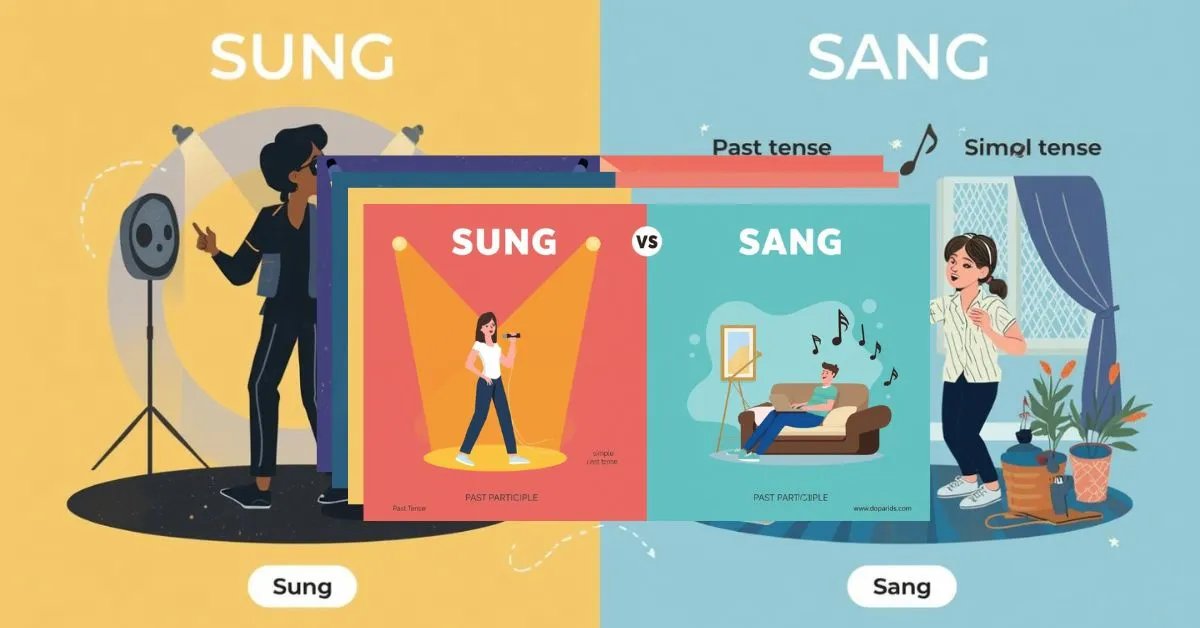
- Sang → Past simple of sing (used when the action happened at a specific time in the past).
- Sung → Past participle of sing (used with have, has, or had).
Examples:
- Yesterday, she sang her favorite song at the concert.
- I have sung in many school choirs over the years.
The Origin of Sung or Sang
The verb sing comes from Old English “singan”, which has Germanic roots. Like many irregular verbs, it developed distinct past tense forms over centuries.
- Sang appeared as the simple past form in Middle English.
- Sung became the past participle, used with auxiliary verbs like have and had.
The spelling difference exists because English irregular verbs retain older patterns instead of following modern rules like adding -ed for the past tense.
British English vs American English Spelling
Interestingly, “sang” and “sung” are the same in both American and British English. The difference is not in spelling but in usage and style.
| Form | Usage | Example | Region |
| Sang | Past simple | She sang beautifully last night. | US & UK |
| Sung | Past participle | He has sung that song many times. | US & UK |
Both versions are universally accepted, so you won’t need to worry about regional differences in spelling.
Which Spelling Should You Use?
- Use sang when describing a specific action that happened in the past.
- Use sung when paired with have, has, or had.
Advice by Audience:
- US Writers: Follow the standard rules above.
- UK/Commonwealth Writers: Same usage applies; no regional variations.
- Global Audience: Stick to the rule of simple past = sang, past participle = sung.
Common Mistakes with Sung or Sang
- ❌ I have sang that song yesterday. → ✅ I sang that song yesterday.
- ❌ She sung beautifully yesterday. → ✅ She sang beautifully yesterday.
- ❌ He sang the song already. → ✅ He has sung the song already.
The key mistake is confusing past simple (sang) with past participle (sung).
Sung or Sang in Everyday Examples
- Emails: “I have sung the company anthem at our last event.”
- News: “The choir sang the national anthem during the ceremony.”
- Social Media: “I’ve sung this song in my TikTok video!”
- Formal Writing: “The artist has sung in multiple international competitions.”
Sung or Sang – Google Trends & Usage Data
Search data shows that “sang” is slightly more common for past events, while “sung” appears more in tutorials, grammar queries, and writing guidance. Countries with high English proficiency like the US, UK, Canada, and Australia often show interest in usage clarification rather than regional spelling.
Comparison Table: Sung vs Sang
| Keyword | Type | Usage Example |
| Sang | Past simple | She sang beautifully last night. |
| Sung | Past participle | I have sung in many choirs. |
FAQs
1. Can I use “sung” instead of “sang”?
No, sung is only correct as a past participle with auxiliary verbs.
2. Is “sang” correct for all past tense sentences?
Yes, for simple past tense sentences like “She sang yesterday.”
3. Which is more common, sung or sang?
Both are common, but sang is slightly more used in daily past tense conversations.
4. Can I say “I have sang”?
No, the correct form is “I have sung.”
5. Do British and American English use these differently?
No, usage is the same in both varieties.
6. How do I remember the difference?
Think: sang = past simple, sung = past participle.
7. Can “sung” ever be used alone?
No, it needs an auxiliary verb like have, has, or had.
Conclusion
In English, mastering irregular verbs like sing is essential for proper grammar. Sang is your go-to past simple verb when describing actions that happened at a specific time. Sung is your past participle, always paired with have, has, or had. Understanding this simple distinction ensures that your sentences sound correct, professional, and confident.
Whether you’re writing emails, social media posts, formal articles, or casual conversations, applying the right form will prevent awkward mistakes. Remember the simple rule: sang = past action, sung = action connected to the present or past perfect. By practicing these forms and reviewing examples, you’ll naturally internalize the difference, making your English clearer and more polished.
So next time you pause over “sung or sang”, remember this guide, check your auxiliary verbs, and write with confidence. English can be tricky, but small rules like these make it easier and enjoyable to master.

I am James Patterson, one of the world’s bestselling authors, known for fast-paced thrillers like the Alex Cross, Women’s Murder Club, and Maximum Ride series that have captivated millions of readers worldwide. I share my passion for storytelling and writing expertise with readers through my work and also feature insights on my site grammlyx.com, where great writing meets creativity.