Many English learners stop and think when writing Smelled Or Smelt. Both words look correct. Both sound natural.
But which one should you use? Is one American and the other British? Is one more formal? These questions are common. That is why so many people search for this keyword online.
The confusion happens because English has different spelling and verb forms in different regions. Some words change in American English but stay different in British English.
This makes writing tricky, especially for students, bloggers, and professionals who want correct grammar.
If you are writing for a global audience, you may feel unsure about which version sounds better.
In this guide, you will get a clear and simple answer. You will learn the origin, regional differences, common mistakes, and real-life examples.
By the end, you will confidently know when to use Smelled and when to use Smelt.
Smelled Or Smelt – Quick Answer
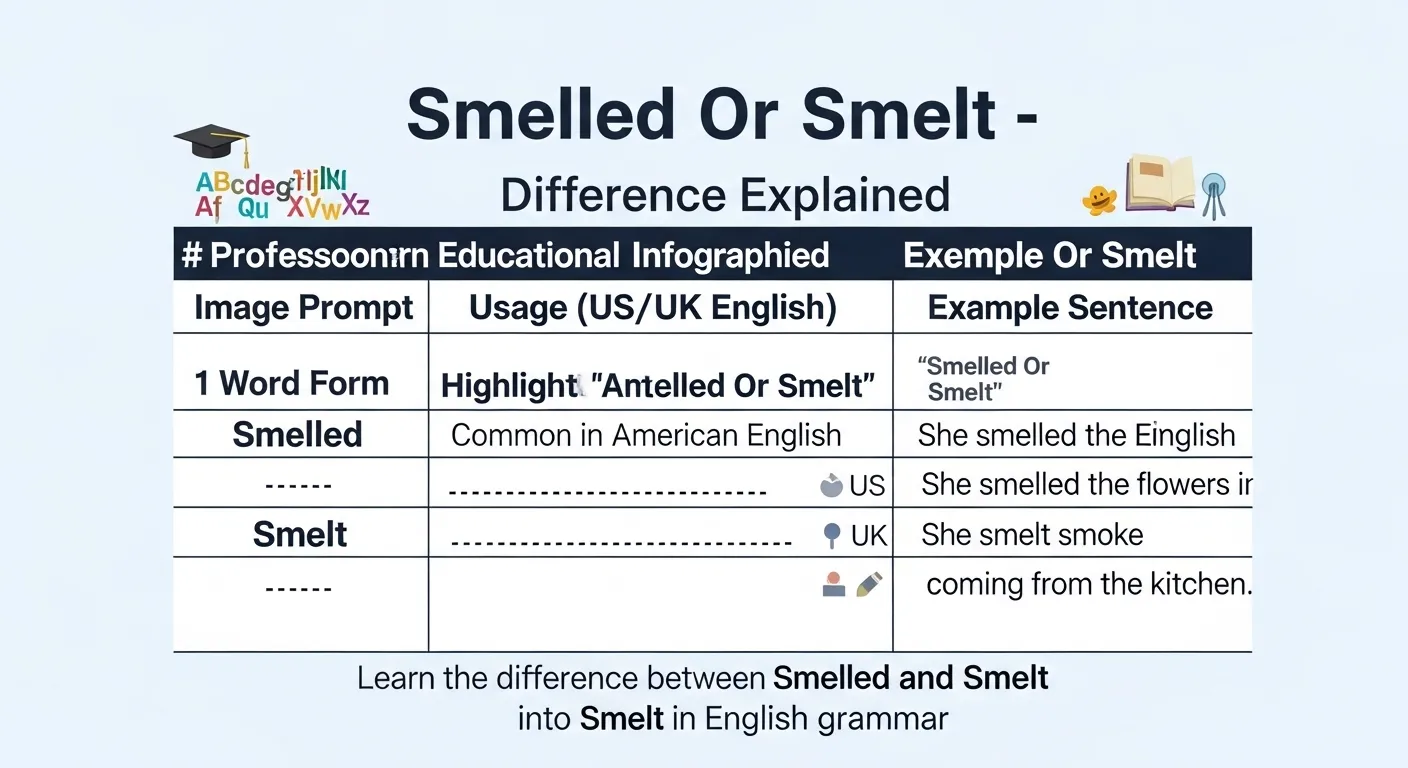
Both Smelled and Smelt are correct past tense forms of the verb “smell.”
Smelled is more common in American English.
Smelt is more common in British English.
Examples:
- She smelled smoke in the kitchen.
- He smelt fresh bread in the bakery.
The Origin of Smelled Or Smelt
The verb “smell” comes from Old English smellan, which means “to emit a scent.” Over time, English verbs developed two types of past tense forms:
- Regular verbs (adding -ed)
- Irregular verbs (changing form)
In British English, many verbs kept irregular forms. That is why Smelt became common in the UK.
In American English, regular forms became more popular. So Smelled became the standard form in the United States.
Both forms have existed for centuries. The difference is mainly regional, not grammatical.
British English vs American English Spelling
In the UK, people often use shorter irregular forms like Smelt.
In the US, people prefer the regular form Smelled.
Comparison Table
| Feature | American English | British English |
| Preferred Form | Smelled | Smelt |
| Verb Type | Regular (-ed) | Irregular |
| Example | The milk smelled bad. | The milk smelt bad. |
| Formal Writing | Smelled | Smelt |
Both are correct, but your audience matters.
Which Spelling Should You Use?
Here is simple advice:
- Writing for the United States → Use Smelled
- Writing for the UK or Commonwealth → Use Smelt
- Writing for a global audience → Smelled is usually safer
If you are blogging or doing SEO for international readers, Smelled may reach a wider audience. But if your readers are British, Smelt sounds more natural.
Consistency is very important. Do not mix both forms in one article.
Common Mistakes with Smelled Or Smelt
Here are frequent errors:
❌ Mixing both forms in the same paragraph
✔ Choose one version and stay consistent
❌ Thinking one form is wrong
✔ Both are correct
❌ Confusing “smelt” with metal melting
✔ “Smelt” can also mean melting metal in a furnace
Example:
- The factory smelted iron. (different meaning)
Always check context.
Smelled Or Smelt in Everyday Examples
In Emails
- I smelled gas near the stove. Please check it.
In News
- Residents smelt smoke before the fire alarm rang.
On Social Media
- I smelled coffee and woke up happy!
In Formal Writing
- The witness stated she smelt burning rubber.
Both forms work. Just match your audience.
Smelled Or Smelt – Google Trends & Usage Data
Search data shows:
- Smelled is more popular in the United States.
- Smelt is searched more in the United Kingdom, Australia, and New Zealand.
In global searches, Smelled has slightly higher usage. This is likely because American English dominates online content.
In literature and British news sources, Smelt appears more often.
So popularity depends on country and context.
Comparison Table – Smelled Or Smelt
| Word | Type | Region | Example Sentence |
| Smelled | Regular Verb | USA | She smelled flowers. |
| Smelt | Irregular Verb | UK | She smelt flowers. |
Both words mean the same thing.
FAQs About Smelled Or Smelt
1. Is Smelt wrong?
No. It is correct, especially in British English.
2. Is Smelled more formal?
Not exactly. It is just more common in American English.
3. Can I use Smelt in American English?
Yes, but it sounds less common.
4. Why does English have two forms?
Because English developed differently in the UK and US.
5. Is Smelt only British?
Mostly, but it is understood everywhere.
6. Which form is better for SEO?
If targeting global traffic, Smelled may perform slightly better.
7. Do dictionaries accept both?
Yes. Major dictionaries list both as correct past tense forms.
Conclusion:
Understanding Smelled Or Smelt is simple once you know the regional difference. Both forms are correct. The meaning is the same.
The only real difference is where they are commonly used. American English prefers Smelled, while British English prefers Smelt.
If you write for a US audience, choose Smelled. If your readers are in the UK or Commonwealth countries, Smelt is natural.
For international content, Smelled is often the safer choice because of wider usage online.
The most important rule is consistency. Do not switch between both forms in the same article. Pick one and stick to it. This keeps your writing clean and professional.
Now you can confidently use Smelled or Smelt without confusion. Clear grammar builds trust. And correct usage makes your writing stronger.

I am James Patterson, one of the world’s bestselling authors, known for fast-paced thrillers like the Alex Cross, Women’s Murder Club, and Maximum Ride series that have captivated millions of readers worldwide. I share my passion for storytelling and writing expertise with readers through my work and also feature insights on my site grammlyx.com, where great writing meets creativity.