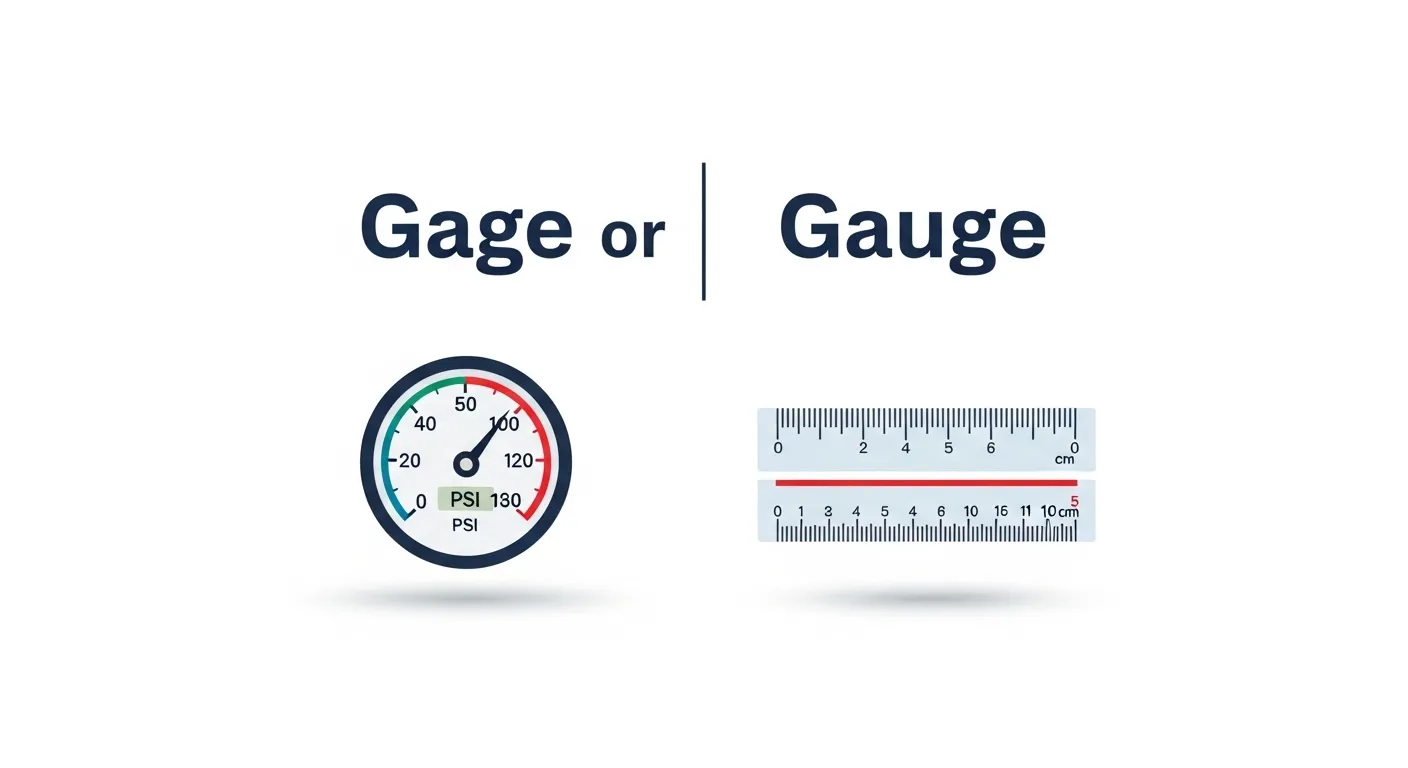
Many English learners and writers often get confused between gage and gauge. Both words sound alike, but their spellings, origins, and uses can differ depending on context.
This confusion becomes especially tricky in technical writing, emails, social media posts, and professional documents.
People search for “gage or gauge” because they want to write correctly and appear knowledgeable, discussing tools, measurements, or figurative expressions.
In this article, we will break down the differences clearly, provide examples, explain origins, and give professional advice on which spelling to use in British English, American English, and global contexts.
By the end, you will confidently know which spelling is correct in every situation.
Gage or Gauge – Quick Answer
Quick Answer:
- Gauge is the standard spelling for most situations.
- Gage is a less common variant and often appears as a surname or in historical contexts.
Examples:
- The mechanic checked the tire gauge before the trip.
- The company installed a pressure gauge in the factory pipeline.
The Origin of Gage or Gauge
The words gage and gauge come from Old French gauge, meaning a “measure” or “standard.” Over time, English adapted both spellings.
- Gauge became standard in technical and modern writing.
- Gage survived in historical texts, legal documents, or as surnames.
This dual spelling arose due to early printing practices and regional preferences, which allowed both forms to coexist.
British English vs American English Spelling
| Aspect | British English | American English | Notes |
| Common Usage | Gauge | Gauge | Preferred spelling in modern writing |
| Gage | Rare, mainly surname or historical | Rare, mainly surname or historical | Often avoided in technical contexts |
| Measurement Tools | Gauge | Gauge | Always use “gauge” |
| Figurative Use | Gauge (e.g., gauge your progress) | Gauge | Consistent across English variants |
Which Spelling Should You Use?
- US Audience: Always use gauge.
- UK/Commonwealth Audience: Use gauge in formal writing; gage may appear in historical texts.
- Global Audience: Gauge is universally understood and safe for digital content, technical writing, and social media.
Common Mistakes with Gage or Gauge
- Writing “gage” instead of “gauge” for tools or measurements → ❌ Wrong
- ✅ Correct: Check the fuel gauge before driving.
- Using “gauge” as a surname → ❌ Wrong
- ✅ Correct: Mr. Gage attended the meeting.
- Confusing the two in idioms → ❌ Wrong
- ✅ Correct: She tried to gauge his reaction.
Gage or Gauge in Everyday Examples
Emails: “Please check the pressure gauge before shipment.”
News: “The storm gauge shows increasing wind speeds.”
Social Media: “Gauge your progress daily for better results.”
Formal Writing: “Engineers rely on a calibrated gauge for precise measurements.”
Gage or Gauge – Google Trends & Usage Data
Google Trends data shows gauge is searched far more often than gage, particularly in the US, UK, and Canada. Gage spikes mostly appear in searches for surnames or historical contexts.
Contextual Insight: People usually want gauge for technical, business, or everyday writing purposes.
Keyword Comparison Table
| Variation | Correct Usage | Example |
| Gauge | Measurement, figurative expressions | Check the pressure gauge. |
| Gage | Surname, historical contexts | William Gage wrote the letter. |
FAQs
- Is it gage or gauge for measuring tools?
Always use gauge. - Can “gage” ever be correct?
Yes, for names and historical usage only. - Do UK and US English differ in spelling?
No, both prefer gauge. - What is the meaning of gauge as a verb?
To estimate or assess something (e.g., gauge the mood). - Is “gage” used in technical writing today?
Rarely, and it’s best avoided. - Which is more common online?
Gauge is far more prevalent in searches and professional writing. - Can “gage” appear in idioms?
Rarely; stick with gauge in modern idiomatic usage.
Conclusion:
Choosing between gage and gauge is simple once you know the rules. Gauge is the standard and safest spelling for all modern, technical, and figurative uses across British and American English.
Gage is primarily reserved for historical contexts, proper nouns, or surnames.
Always remember: when writing emails, professional documents, social media content, or technical instructions, gauge is the correct choice.
Checking a gauge ensures accurate measurements, prevents mistakes, and keeps your writing professional.
By following these tips, you can write confidently and avoid the common spelling pitfalls that confuse many writers worldwide.

I’m Jim Butcher, and this is my site, Grammlyx.com, where I share my work as an author. I am an expert in my craft, dedicated to delivering the best content.