Confused between were and where? You’re not alone. Many English learners and even native speakers mix these words.
Though they sound alike, their meanings and uses are very different. Using the wrong one can make your sentences confusing or grammatically incorrect.
People often search for “were or where” because they want to write correctly in emails, social media posts, assignments, or professional communication.
This guide explains the difference in a simple way, shows examples, highlights common mistakes, and offers advice on which word to use in different contexts.
By the end, you will confidently know when to write were versus where and avoid common errors.
Were or Where – Quick Answer
Quick Answer:
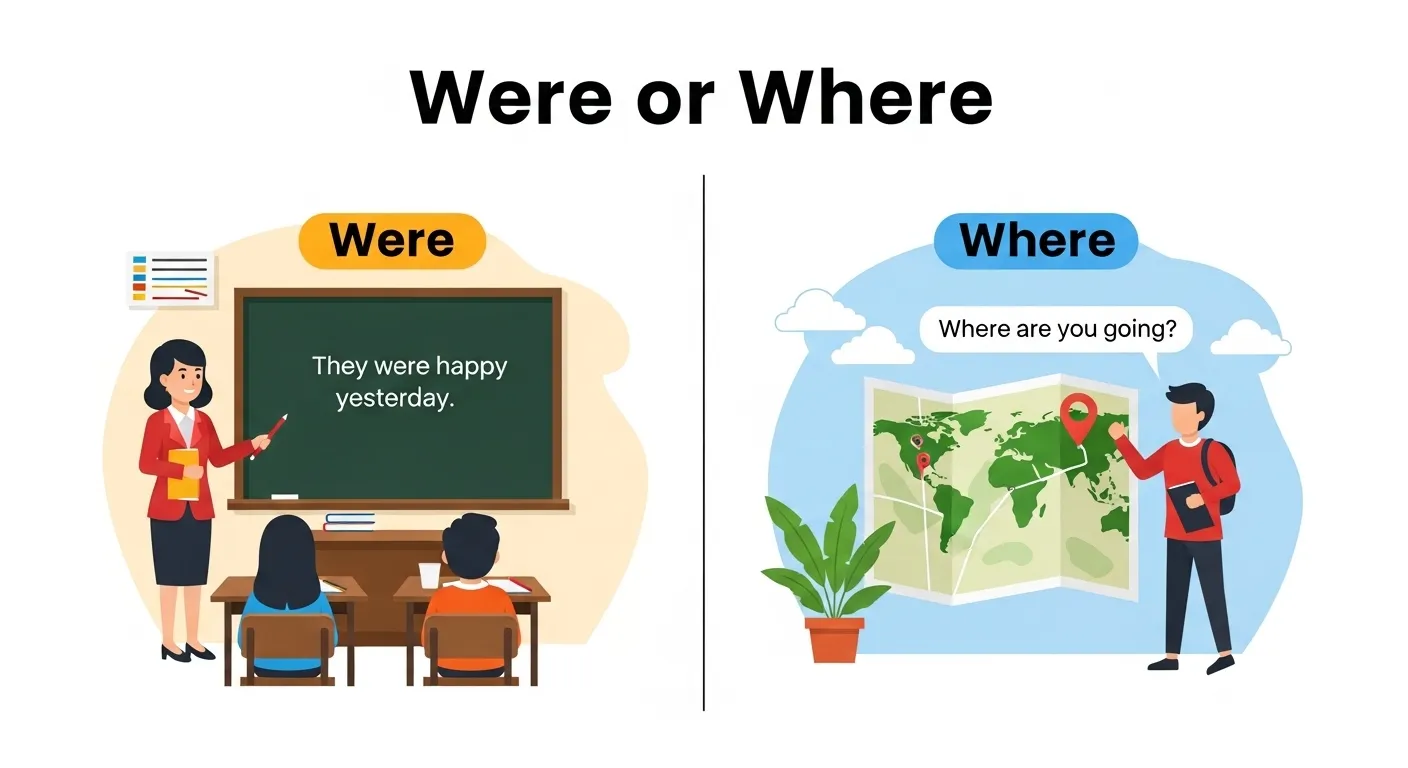
- Were – past tense of to be.
Example 1: They were happy with the results.
Example 2: If I were you, I would take a break. - Where – refers to a place or location.
Example 1: Do you know where the library is?
Example 2: That’s the park where we first met.
The Origin of Were or Where
- Were comes from Old English wæron, the plural past form of beon (to be). It has been used in English for over 1,000 years to indicate past states or hypothetical conditions.
- Where comes from Old English hwǣr, meaning “in what place” or “at which location.” It has always served as a question word or relative adverb for place.
The difference exists because English evolved from Germanic roots, keeping distinct words for “past being” (were) and “location” (where).
British English vs American English Spelling
Both were and where are spelled the same in British and American English. There are no spelling differences, but usage and examples may vary slightly in style or formality.
| Word | British English Usage | American English Usage |
| Were | They were going to the shop. | They were going to the store. |
| Where | Where is the nearest hospital? | Where is the nearest hospital? |
Which Spelling Should You Use?
- US English: Use were and where as defined above. No spelling change needed.
- UK/Commonwealth English: Same rules apply; spelling is identical.
Tip: Focus on meaning, not spelling. If it’s a past tense verb, use were. If it indicates a place, use where.
Common Mistakes with Were or Where
- Using where instead of were:
❌ They where late to the meeting.
✅ They were late to the meeting. - Using were instead of where:
❌ Do you know were the party is?
✅ Do you know where the party is? - Forgetting were in conditional sentences:
❌ If I you, I would wait.
✅ If I were you, I would wait.
Were or Where in Everyday Examples
- Emails:
Please let me know where the documents are. - News:
There were over 1,000 attendees at the conference. - Social Media:
Remember where we took that photo last summer? - Formal Writing:
If the subjects were studied further, more accurate conclusions could be drawn.
Were or Where – Google Trends & Usage Data
Searches for “were or where” peak among students, ESL learners, and writers seeking grammar clarification.
- Most Searches: USA, UK, Canada, Australia, India
- Top Contexts: Grammar help, spelling clarification, writing tips
Keyword Comparison Table
| Keyword | Part of Speech | Meaning / Use | Example |
| Were | Verb (past) | Past tense of “be” | They were tired. |
| Where | Adverb | Place or location | Where is my phone? |
FAQs About Were or Where
- Can I use “where” instead of “were”?
No, “where” indicates a place, not past tense. - Is “were” used only for plural subjects?
Mostly yes, but also in hypothetical statements with singular subjects (If I were you). - Are there spelling differences in English variants?
No, the spelling stays the same in US, UK, or Commonwealth English. - Can “where” appear at the end of a sentence?
Yes, for questions or relative clauses: That’s the house where I grew up. - Is “were” ever used in questions?
Yes, in past tense questions: Were you at the party last night? - Why do people confuse “were” and “where”?
They sound similar, but context determines correct usage. - Is it wrong to use “where” in formal writing?
No, as long as it correctly refers to a location.
Conclusion:
Understanding were or where is simple once you remember their meanings.
Were is always a past tense verb or part of a conditional statement, while where always points to a location.
Misusing them can confuse your readers, so double-check your context before writing.
If you’re drafting emails, posting on social media, or writing reports, clear usage enhances your professionalism.
British and American English spell them the same, so focus on meaning, not variant spellings.
Frequent practice, reviewing examples, and checking sentences can help you master their correct usage.
Next time you write, ask yourself: am I referring to time/past state (were) or place/location (where)? Your writing will instantly become more accurate and readable.

I am James Patterson, one of the world’s bestselling authors, known for fast-paced thrillers like the Alex Cross, Women’s Murder Club, and Maximum Ride series that have captivated millions of readers worldwide. I share my passion for storytelling and writing expertise with readers through my work and also feature insights on my site grammlyx.com, where great writing meets creativity.