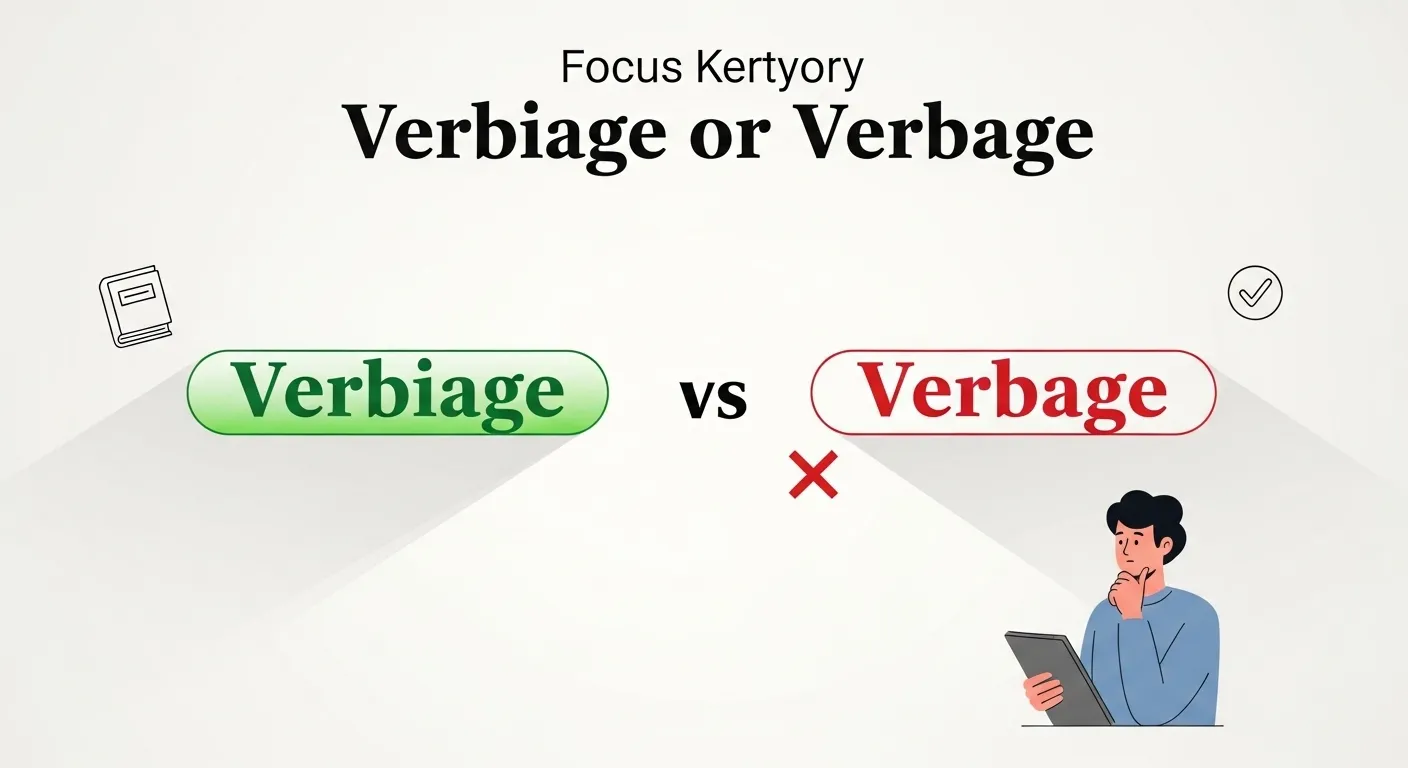
When writing or speaking, choosing the right word can make a huge difference. One common source of confusion is “verbiage or verbage.” Many people wonder which spelling is correct and whether the words carry the same meaning. Misusing these terms can make your writing look careless, especially in professional emails, articles, or social media posts.
Understanding the correct form helps you communicate clearly and avoid unnecessary mistakes. People often search for “verbiage or verbage” because they’ve seen both spellings in emails, blogs, or textbooks and are unsure which one is standard. This guide will give you a clear, simple explanation, examples, historical context, and advice on which spelling to use depending on your audience. By the end, you’ll confidently know how to use this word in everyday writing.
Verbiage or Verbage – Quick Answer
Quick Answer: The correct spelling is “verbiage”. The term refers to the way words are used, especially when there are too many words or overly formal language. “Verbage” is considered a misspelling in modern English.
Examples:
- The report’s verbiage was so dense that it confused the readers.
- Avoid unnecessary verbiage in your emails to keep them concise.
The Origin of Verbiage or Verbage
The word “verbiage” comes from the Latin word verbum, meaning “word.” It was first used in English in the 15th century to describe the style or manner of using words. Over time, some English speakers mistakenly spelled it as “verbage” because it sounds similar to verbs, a related term in grammar.
The spelling difference exists because English has evolved with influences from French and Latin. “Verbiage” became the standard form, while “verbage” is seen mostly in informal writing or misprints.
British English vs American English Spelling
In both British English and American English, the correct form is “verbiage”. There is no regional spelling difference, although “verbage” occasionally appears in casual US writing.
Comparison Table:
| Variant | Status | Region Use | Notes |
| Verbiage | Correct | US, UK, Commonwealth | Standard, formal, and professional |
| Verbage | Incorrect/Misspelling | Mostly US informal | Common typo, not recommended in writing |
Which Spelling Should You Use?
If you are writing for a formal audience, such as in journalism, business, or academic papers, always use “verbiage.”
- US readers: Use verbiage for professional or formal contexts.
- UK/Commonwealth readers: Same advice; verbiage is standard.
- Global audience: Stick to verbiage to avoid confusion and maintain credibility.
Even if some informal US sources use verbage, it is better avoided in polished writing.
Common Mistakes with Verbiage or Verbage
Many people make these mistakes:
- Writing “verbage” in formal emails – ❌ Correct: verbiage
- Confusing verbiage with a synonym for vocabulary – ❌ Verbiage refers to wordiness, not vocabulary size.
- Using verbiage when “phrasing” or “wording” is more precise – ✅ Check context carefully.
Corrected Examples:
- ❌ Too much verbage in the essay made it unclear.
- ✅ Too much verbiage in the essay made it unclear.
Verbiage or Verbage in Everyday Examples
Emails:
- ✅ Please review the report and remove any unnecessary verbiage.
News Articles:
- ✅ The politician’s speech was full of verbiage, leaving the audience confused.
Social Media Posts:
- ✅ Stop adding so much verbiage to your captions; keep them short.
Formal Writing:
- ✅ Academic papers should avoid excessive verbiage for clarity.
Verbiage or Verbage – Google Trends & Usage Data
According to recent Google Trends data:
- Verbiage consistently shows higher search volume worldwide than verbage.
- Verbage appears mostly in informal US searches, often by people unsure of spelling.
- The keyword “verbiage or verbage” spikes whenever writers check correct usage for professional writing or blogging purposes.
Keyword Variations Comparison Table
| Keyword | Correctness | Common Use |
| Verbiage | ✅ Correct | Standard, formal writing |
| Verbage | ❌ Incorrect | Informal, occasional US usage |
| Verbiage/Verbage | ✅ Common search query | People checking correct spelling |
FAQs about Verbiage or Verbage
1. Is “verbage” ever correct?
No, it is considered a misspelling. Always use verbiage.
2. Does verbiage mean vocabulary?
Not exactly. It refers to the use or style of words, often implying wordiness.
3. Can I use verbage in emails?
It is better to use verbiage, especially in professional emails.
4. Is “verbiage” formal or informal?
It is formal and professional but can also be used in casual writing for emphasis.
5. Do UK and US English differ in this word?
No, verbiage is standard in both.
6. How do I reduce verbiage in writing?
Use simple sentences, remove unnecessary adjectives, and focus on clarity.
7. Can verbiage be positive?
Yes, sometimes it refers to elegant or elaborate wording, but usually, it implies unnecessary wordiness.
Conclusion
Understanding the difference between verbiage or verbage is essential for clear communication.
The correct spelling is verbiage, derived from Latin, and used worldwide in professional, academic, and casual contexts. Misusing verbage can reduce credibility, especially in formal writing.
Always check your audience: US, UK, and global readers recognize verbiage as standard. Avoid wordy sentences by trimming excess verbiage, making your writing concise and readable.
Being mindful of spelling and context ensures your communication is precise, polished, and professional.
By following these simple rules, you’ll never confuse verbiage with verbage again, and your writing will reflect confidence and correctness.

I am John Grisham, a bestselling author known for thrilling legal dramas that captivate millions. Discover more about my work at my site, Grammlyx.com.