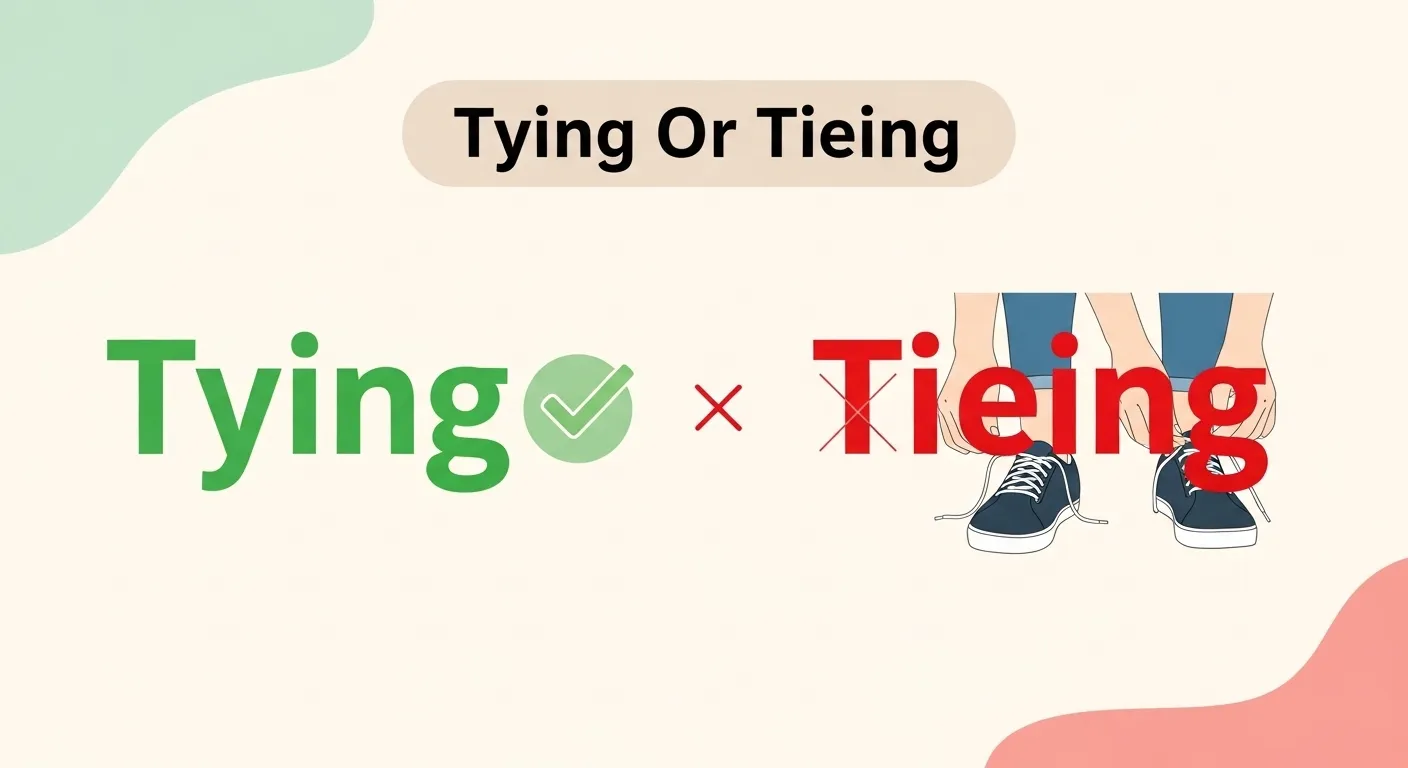
When it comes to writing, small spelling differences can create big confusion. One of the most commonly searched questions online is: “Tying or Tieing?” People often wonder which spelling is correct, especially when writing emails, essays, or social media posts.
This confusion arises because English has several rules for forming gerunds (verbs ending in -ing) and exceptions when the base verb ends in a single vowel followed by a consonant. Knowing the correct spelling helps you avoid mistakes, appear professional, and communicate clearly.
Whether you’re a student, writer, or casual English speaker, understanding tying vs tieing will save you time and reduce errors. In this article, we’ll break down the correct usage, explain why the spelling differs, compare British and American English, and provide everyday examples to make it easy to remember.
Tying or Tieing – Quick Answer
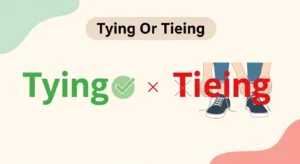
Quick Answer: The correct spelling is tying. The form tieing is incorrect in standard English.
Examples:
- She is tying her shoes before going for a run.
- They were tying ribbons around the gift box.
The Origin of Tying or Tieing
The word tie comes from Old English tīegan, meaning “to fasten or bind.” Historically, English spelling was less standardized, which is why some people mistakenly write tieing. Modern English simplified it: when a verb ends with an “e,” you drop the “e” before adding “-ing.” This explains why we write tying instead of tieing.
British English vs American English Spelling
Both British and American English follow the same rule here: drop the silent “e” before adding “-ing.”
| Verb | Correct Spelling (US & UK) | Incorrect Spelling |
| Tie | Tying | Tieing |
| Make | Making | Makeing |
| Bake | Baking | Bakeing |
✅ Rule: Verb ending in silent “e” → drop “e” + “-ing” = correct form.
Which Spelling Should You Use?
Since tying is correct in both American and British English, it’s safe to use it in all contexts:
- US readers: Always use tying.
- UK/Commonwealth readers: Tying is standard.
- Global audience: Tying is universally correct; avoid tieing.
Using tieing can appear as a spelling mistake or a typo, especially in professional writing.
Common Mistakes with Tying or Tieing
Many people make these errors:
- Writing tieing → ❌ Incorrect.
- Forgetting to drop the “e” in verbs like make → making ❌.
- Confusing tying with tied → “She tied her shoes” ✅ past tense.
- Using tying as a noun improperly → “The tying of the package” ✅ correct, but avoid pluralizing incorrectly.
Tying or Tieing in Everyday Examples
Emails:
- ✅ I am tying up loose ends before the project deadline.
News Headlines:
- ✅ The team is tying the game in the final minutes.
Social Media:
- ✅ Just tying my sneakers for a quick run!
Formal Writing:
- ✅ They focused on tying the theoretical concepts to practical examples.
Tying or Tieing – Google Trends & Usage Data
According to Google Trends:
- Tying is overwhelmingly more searched than tieing worldwide.
- Top countries searching for tying: US, UK, Canada, Australia.
- Tieing shows negligible or incorrect usage, mostly from non-native English writers.
Keyword Comparison Table
| Variation | Status | Notes |
| Tying | ✅ Correct | Standard English, widely used |
| Tieing | ❌ Incorrect | Common error, not recommended |
FAQs
1. Can I use tieing in formal writing?
❌ No, always use tying.
2. Why do some people write tieing?
Some may follow older English forms or misunderstand spelling rules.
3. Is tying a noun or verb?
It can be both: verb in “She is tying her shoes” and noun in “The tying of ribbons.”
4. Is tying British or American English?
✅ Both. The spelling is standard worldwide.
5. How do I remember the rule?
Drop the “e” before adding “-ing” for verbs ending in “e.”
6. Is “tying” pronounced differently than “tieing”?
They are pronounced the same. The difference is only in spelling.
7. Are there other similar verbs with the same rule?
Yes, make → making, bake → baking, take → taking.
Conclusion
When deciding between tying or tieing, always use tying. The “e” from the base verb is dropped before adding -ing, which is consistent across both American and British English. Understanding this rule helps prevent common spelling errors and improves clarity in emails, essays, social media, and formal writing.
Remember: tying is not only correct but universally recognized. Avoid tieing, as it may confuse readers or appear unprofessional. By following the simple rule—drop the silent “e” and add -ing—you can confidently use the word in any context. Spelling accuracy, though small, significantly improves the readability and credibility of your writing.
With this knowledge, you’ll never have to wonder about tying vs tieing again. Correct spelling keeps your writing polished and professional.

I am John Grisham, a bestselling author known for thrilling legal dramas that captivate millions. Discover more about my work at my site, Grammlyx.com.