English spelling can be tricky, and many people wonder whether “truly” or “truely” is correct. This question pops up often in writing, emails, social media, and even professional documents. Knowing the right spelling not only helps you write confidently but also avoids embarrassing mistakes. In this article, we will explore the difference between truly and truely, their origins, common mistakes, and how to use them in everyday writing.
People search for this keyword because the English language has many words that sound correct but are spelled differently. Mistyping or misunderstanding truly vs truely can make sentences look unprofessional. If you’ve ever paused while writing “I truely believe…” or “I truly appreciate…,” this guide will clarify everything. By the end, you’ll know the correct usage, the history of the word, and practical tips for both British and American English.
Truly or Truely – Quick Answer
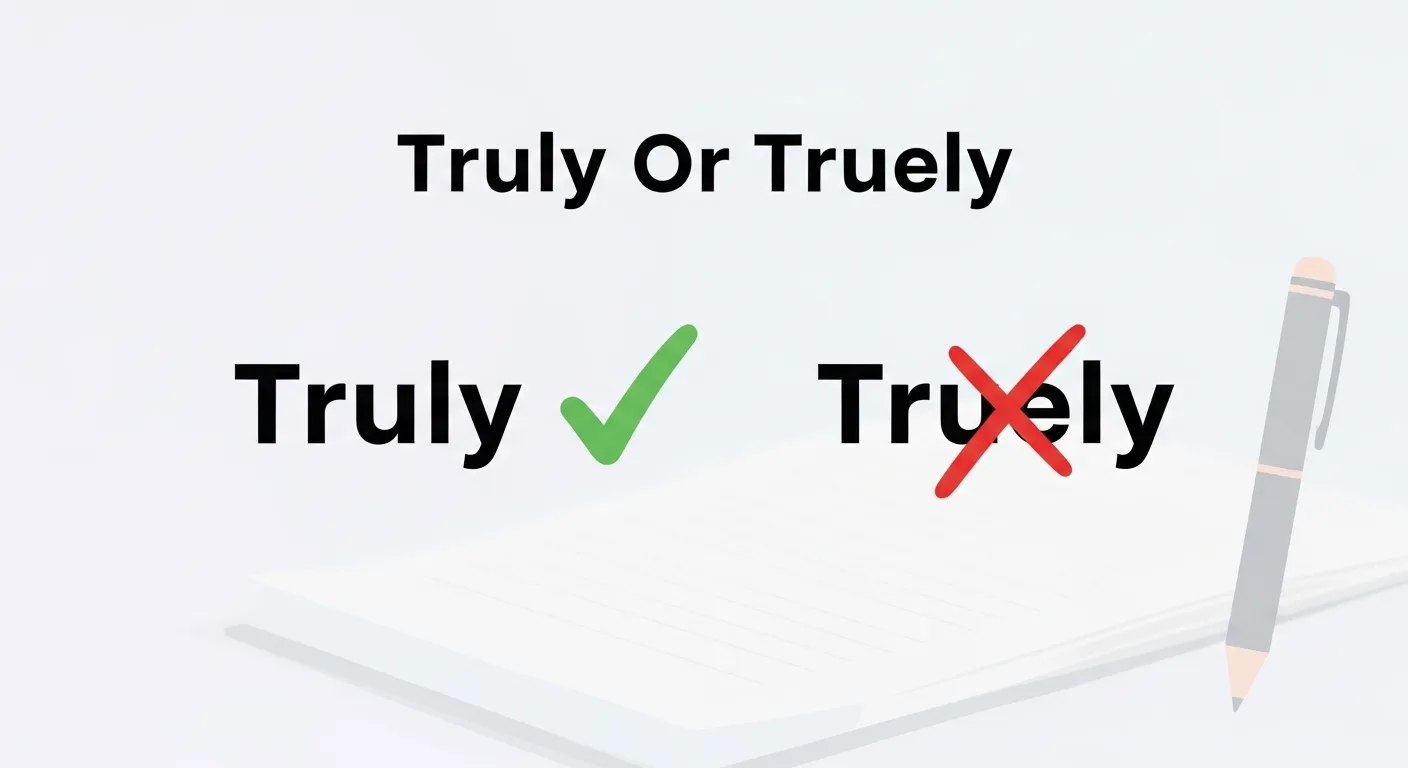
The correct spelling is “truly.” The version “truely” is incorrect and considered a common misspelling.
Examples:
- I truly appreciate your help.
- She truly believes in fairness.
✅ Quick Tip: Always use truly in formal and informal writing.
The Origin of Truly or Truely
The word truly comes from the Old English “triewe”, which means faithful, loyal, or genuine. Over time, it evolved into “true” in Modern English. The -ly suffix is added to form an adverb, which indicates the manner of an action.
The misspelling “truely” likely comes from overgeneralizing the rule that many adverbs are formed by adding -ly to adjectives (e.g., “happy → happily”). Since “true” ends in “e,” some mistakenly write truely, but this is never correct in standard English.
British English vs American English Spelling
In this case, both British English and American English use truly. The misspelling truely is not recognized in any formal dictionary.
| Spelling | Region | Correct? |
| Truly | US & UK | ✅ Correct |
| Truely | US & UK | ❌ Incorrect |
🔹 Tip: Unlike words like “travelling/traveling,” there is no regional difference for truly.
Which Spelling Should You Use?
Always use truly.
- US audience: Truly (correct, universal)
- UK/Commonwealth audience: Truly (also correct)
- Global audience: Truly is recognized everywhere
Even informal writing, such as social media posts or text messages, should prefer truly to maintain credibility.
Common Mistakes with Truly or Truely
Some frequent errors include:
- Writing truely instead of truly
- Confusing truly with similar-sounding words like “trulye” or “truley”
- Overcomplicating sentences with unnecessary adverbs
Corrected Examples:
- ❌ I truely admire your work.
- ✅ I truly admire your work.
Truly in Everyday Examples
Emails: “I truly value your feedback.”
News: “The event was truly inspiring for everyone.”
Social Media: “Truly blessed to see this happen!”
Formal Writing: “We truly respect the efforts of our employees.”
Using truly correctly enhances readability and professionalism.
Truly – Google Trends & Usage Data
Google Trends shows truly is consistently searched more than truely, especially in English-speaking countries like the US, UK, Canada, and Australia. Searches for “truely” are mostly accidental or by learners of English.
| Keyword | Popularity | Notes |
| Truly | High | Correct, widely used |
| Truely | Low | Misspelling, less common |
Comparison Table: Truly vs Truely
| Feature | Truly | Truely |
| Correctness | ✅ Correct | ❌ Incorrect |
| Usage | Universal | Mistaken |
| Region | US & UK | None standard |
| Formal Writing | Yes | No |
| Informal Writing | Yes | Avoid |
FAQs About Truly or Truely
1. Is “truely” ever correct?
No, it is always considered a misspelling.
2. Can I use “truly” in formal emails?
Yes, it’s perfectly acceptable and professional.
3. Why do people spell it “truely”?
They overgeneralize the rule of adding -ly to adjectives.
4. Is there a UK vs US difference?
No, both regions use truly.
5. How do I remember the correct spelling?
Think of true + ly as one simple combination: truly.
6. Can “truly” be used for emotions?
Yes, e.g., “I truly love this moment.”
7. Does “truly” appear in dictionaries?
Yes, all standard dictionaries list truly as the correct adverb.
Conclusion
In summary, truly is the only correct spelling. The version truely is a common mistake that can affect your credibility in both formal and informal writing. Remember that truly comes from Old English “triewe” and is consistent in both British and American English. By keeping the word simple—true + ly—you can confidently use it in emails, social media, news articles, and professional writing.
Avoiding mistakes like truely ensures your text looks polished and correct. Always check your spelling if unsure, but with truly, there is no confusion. Whether writing to colleagues, posting online, or creating content, using truly demonstrates proper English and enhances readability.
Master this small but important word, and your writing will always seem genuine, professional, and credible.

I am James Patterson, one of the world’s bestselling authors, known for fast-paced thrillers like the Alex Cross, Women’s Murder Club, and Maximum Ride series that have captivated millions of readers worldwide. I share my passion for storytelling and writing expertise with readers through my work and also feature insights on my site grammlyx.com, where great writing meets creativity.