You’re writing an email, report, or social post. You type a sentence like, “The expenses are totalling $500,” and suddenly that red underline appears. Now you pause.
Should it be Totalling or Totaling? This small spelling difference confuses many English learners and even native speakers.
People search for Totalling Or Totaling because both versions look correct. Both are used. Both appear in books, news, and online writing.
The confusion comes from the difference between British English and American English spelling rules. One version doubles the L, and the other does not. If you don’t know which style your audience uses, it can feel risky to choose.
This article clears that confusion in a simple way. You’ll get a quick answer, real examples, history, spelling rules, and advice on which version you should use. By the end, you will feel confident using Totalling Or Totaling correctly in any situation.
Totalling Or Totaling – Quick Answer
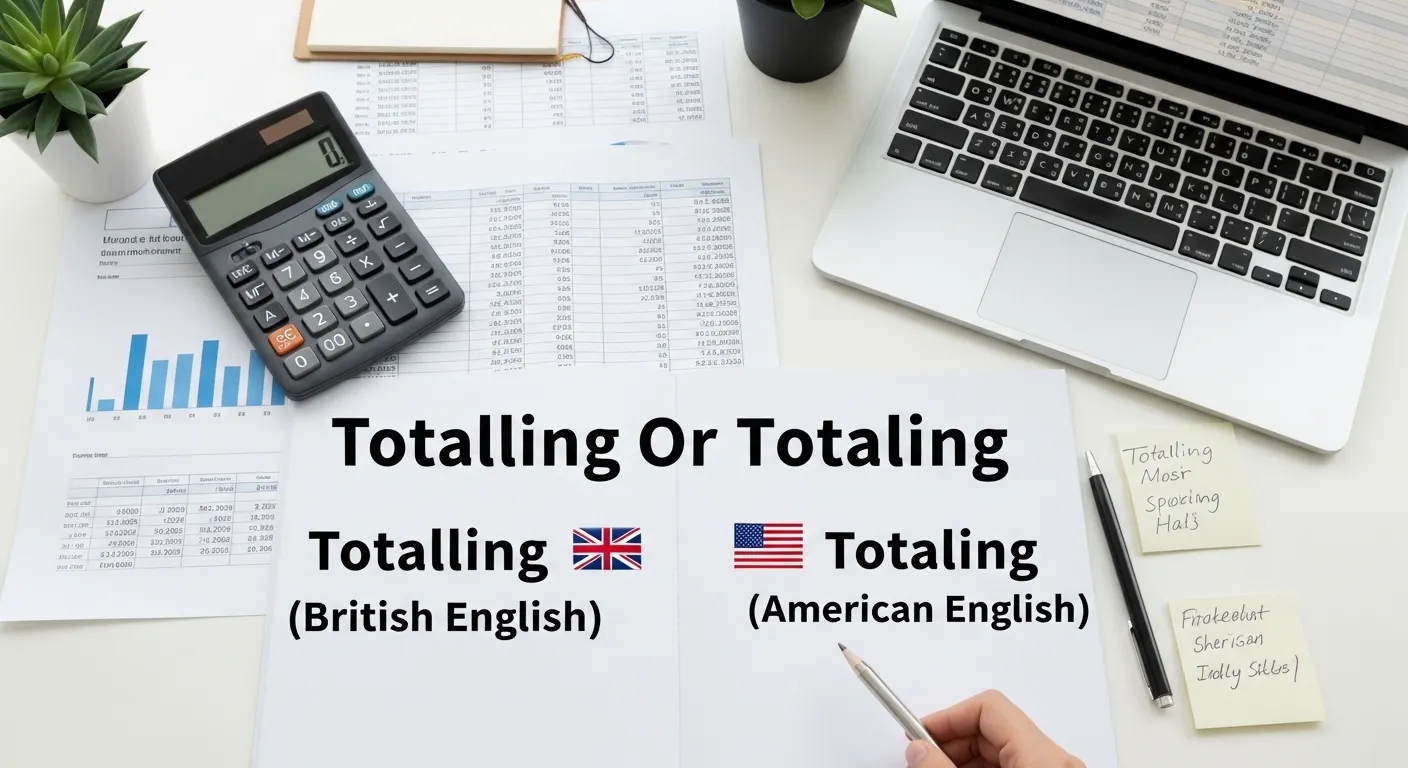
Totalling is British English spelling.
Totaling is American English spelling.
Both words mean “adding up numbers to get a final amount.”
Examples:
The bill is totalling $250. The damages are totaling more than $2,000.
The Origin of Totalling Or Totaling
The word comes from “total,” which entered English from French and Latin roots meaning “whole” or “entire.” Over time, English added -ing to make the present continuous form: total + ing.
The spelling difference started when American English simplified many British spellings. British English often doubles a final consonant before adding -ing if the stress pattern fits. American English sometimes drops the extra letter for simplicity. That is why Totalling (double L) and Totaling (single L) both exist today.
British English vs American English Spelling
| British English | American English | Example Sentence |
| Totalling | Totaling | The costs are totalling/totaling $900. |
| Travelling | Traveling | She is travelling/traveling today. |
| Labelling | Labeling | He is labelling/labeling boxes. |
British English likes double L. American English prefers one L.
Which Spelling Should You Use?
- Writing for the US? Use Totaling
- Writing for the UK or Commonwealth countries? Use Totalling
- Global or mixed audience? Pick one style and stay consistent
Consistency is more important than the choice itself.
Common Mistakes with Totalling Or Totaling
| Mistake | Correction |
| Mixing both spellings in one article | Choose one style |
| Using “total” when action is happening | Use Totalling/Totaling |
| Writing “totalled up” wrongly | Keep same spelling style |
Totalling Or Totaling in Everyday Examples
Email: We are totaling the monthly sales now.
News: Damages are totalling millions after the storm.
Social Media: My grocery bill is totaling too much lately.
Formal Writing: The figures are totalling the annual budget.
Totalling Or Totaling – Google Trends & Usage Data
Search patterns show Totaling is more common in the United States. Totalling is more popular in the UK, Australia, and other Commonwealth countries. Both spellings are widely accepted, depending on region and audience.
Comparison Table
| Feature | Totalling | Totaling |
| English Type | British | American |
| Number of Ls | Two | One |
| Meaning | Adding up | Adding up |
| Correct? | Yes | Yes |
FAQs
1. Is Totalling wrong?
No. It is correct in British English.
2. Is Totaling wrong?
No. It is correct in American English.
3. Do they mean the same thing?
Yes. Both mean adding numbers.
4. Which is more common worldwide?
Depends on region.
5. Can I use both in one article?
No, stay consistent.
6. Is this rule same for other words?
Yes, like travelling/traveling.
7. Which should students use?
Follow your school’s English style.
Conclusion
Spelling differences like Totalling Or Totaling can feel confusing, but the rule is actually simple. Both spellings are correct. The difference depends on location and language style. British English prefers Totalling with double L, while American English uses Totaling with a single L. The meaning stays the same in both cases: adding numbers to reach a final amount.
The key is knowing your audience. If you write for US readers, use Totaling. If your readers are in the UK or other Commonwealth countries, use Totalling. For global writing, choose one and stay consistent. This keeps your writing professional and clear.
Once you understand this pattern, other spelling pairs like travelling/traveling or labelling/labeling become easier too. Small spelling choices make a big difference in polished writing.

I am John Grisham, a bestselling author known for thrilling legal dramas that captivate millions. Discover more about my work at my site, Grammlyx.com.