Understanding the difference between through or thru can be confusing. Many people search for this because both words sound the same but are used differently depending on context.
Choosing the correct spelling ensures your writing is professional and clear.
People often see thru on signs, emails, or informal messages and wonder if it is correct English.
Meanwhile, through appears in formal writing, books, and official documents. This article will clear up the confusion, explain the origin, compare British vs. American usage, and provide practical examples for everyday use.
Through or Thru – Quick Answer
Quick Answer:
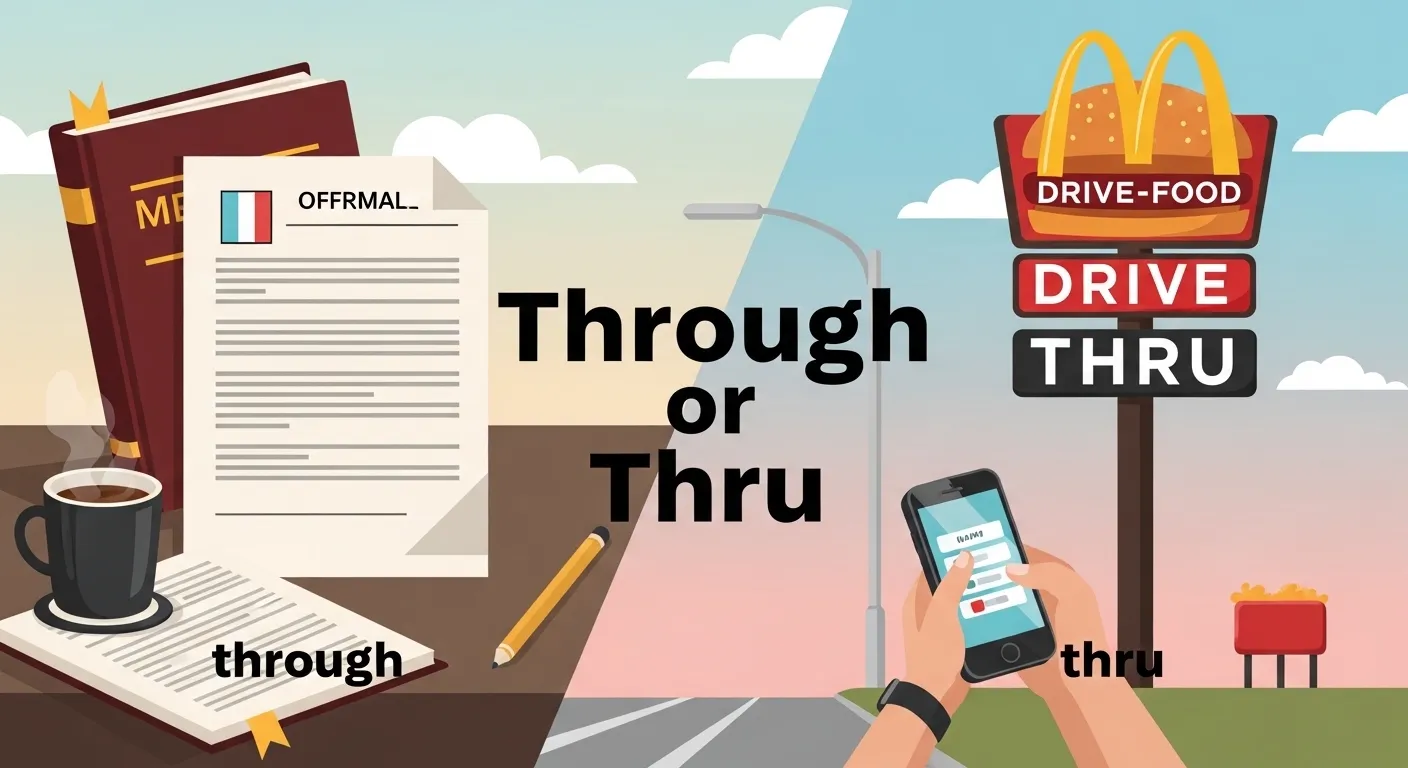
- Through is the standard, formal spelling used in writing, books, and professional documents.
- Thru is an informal or simplified spelling, mainly used in American English, signage, and casual contexts.
Examples:
- I walked through the park to get home.
- Please drive thru the fast-food lane.
The Origin of Through or Thru
The word through comes from Old English “þurh”, which meant “from one side to the other.” Over time, its spelling evolved in British and American English.
The simplified spelling first appeared in the 20th century, particularly in the United States, to make signage and informal writing easier and quicker. While through remains standard, thru became common in casual contexts like fast-food signs or text messages.
British English vs American English Spelling
| Spelling | Region | Usage |
| Through | UK, US, Commonwealth | Formal writing, books, official documents |
| Thru | US only | Informal writing, signage, casual notes |
British English almost always uses through.- American English allows thru in informal contexts, though formal writing still prefers through.
Which Spelling Should You Use?
- US audiences: Use thru in casual writing or signage. Use through for professional, formal, or academic work.
- UK/Commonwealth audiences: Always use through. Thru is rarely recognized and may appear unprofessional.
- Global: Stick with through unless targeting an informal American audience.
Common Mistakes with Through or Thru
- Writing thru in formal essays → ❌ Correct with through
- Using through on signs where brevity is needed → ❌ Thru is better
- Confusing pronunciation with spelling → ✅ Remember both sound the same
Through or Thru in Everyday Examples
- Emails: “I read your report through carefully.”
- News: “The rescue team went through the debris.”
- Social Media: “Drive thru for coffee, anyone?”
- Formal Writing: “Please go through the document before submitting.”
Through or Thru – Google Trends & Usage Data
Data shows through is far more popular globally. Thru spikes in searches related to American fast-food chains, drive-thrus, or casual messaging. In countries like the UK, Australia, and India, through dominates entirely.
Keyword Variations Comparison Table
| Variation | Formal | Informal | Region |
| Through | ✅ | ❌ | UK, US, Global |
| Thru | ❌ | ✅ | US only |
FAQs About Through or Thru
- Can I use “thru” in academic writing?
❌ No, always use through. - Why do some US signs say “drive-thru”?
✅ It’s informal and easier to read quickly. - Is “through” pronounced differently than “thru”?
❌ Both are pronounced the same. - Is “thru” correct in British English?
❌ Rarely, it’s considered informal or incorrect. - When is “through” preferred?
✅ Always in professional, academic, and formal writing. - Can I abbreviate “through” as “thru” in text messages?
✅ Yes, it’s common and accepted informally in the US. - Which spelling is more popular online?
✅ Through is more widely used globally.
Conclusion:
Choosing between through or thru depends on your audience and context. Through is the correct, formal spelling suitable for professional, academic, and global usage.
Thru is an informal American spelling, perfect for casual notes, signage, or text messages.
Remember, spelling affects clarity and professionalism. Using through universally is safe for formal writing.
Use thru sparingly and only in casual or fast-read contexts. By understanding the origin, usage rules, and regional differences, you can confidently write without confusion.
if drafting an email, writing a report, or reading a menu, knowing the difference ensures you communicate clearly and effectively.

I am James Patterson, one of the world’s bestselling authors, known for fast-paced thrillers like the Alex Cross, Women’s Murder Club, and Maximum Ride series that have captivated millions of readers worldwide. I share my passion for storytelling and writing expertise with readers through my work and also feature insights on my site grammlyx.com, where great writing meets creativity.