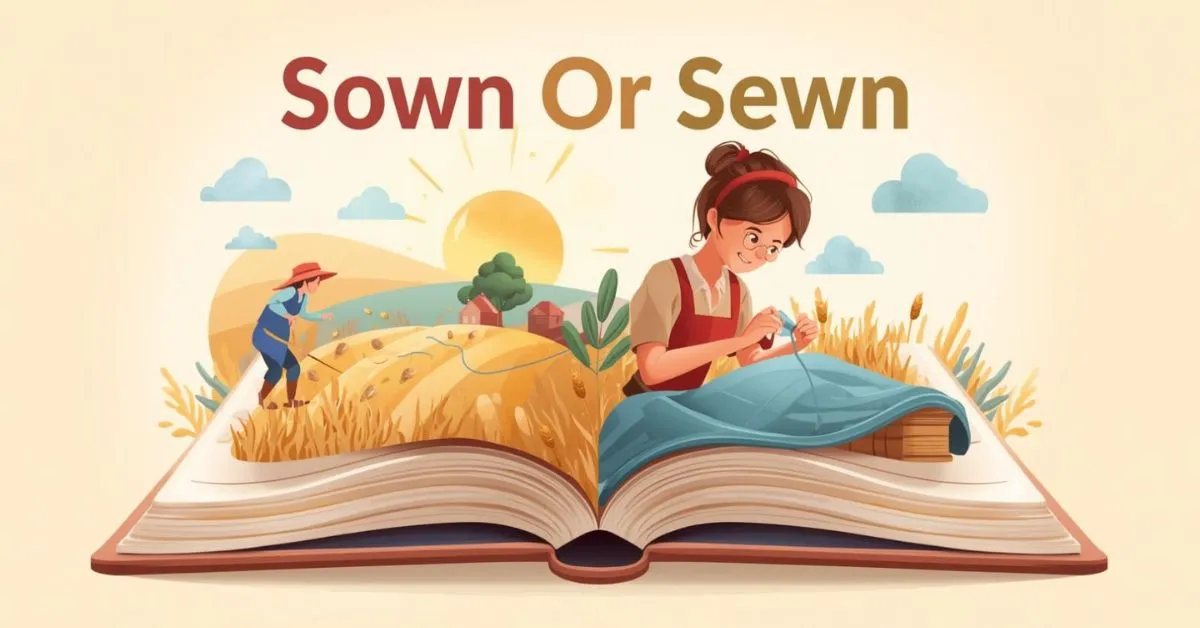
English spelling can feel like a maze, especially when two words look similar but mean very different things. Sown Or Sewn is one of those confusing pairs that people search for every day. At first glance, both words seem related to fabric or farming, but their meanings come from completely different actions.
This mix-up often happens in school writing, emails, blogs, and even professional documents. One small spelling mistake can change the whole meaning of a sentence.
People search for Sown Or Sewn because they want a quick and clear answer. They wonder if the words are just different spellings in British and American English, or if they have different meanings. The confusion usually appears when talking about planting seeds or stitching clothes.
Spellcheck tools may not always catch the mistake because both words are correct just used in different situations.
This article solves that confusion in a simple way. You’ll get a fast answer, examples, origin history, spelling rules, and practical advice. By the end, you will clearly know when to use Sown and when to use Sewn without second-guessing yourself.
Sown Or Sewn – Quick Answer
Sown relates to planting seeds. Sewn relates to stitching with a needle and thread.
Examples:
• The farmer has Sown the wheat seeds.
• She has Sewn a button on her shirt.
The Origin of Sown Or Sewn
Both words come from Old English but from different root verbs.
| Word | Root Verb | Meaning | History |
| Sown | Sow | To plant seeds | From Old English sāwan |
| Sewn | Sew | To stitch fabric | From Old English siwian |
The similar sound developed over time, but the actions stayed different.
British English vs American English Spelling
Good news: there is no spelling difference between UK and US for these words.
| Action | British English | American English |
| Planting seeds | Sown | Sown |
| Stitching cloth | Sewn | Sewn |
So the confusion is about meaning, not region.
Which Spelling Should You Use?
Use Sown if you are talking about agriculture, gardening, or spreading something.
Use Sewn if you are talking about clothes, fabric, or stitching work.
For global writing, stick to the same rule. The meaning does not change by country.
Common Mistakes with Sown Or Sewn
| Incorrect | Correct | Why |
| She has Sown her dress | She has Sewn her dress | Clothing uses stitch meaning |
| The seeds were Sewn | The seeds were Sown | Farming uses plant meaning |
Sown Or Sewn in Everyday Examples
Email: The garden has been Sown for spring.
News: Farmers have Sown crops early this year.
Social Media: I just Sewn my jacket patch!
Formal Writing: The field was Sown before the rain.
Sown Or Sewn – Google Trends & Usage Data
Search data shows people often confuse these words in writing about gardening and clothing. Countries with strong agriculture searches show more use of Sown, while craft and fashion topics show Sewn.
Comparison Table
| Word | Meaning | Field | Example |
| Sown | Planted | Farming/Gardening | Seeds were Sown |
| Sewn | Stitched | Clothing/Craft | Shirt was Sewn |
FAQs
1. Are Sown and Sewn the same word?
No, they have different meanings.
2. Is Sown used for clothes?
No, clothes use Sewn.
3. Is Sewn used for farming?
No, farming uses Sown.
4. Are they British vs American spellings?
No difference by country.
5. Why do they sound similar?
Old English roots created similar sounds.
6. Which one is more common?
Depends on topic — farming or sewing.
Conclusion
Confusion between Sown Or Sewn happens because the words sound alike and are both past participles. However, they belong to two very different actions. Sown is always connected to planting or spreading seeds. Sewn always connects to stitching fabric. Remembering this simple rule removes most mistakes instantly.
Writers often mix them up in emails, essays, and online posts. Since both spellings are correct words, spellcheck tools may not help. That’s why understanding meaning matters more than memorizing letters. Think of soil for Sown and thread for Sewn. This mental link makes the choice easy.
There is also no regional spelling change. Whether you write for the US, UK, or global readers, the usage rule stays the same. Using the right word shows professionalism and clarity in writing.
Next time you pause between Sown Or Sewn, just ask yourself: am I talking about seeds or stitches? Your answer will guide you every time.

I am James Patterson, one of the world’s bestselling authors, known for fast-paced thrillers like the Alex Cross, Women’s Murder Club, and Maximum Ride series that have captivated millions of readers worldwide. I share my passion for storytelling and writing expertise with readers through my work and also feature insights on my site grammlyx.com, where great writing meets creativity.