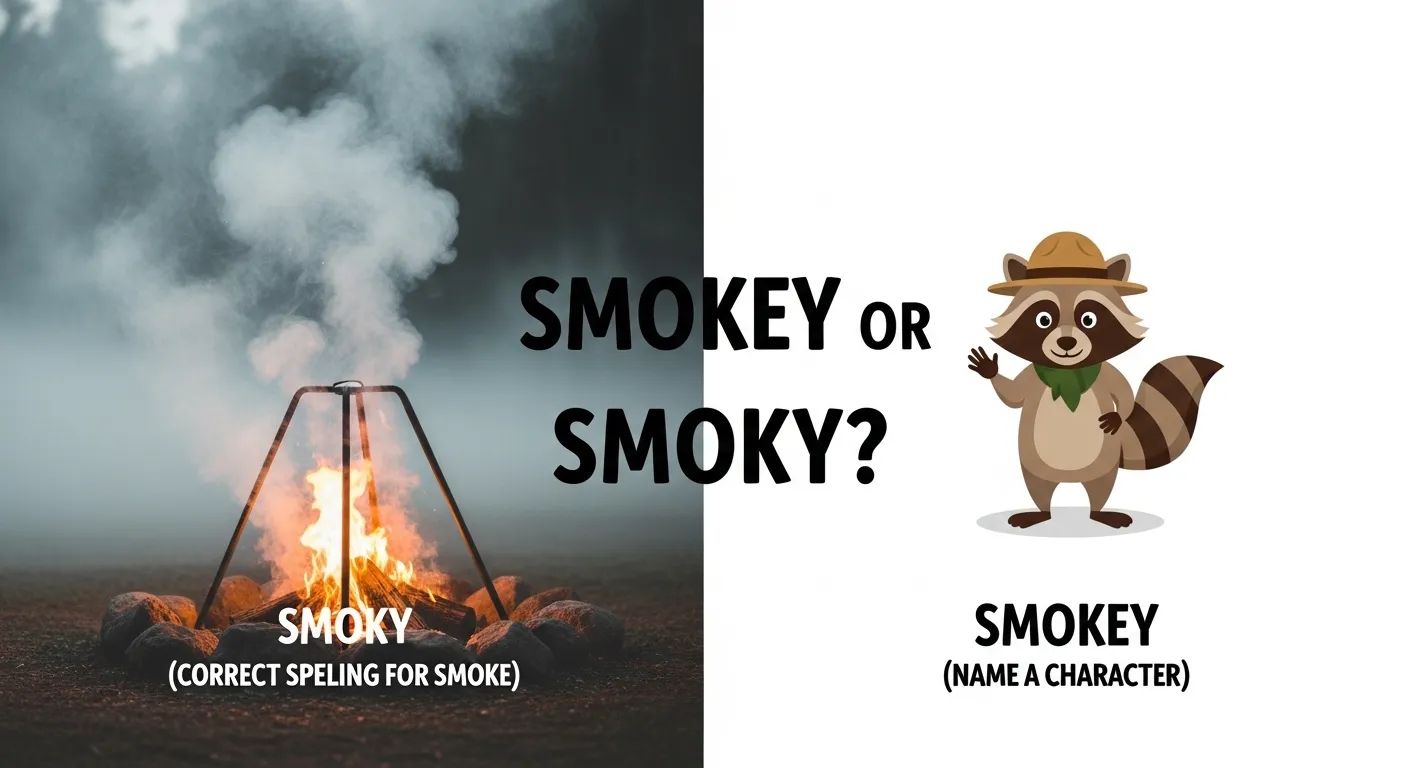
When it comes to describing something filled with smoke or having the smell of smoke, many writers get confused about to use “smokey” or “smoky.”
This common dilemma affects emails, articles, social media posts, and even product descriptions.
People search for this keyword because they want to write accurately and avoid spelling mistakes that can affect credibility.
Understanding the difference helps you communicate clearly and maintain professionalism.
Both versions exist, but one is generally preferred in formal writing. By the end of this article, you’ll know the origin, the correct usage depending on your audience, common mistakes, and even how these words appear in everyday contexts.
Smokey or Smoky – Quick Answer
Quick Answer:
- The correct spelling in most formal contexts is “smoky.”
- “Smokey” is often used in names or informal contexts, like nicknames, brands, or fictional characters.
Examples:
- The room had a smoky smell after the fire.
- Smokey the Bear is the famous mascot for forest fire prevention.
The Origin of Smokey or Smoky
The word “smoky” comes from “smoke” + “-y”, an adjective suffix meaning “full of” or “characterized by.” Historically, “smoky” has been the standard form in dictionaries, while “smokey” appeared later, often as a proper noun or in branding.
The difference in spelling doesn’t indicate a different meaning, it’s more about convention and usage. “Smokey” became popular in American culture, especially in names like Smokey Robinson and Smokey Bear.
British English vs American English Spelling
In British English, “smoky” is the standard spelling for all formal and informal uses.
In American English, “smoky” is preferred for regular use, while “smokey” often appears in proper names.
| Region | Standard Spelling | Usage Notes | Examples |
| US | smoky | Adjective, formal/informal | smoky flavor, smoky room |
| US | smokey | Proper nouns, informal | Smokey the Bear, Smokey Robinson |
| UK | smoky | Always standard | smoky sky, smoky flavor |
| UK | smokey | Rare, mainly names | Smokey Joe’s café |
Which Spelling Should You Use?
- Use “smoky” for formal writing, emails, reports, articles, and general descriptions worldwide.
- Use “smokey” only for proper nouns, brands, or informal contexts, especially in American English culture.
If you’re unsure, stick with “smoky.” It’s safe in both US and UK English.
Common Mistakes with Smokey or Smoky
- Writing “smokey” in formal essays or news articles → ❌ Incorrect
- Confusing brand names with general adjectives → ⚠️ Example: “The smoky flavor is strong” vs “Smokey Bear warns about fires”
- Using both spellings interchangeably → ❌ Avoid mixing
Always check if it’s a proper noun or a descriptive adjective.
Smokey or Smoky in Everyday Examples
- Emails: “The kitchen smelled smoky after cooking.”
- News articles: “A smoky haze covered the city streets.”
- Social media: “Love the smoky eyeshadow look today!”
- Formal writing: “The laboratory observed smoky emissions from the experiment.”
Smokey or Smoky – Google Trends & Usage Data
Google searches indicate that “smoky” is overwhelmingly more popular than “smokey” globally, except when referring to specific names or brands. In the US, “Smokey Bear” drives spikes for “smokey.” UK and Commonwealth countries almost exclusively use “smoky.”
Keyword Variations Comparison Table
| Variation | Correct Usage | Notes |
| smoky | ✅ General adjective | Safe in both US & UK English |
| smokey | ⚠️ Proper nouns, brands | Names like Smokey Bear or Smokey Robinson |
| smokie | ❌ Incorrect | Avoid in standard writing |
FAQs
1. Is “smokey” wrong?
Not always. It’s correct for names or informal usage, but “smoky” is preferred for adjectives.
2. Can I use “smokey” in a blog post?
Only if referring to a proper noun or character. Otherwise, stick with “smoky.”
3. What about “smokie”?
It is considered incorrect in standard English.
4. Which is more common in the US?
“Smoky” is more common overall, but “smokey” appears in cultural references like Smokey Robinson.
5. How do Brits spell it?
“Smoky” is standard in British English. “Smokey” is rarely used outside names.
6. Can “smoky” describe flavors?
Yes, it’s used for food, drinks, and scents: “smoky barbecue sauce.”
7. Is there a mnemonic to remember?
Think: “y” → adjective, “ey” → name or brand.
Conclusion:
In conclusion, when deciding between “smokey” and “smoky,” remember the context. “Smoky” is your go-to for adjectives, descriptive writing, and professional use.
“Smokey” is reserved for proper nouns, brands, and informal references.
By following these guidelines, you ensure correct spelling, maintain credibility, and communicate clearly If you’re writing emails, creating content, or drafting reports.
Ultimately, the choice isn’t about meaning it’s about convention. Stick to “smoky” for universal correctness, and use “smokey” only for the few exceptions where it’s culturally or formally recognized.
Mastering this small but important detail improves your writing quality and keeps your audience confident in your communication.

I’m Jim Butcher, and this is my site, Grammlyx.com, where I share my work as an author. I am an expert in my craft, dedicated to delivering the best content.