Have you ever paused while writing and wondered, “Should I write Sang Or Sung?” You are not alone.
Many English learners and even native speakers get confused about these two words. Both come from the verb “sing,” but they are used in different ways.
A small grammar mistake can change how professional your writing looks. That is why people often search for “Sang Or Sung” to find a clear and simple answer.
The confusion usually happens because both words describe something in the past. But English has different past forms:
simple past and past participle. If you do not know the difference, it is easy to mix them up. This guide will solve that confusion step by step.
You will get a quick answer, easy examples, grammar tips, and usage advice for real-life writing. By the end, you will confidently know when to use Sang and when to use Sung.
Sang Or Sung – Quick Answer
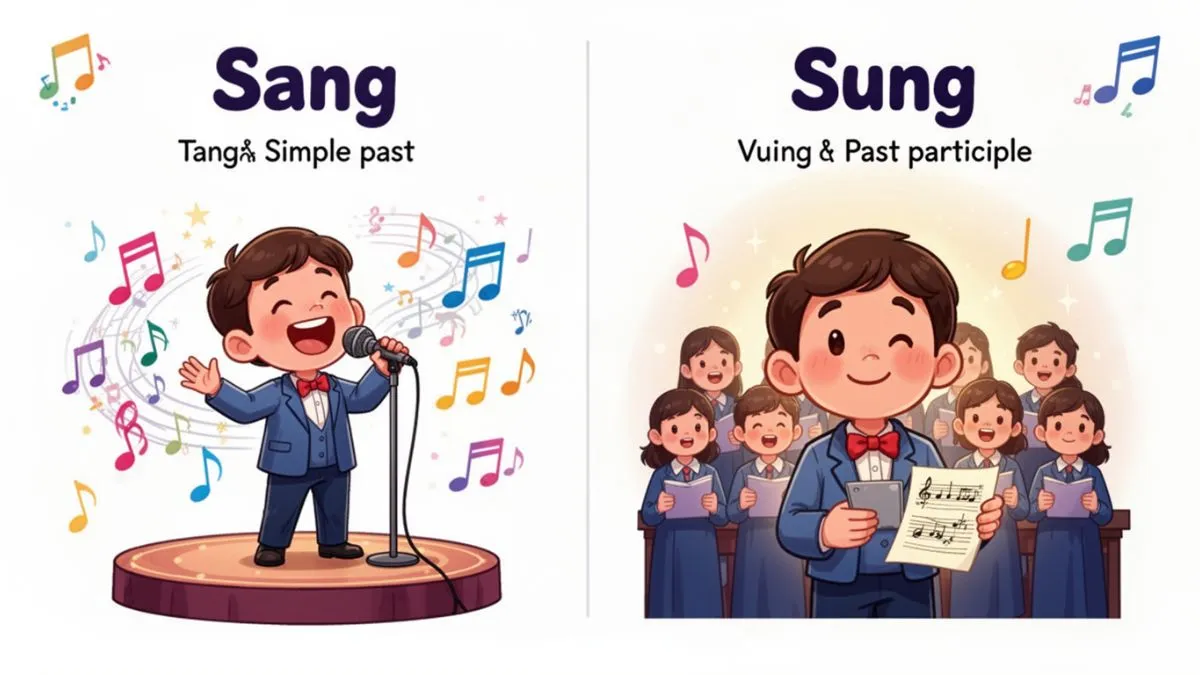
Sang is the simple past tense of “sing.”
Sung is the past participle and must be used with a helping verb like “has,” “have,” or “had.”
Examples:
She sang a beautiful song.
She has sung that song before.
The Origin of Sang Or Sung
The words Sang and Sung come from Old English. The base verb “sing” comes from the Old English word singan. English has strong verbs that change vowels to show tense. This pattern is called vowel gradation.
Sing → Sang → Sung
This pattern is similar to:
- Ring → Rang → Rung
- Drink → Drank → Drunk
Over time, English kept these vowel changes instead of adding “-ed.” That is why we do not say “singed” for the past of sing (because “singed” has a different meaning).
British English vs American English Spelling
Good news: There is no spelling difference between British and American English for Sang Or Sung. Both forms are the same in the US and the UK.
The grammar rules are also the same.
Examples
American English:
She sang the national anthem.
He has sung in many concerts.
British English:
She sang at the festival.
He has sung in the choir.
Comparison Table
| Base Verb | Past Simple | Past Participle | US English | UK English |
| Sing | Sang | Sung | Same | Same |
Which Spelling Should You Use?
Your choice depends on grammar, not country.
- Use Sang for simple past actions.
- Use Sung with helping verbs (has, have, had).
For US audiences: Follow the same grammar rule.
For UK/Commonwealth audiences: Follow the same grammar rule.
For global writing: Use correct tense structure.
If you remove “has,” “have,” or “had” and the sentence sounds wrong, you probably need Sang.
Common Mistakes with Sang Or Sung
Here are frequent errors people make:
❌ She has sang a song.
✅ She has sung a song.
❌ He sung yesterday at school.
✅ He sang yesterday at school.
❌ They have sang together.
✅ They have sung together.
Remember:
No helping verb? → Use Sang
Helping verb present? → Use Sung
Sang Or Sung in Everyday Examples
Here is how these words appear in daily life:
In Emails
“I sang at the event last night.”
“I have sung at three weddings this year.”
In News
“The artist sang live on stage.”
“The singer has sung for over 20 years.”
On Social Media
“She sang her heart out!”
“I have sung this song all week!”
In Formal Writing
“The choir sang beautifully.”
“The anthem has been sung at every ceremony.”
Sang Or Sung – Google Trends & Usage Data
Search data shows that many people type “Sang Or Sung” because they are unsure about tense rules. English learners in countries like the United States, United Kingdom, India, and Pakistan often search this phrase.
The confusion usually appears in:
- School homework
- Business emails
- Song lyrics
- Social media captions
Most grammar tools also flag “has sang” as incorrect. This shows that “Sung” is strongly linked to perfect tense structures worldwide.
Sang Or Sung – Comparison Table
| Feature | Sang | Sung |
| Verb Type | Past Simple | Past Participle |
| Needs Helping Verb? | No | Yes |
| Example | She sang yesterday. | She has sung before. |
| Grammar Level | Basic past | Perfect tense |
FAQs About Sang Or Sung
1. Is “Sung” correct without has or have?
No. “Sung” needs a helping verb like has, have, or had.
2. Is “Sang” past tense?
Yes. “Sang” is the simple past tense of sing.
3. Why do people confuse Sang Or Sung?
Because both describe past actions and look similar.
4. Is “Has sang” correct?
No. The correct form is “Has sung.”
5. Is there a British vs American difference?
No. Both use the same grammar rules.
6. What is the full verb form of sing?
Sing – Sang – Sung.
7. Can I say “I sung yesterday”?
No. The correct sentence is “I sang yesterday.”
Conclusion
Understanding Sang Or Sung is simple once you know the tense rule. The key difference is grammar structure. Sang is used for simple past actions that happened at a specific time. Sung is used with helping verbs like has, have, or had. This small difference makes your writing clearer and more professional.
There is no spelling difference between American and British English. The rule is the same everywhere. If your sentence includes a helping verb, choose Sung. If it does not, choose Sang. When in doubt, check if the sentence sounds complete without a helper verb. If it sounds wrong, you likely need Sung.
By following this easy guide, you can avoid common grammar mistakes in emails, exams, and daily writing. Now you can confidently choose the correct word every time.

I am James Patterson, one of the world’s bestselling authors, known for fast-paced thrillers like the Alex Cross, Women’s Murder Club, and Maximum Ride series that have captivated millions of readers worldwide. I share my passion for storytelling and writing expertise with readers through my work and also feature insights on my site grammlyx.com, where great writing meets creativity.