You may have seen both Reoccurring Or Recurring in writing. At first glance, they look similar. Still, they do not always mean the same thing. This creates confusion for students, writers, and professionals.
People search for Reoccurring Or Recurring to find the correct word. They want to write clearly in emails, reports, and online content. A small spelling mistake can change meaning or reduce trust in your writing.
In daily use, these words appear in schedules, billing, and events. For example, meetings can happen again and again. Payments can repeat every month. In such cases, choosing the right word is important.
Many people think both words mean the same, but “recurring” is the correct choice in most situations. The word reoccurring exists, but it is rarely needed.
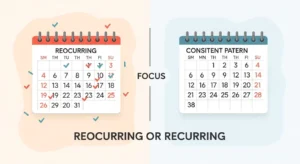
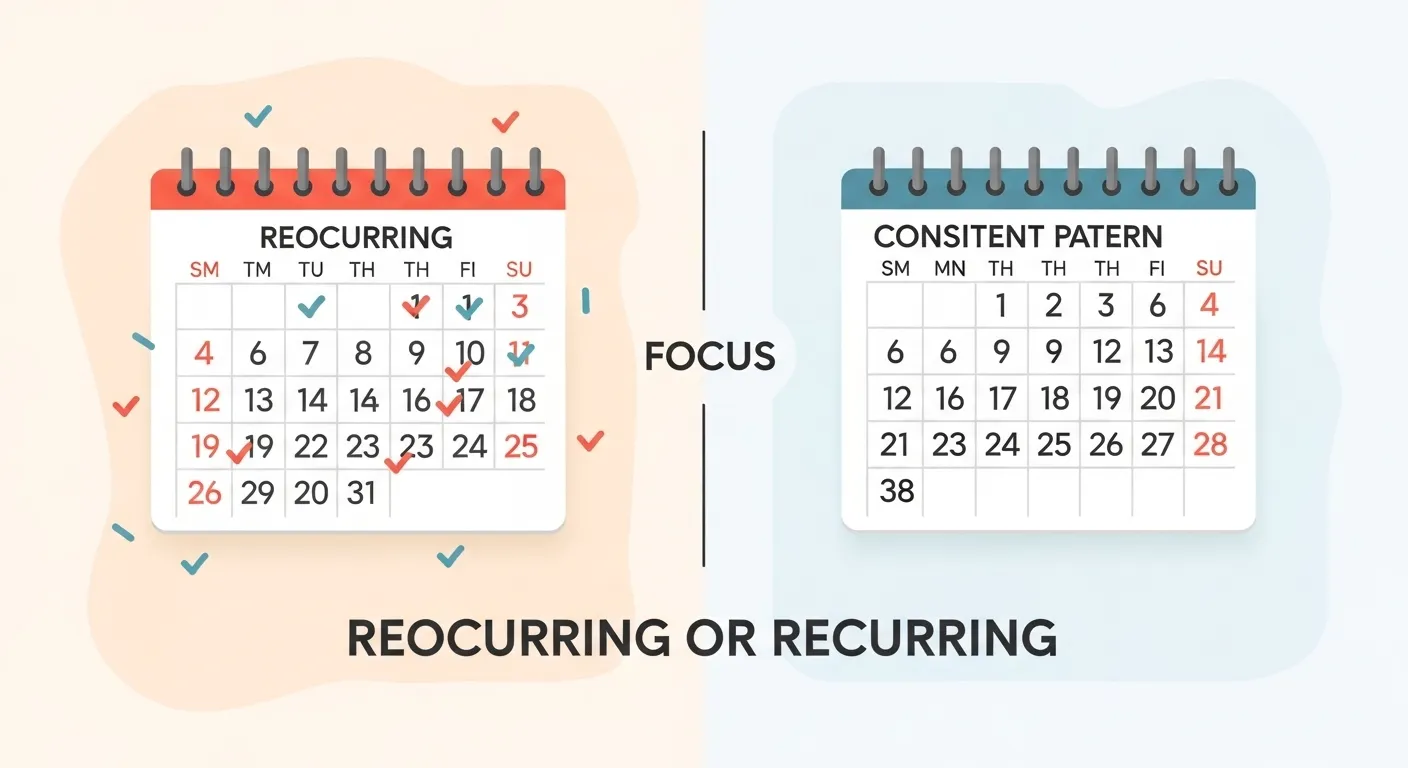
The key difference is simple: “recurring” means happening repeatedly, while “reoccurring” means happening again after stopping. This guide will help you understand and use both terms correctly.
Reoccurring Or Recurring – Quick Answer
The terms Reoccurring Or Recurring are related but not identical.
- Recurring – Something that happens again and again, regularly.
- Reoccurring – Something that happens again after it stopped.
In most writing, “recurring” is the correct and preferred word.
Examples:
- The company has a recurring monthly payment plan.
- The issue is reoccurring after a long break.
The Origin of Reoccurring Or Recurring
Both words come from the root word “occur,” which means to happen.
- Recurring comes from the Latin “recurrere,” meaning “to run back” or repeat.
- Reoccurring combines “re-” (again) and “occurring” (happening).
Over time, recurring became more common in everyday English. It is widely used in business, finance, and general writing.
In contrast, reoccurring stayed rare. It appears only when something happens again after a pause.
British English vs American English Spelling
The difference in Reoccurring Or Recurring is not about region. Both British and American English prefer recurring.
Spelling Comparison
| Context | American English | British English |
| Repeated events | Recurring | Recurring |
| Rare repeated event after stop | Reoccurring | Reoccurring |
Both regions strongly favor “recurring” for regular repetition.
Which Spelling Should You Use?
Choosing between Reoccurring Or Recurring depends on meaning.
If something happens on a regular schedule, use recurring. This is the most common case.
If something happens again after stopping for a while, you may use reoccurring.
For global audiences, recurring is the safest and clearest option.
In professional writing, “recurring” is almost always the correct choice.
Common Mistakes with Reoccurring Or Recurring
Writers often confuse Reoccurring Or Recurring.
1. Using “reoccurring” for regular events
Incorrect: recurring payments called reoccurring payments
Correct: recurring payments
2. Thinking both words are identical
They have slightly different meanings.
3. Overusing “reoccurring”
This word is rare and not needed in most cases.
Correct example:
- We have a recurring meeting every Monday.
Incorrect example:
- We have a recurring meeting every Monday.
Reoccurring Or Recurring in Everyday Examples
The terms Reoccurring Or Recurring appear in daily communication.
“Please review the recurring invoice for this month.”
News
“The city faces a recurring traffic problem during rush hours.”
Social Media
“Set a recurring reminder so you don’t miss the event!”
Formal Writing
“The system detected a recurring error in the process.”
Reoccurring Or Recurring – Google Trends & Usage Data
Search data shows that recurring is far more popular than reoccurring.
Countries like the United States, the United Kingdom, and Canada prefer recurring in business and daily use.
Reoccurring appears rarely and usually in specific contexts where something happens again after a gap.
Online usage clearly shows that “recurring” dominates in SEO and professional writing.
Keyword Variation Comparison
| Keyword Variation | Meaning | Usage Level |
| Recurring | Repeating regularly | Very high |
| Reoccurring | Happening again after stop | Low |
| Recurring Payment | Monthly/regular billing | Very high |
| Reoccurring Issue | Problem returns after pause | Low |
FAQs About Reoccurring Or Recurring
1. Are Reoccurring And Recurring The Same?
No. Recurring means repeated regularly, while reoccurring means happening again after a break.
2. Which Word Is More Common?
Recurring is much more common in modern English.
3. Is Reoccurring Wrong?
No. It is correct but rarely used.
4. What Should I Use For Monthly Payments?
Use recurring payments.
5. Why Do People Confuse These Words?
They look similar and share the same root word.
6. Is Recurring Better For SEO?
Yes. Recurring has higher search volume and is widely used online.
7. Can I Always Use Recurring?
In most cases, yes. It works for regular and repeated actions.
Conclusion:
The confusion around Reoccurring Or Recurring is common, but the solution is simple. Both words come from the same root, yet their meanings differ slightly.
Recurring refers to something that happens again and again on a regular basis. This includes payments, meetings, and events. It is widely used in business, education, and online content.
On the other hand, reoccurring describes something that happens again after it stopped for some time. This meaning is more specific and less common in daily writing.
For most situations, especially in professional and digital content, recurring is the best choice. It is clear, simple, and widely accepted across regions.
The key takeaway is this: use “Recurring” for regular repetition and choose “Reoccurring” only for rare cases of return after a pause.
By understanding the difference, you can improve clarity, avoid mistakes, and write with confidence every time you use Reoccurring Or Recurring.

I am James Patterson, one of the world’s bestselling authors, known for fast-paced thrillers like the Alex Cross, Women’s Murder Club, and Maximum Ride series that have captivated millions of readers worldwide. I share my passion for storytelling and writing expertise with readers through my work and also feature insights on my site grammlyx.com, where great writing meets creativity.