When it comes to writing or speaking, choosing the right word can be tricky. Many English learners and even native speakers often wonder to use “purposely” or “purposefully.”
Both words seem similar, but subtle differences in meaning, usage, and regional preferences can cause confusion.
Understanding these differences is essential for writing emails, formal documents, or casual messages correctly.
People search for “purposely or purposefully” because they want a quick, definitive answer: which one fits better in a sentence? Should it be used in formal writing or casual conversation?
Does it matter if you are writing in the US or the UK? This article clears up all these doubts, giving you examples, spelling rules, and practical advice.
By the end, you’ll be confident using the right word in any situation, avoiding common mistakes, and understanding the subtle nuances that make your English sound polished and professional.
Purposely or Purposefully – Quick Answer
Quick Answer:
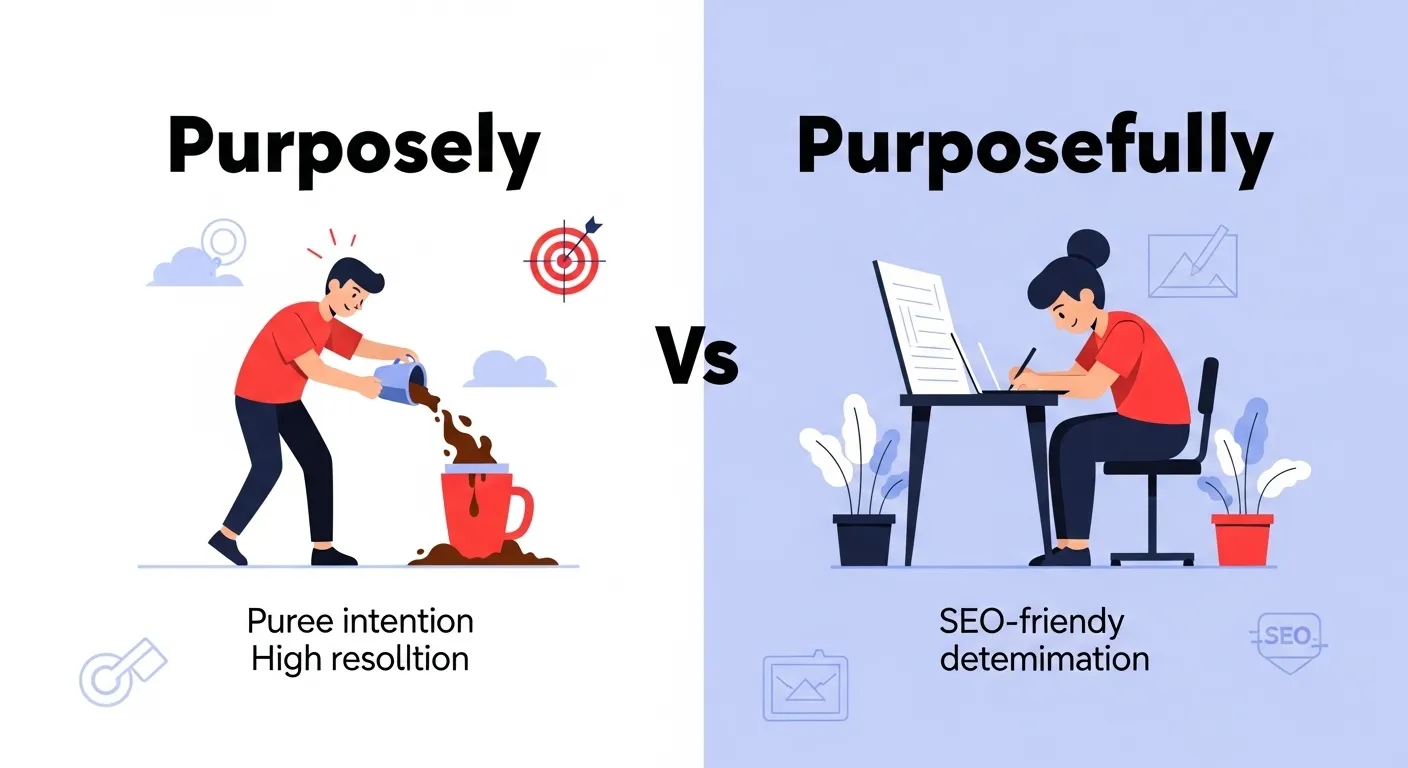
- Purposely is usually used to indicate that someone did something intentionally or on purpose.
- Purposefully often describes doing something with a sense of purpose or determination, highlighting intent and seriousness.
Examples:
- She purposely left the meeting early to avoid a long discussion.
- He walked purposefully toward the podium, ready to give his speech.
The Origin of Purposely or Purposefully
The word “purposely” comes from the noun “purpose” + “-ly”, meaning “in a deliberate manner.” Its use dates back to Middle English and has traditionally meant “intentionally.”
“Purposefully” is a more modern derivation, combining “purpose” with “-fully”, implying “full of purpose” or “with determination.” The difference in endings leads to subtle distinctions in tone: -ly focuses on deliberate action, while -fully emphasizes intent and dedication.
Spelling differences exist because English borrows from both Latin and Germanic roots. Over time, variations arose in style guides and dictionaries, particularly between American and British English.
British English vs American English Spelling
| Word | British English | American English | Notes |
| Purposely | ✔ Common | ✔ Common | Preferred in casual or legal contexts |
| Purposefully | ✔ Less common | ✔ Common | Often used in formal or professional writing |
Explanation:
- In British English, purposely is more frequently used in everyday writing.
- In American English, both are acceptable, but purposefully is often favored in formal or motivational contexts.
Which Spelling Should You Use?
- US audience: Both words are correct. Use purposefully for formal or professional writing, purposely for casual or legal contexts.
- UK/Commonwealth audience: Purposely is more widely accepted; purposefully may sound formal or uncommon.
- Global audience: Consider your tone. For determined or serious actions, purposefully is better; for simple intentional actions, purposely is fine.
Common Mistakes with Purposely or Purposefully
- Incorrect: She purposefully spilled coffee by accident.
Correct: She purposely spilled coffee by accident. - Incorrect: He walked purposely to show his determination.
Correct: He walked purposefully to show his determination. - Confusing the words in casual conversation is common; remember: purposely = intentional, purposefully = determined.
Purposely or Purposefully in Everyday Examples
- Email: Please don’t purposely ignore these instructions.
- News: Protesters purposefully gathered at City Hall to make their voices heard.
- Social Media: She purposefully ignored the troll comments to stay positive.
- Formal Writing: The team worked purposefully toward achieving their annual targets.
Purposely or Purposefully – Google Trends & Usage Data
According to Google Trends:
- Purposely peaks in legal and casual contexts, especially in the UK, India, and Australia.
- Purposefully is more searched in the US, particularly for motivational content, business, and education.
| Word | Peak Usage Country | Context |
| Purposely | UK | Legal, casual |
| Purposefully | US | Professional, motivational |
Keyword Comparison Table
| Feature | Purposely | Purposefully |
| Meaning | Done intentionally | Done with determination |
| Tone | Neutral | Formal or serious |
| Common Audience | UK, casual | US, formal |
| Example | She purposely missed the call. | He purposefully approached the stage. |
FAQs about Purposely or Purposefully
- Are “purposely” and “purposefully” interchangeable?
Sometimes, yes, but consider tone and context. - Which word is better for formal writing?
Purposefully is preferred for professional or motivational writing. - Can I use purposely in emails?
Yes, especially for casual or instructional emails. - Is there a US vs UK difference?
Yes, UK favors purposely, US uses both but prefers purposefully for formal tone. - Does “purposefully” mean the same as “on purpose”?
Almost, but “purposefully” emphasizes determination rather than mere intention. - Which word is more common in everyday conversation?
Purposely is more common in casual speech. - Can I use purposefully for mistakes?
Only if the action shows deliberate determination; otherwise, use purposely.
Conclusion:
Choosing between purposely and purposefully depends on your audience, tone, and intention.
If you want to express a simple deliberate action, purposely works perfectly. If you want to convey determination, seriousness, or deliberate effort, purposefully is the better choice.
Remember, regional preferences matter: in the UK, purposely dominates; in the US, purposefully is common in formal writing.
Understanding these subtle differences will make your writing clearer, professional, and precise.
By applying the examples and rules above, you’ll no longer hesitate when writing emails, reports, or social posts. With the right word, your message will always hit the intended tone.

I am John Grisham, a bestselling author known for thrilling legal dramas that captivate millions. Discover more about my work at my site, Grammlyx.com.