Have you ever stopped while writing and wondered, “Is it Practise Or Practice?” You are not alone.
Many people search this keyword because both words look almost the same. The confusion becomes even stronger when writing emails, school papers, blog posts, or professional content.
One spelling seems right in one country, while the other appears correct somewhere else.
If you use the wrong version for your audience, your content may look unprofessional. That is why understanding the difference between Practise Or Practice is important.
In this guide, you will get a quick answer, clear examples, spelling rules, history, common mistakes, and usage tips. By the end, you will know exactly which spelling to use and when.
Practise Or Practice – Quick Answer
The difference depends on British English and American English.
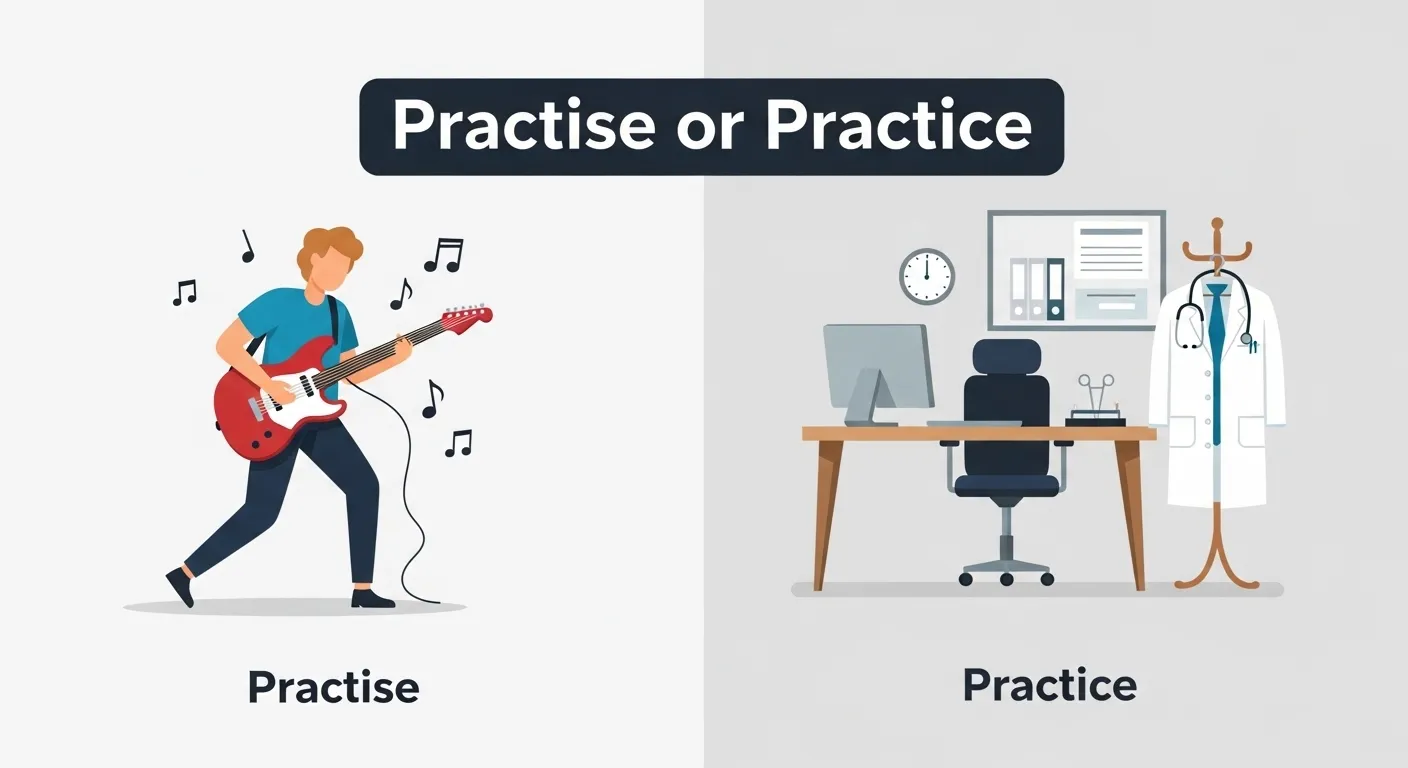
- In British English, Practice is a noun and Practise is a verb.
- In American English, Practice is used for both noun and verb.
Examples:
She goes to football practice every day.
You must practise speaking English daily.
The Origin of Practise Or Practice
Both words come from the Latin word practicare, which means “to perform” or “to carry out.” The word later moved into Old French as pratique. From there, it entered English.
In early English, spelling was not fixed. Over time, British English kept two forms:
- Practice (noun)
- Practise (verb)
American English later simplified the spelling. Influenced by spelling reforms, Americans chose Practice for both forms. That is why today the spelling difference exists mainly between the UK and the US.
British English vs American English Spelling
In the UK and many Commonwealth countries, spelling rules separate noun and verb forms. In the US, one spelling works for both.
| Usage Type | British English | American English |
| Noun | Practice | Practice |
| Verb | Practise | Practice |
Example (UK):
- This law practice is famous.
- I practise law in London.
Example (US):
- This law practice is famous.
- I practice law in New York.
Countries like United Kingdom, Australia, and New Zealand follow the British rule. The United States follows the American rule.
Which Spelling Should You Use?
It depends on your audience.
- Writing for a US audience? → Use Practice for both forms.
- Writing for a UK or Commonwealth audience? → Use Practice (noun) and Practise (verb).
- Writing for a global audience? → Choose one style and stay consistent.
If you run a website, blog, or business, match your spelling with your target country. Consistency builds trust and looks professional.
Common Mistakes with Practise Or Practice
Here are frequent errors:
- Using Practise in American writing.
❌ I practise soccer every day.
✅ I practice soccer every day. - Using Practice as a verb in British English.
❌ I will practice piano tonight. (UK context)
✅ I will practise piano tonight. - Mixing both styles in one article.
Always choose one spelling system and stick with it.
Practise Or Practice in Everyday Examples
Email:
- Please practise the presentation before the meeting. (UK)
- Please practice the presentation before the meeting. (US)
News:
- The doctor opened a new medical practice.
Social Media:
- Practice makes perfect!
Formal Writing:
- She runs a legal practice in the city.
Practise Or Practice – Google Trends & Usage Data
Search data shows that Practice is more common worldwide. This is because American English has a strong global influence online.
- In the United States, “Practice” dominates.
- In the United Kingdom, both forms appear, depending on grammar use.
- In countries following British English education systems, both spellings are used correctly based on noun or verb form.
For SEO, many websites prefer Practice because of higher global search volume. However, local SEO should match local spelling rules.
Comparison Table – Practise Or Practice
| Feature | Practise | Practice |
| Word Type (UK) | Verb | Noun |
| Word Type (US) | Not used | Noun & Verb |
| Region | UK/Commonwealth | US & Global |
| Example | I practise daily. | I go to practice. |
FAQs About Practise Or Practice
1. Is Practise correct in American English?
No. American English uses “Practice” for both noun and verb.
2. Why does British English use two spellings?
Because it separates noun and verb forms.
3. Is Practice always correct?
Yes in American English. In British English, only for nouns.
4. How can I remember the difference?
In British English, verbs often end in “-ise.”
5. Which spelling is better for SEO?
It depends on your target audience location.
6. Do exams mark it wrong?
Yes, if you use the wrong version for the required English style.
7. Is Canadian English British or American?
Canadian English often follows British spelling but may accept both forms.
Conclusion:
Understanding Practise Or Practice is simple once you know the rule. The difference mainly depends on location. In British English, “Practice” is a noun and “Practise” is a verb.
In American English, “Practice” works for both forms.
This small spelling change can make a big difference in writing quality.
If you are a student, blogger, business owner, or professional writer, correct spelling shows care and credibility.
Always think about your audience before choosing a spelling style. If your readers are in the United States, use “Practice.” If they are in the United Kingdom or other Commonwealth countries, follow the noun-verb rule.
The key is consistency. Pick one style and use it throughout your content. Now you can confidently write without second guessing yourself.

I am James Patterson, one of the world’s bestselling authors, known for fast-paced thrillers like the Alex Cross, Women’s Murder Club, and Maximum Ride series that have captivated millions of readers worldwide. I share my passion for storytelling and writing expertise with readers through my work and also feature insights on my site grammlyx.com, where great writing meets creativity.