When it comes to the words “mold” and “mould”, many people get confused. Are they different words, or just different spellings? Understanding the distinction matters for writing correctly in emails, articles, and formal documents.
People search for this keyword because they want clarity on which spelling is appropriate in American English versus British English, and when both can be used.
This article clears the confusion by explaining the differences, showing examples, and offering guidance on correct usage in various contexts. By the end,
you will know not just which spelling to use, but also why the difference exists and how to avoid common mistakes.
if you’re a student, writer, or professional, this guide will make your writing clear, consistent, and Correct.
Mold or Mould – Quick Answer
Quick Answer:
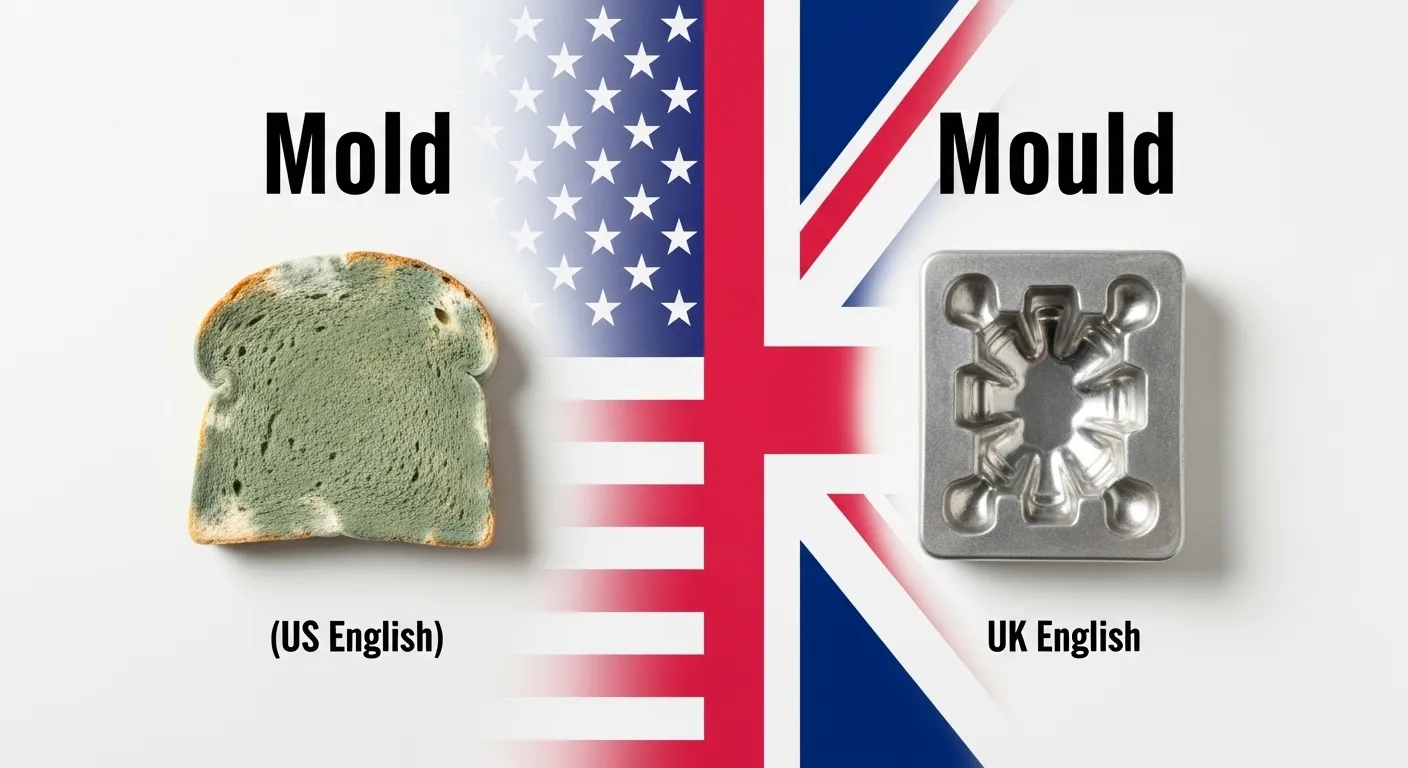
- Mold → Preferred in American English for both fungi and shaping materials.
- Mould → Preferred in British English for the same meanings.
Examples:
- The bread had green mold growing on it.
- She used a chocolate mould to shape the candies.
Examples of Mold or Mould Usage
- Food context: The cheese developed blue mold/mould.
- Shaping materials: The clay is poured into a decorative mold/mould.
The Origin of Mold or Mould
The word comes from Old English “molde”, meaning earth or soil. Over time, spelling evolved differently in America and Britain:
- Mold → Simplified spelling in the United States.
- Mould → Traditional British spelling retained.
This is why dictionaries often list both versions, but the usage depends on the audience.
British English vs American English Spelling
| Feature | American English | British English |
| Fungi | Mold | Mould |
| Shaping/Forms | Mold | Mould |
| Common Use | USA | UK, Australia, Canada |
| Example Sentence | The bathroom has mold on the walls. | The bathroom has mould on the walls. |
Which Spelling Should You Use?
- Use “mold” if writing for an American audience.
- Use “mould” if writing for a British or Commonwealth audience.
- Global content: Choose based on the majority of your readers or be consistent throughout.
Common Mistakes with Mold or Mould
- Mixing spellings in the same document → ❌ Incorrect: “The bread had mould growing, and mold smelled bad.” ✅ Correct: “The bread had mold growing.”
- Using mold/mould only for fungi → Remember it also refers to shaping materials like chocolate or clay.
- Ignoring context → Always match spelling to your audience’s English variant.
Mold or Mould in Everyday Examples
- Email: “Please check the bathroom for mold before the inspection.”
- News: “A mold outbreak has affected local cheese factories.”
- Social Media: “Look at the mold on my old sandwich! 🤢”
- Formal Writing: “The chocolate was poured into a decorative mould for presentation.”
Mold or Mould – Google Trends & Usage Data
Data shows:
- “Mold” dominates in the United States, especially in health, construction, and cooking topics.
- “Mould” dominates in the UK, Australia, Canada, and other Commonwealth countries.
- Searches spike in spring and autumn when humidity causes fungi growth.
Comparison Table
| Word | Region | Meaning | Example |
| Mold | US | Fungus / Shape | Mold on bread / Chocolate mold |
| Mould | UK | Fungus / Shape | Mould on bread / Chocolate mould |
FAQs
1. Is mold the same as mould?
Yes, both refer to fungi or shaping forms; spelling differs by region.
2. Can I use mold in UK English?
Technically yes, but mould is preferred in formal UK writing.
3. What is the plural of mold/mould?
Molds (US) and moulds (UK).
4. Is mold toxic?
Some molds can produce toxins, so avoid inhaling or ingesting them.
5. Can mold refer to a form for casting?
Yes, both “mold” and “mould” are used for shaping materials.
6. Why do Americans use mold and Brits use mould?
It’s a historical spelling difference; Americans simplified many English spellings in the 19th century.
7. Which spelling should I use online?
Match your audience: American content → mold; British/Commonwealth → mould.
Conclusion
The words mold and mould are essentially the same, but their spelling depends on regional English. Americans use mold, while British and Commonwealth countries use mould. Both refer to fungi and shaping forms, but consistency is key. Avoid mixing spellings in the same text, and always consider your audience. Using the correct variant improves readability and professionalism.writing emails, articles, or social media posts, remembering this simple rule ensures your writing is clear, credible, and region-appropriate.
By understanding the origin, differences, and usage examples, you can confidently choose the right spelling every time.

I’m Jim Butcher, and this is my site, Grammlyx.com, where I share my work as an author. I am an expert in my craft, dedicated to delivering the best content.