When it comes to English spelling, some words often confuse writers, and “loses or looses” is one of them.
People frequently search for this term because misusing it can change the meaning of a sentence entirely.
For example, “loses” and “looses” sound similar but are used differently. If you’re writing emails, essays, social media posts, or professional documents, knowing the correct spelling ensures clarity and professionalism.
In this article, we will explain the differences, origins, and common mistakes associated with “loses or looses”. By the end, you’ll know exactly which spelling to use in any situation, why it matters, and how native speakers distinguish between them.
Loses or Looses – Quick Answer
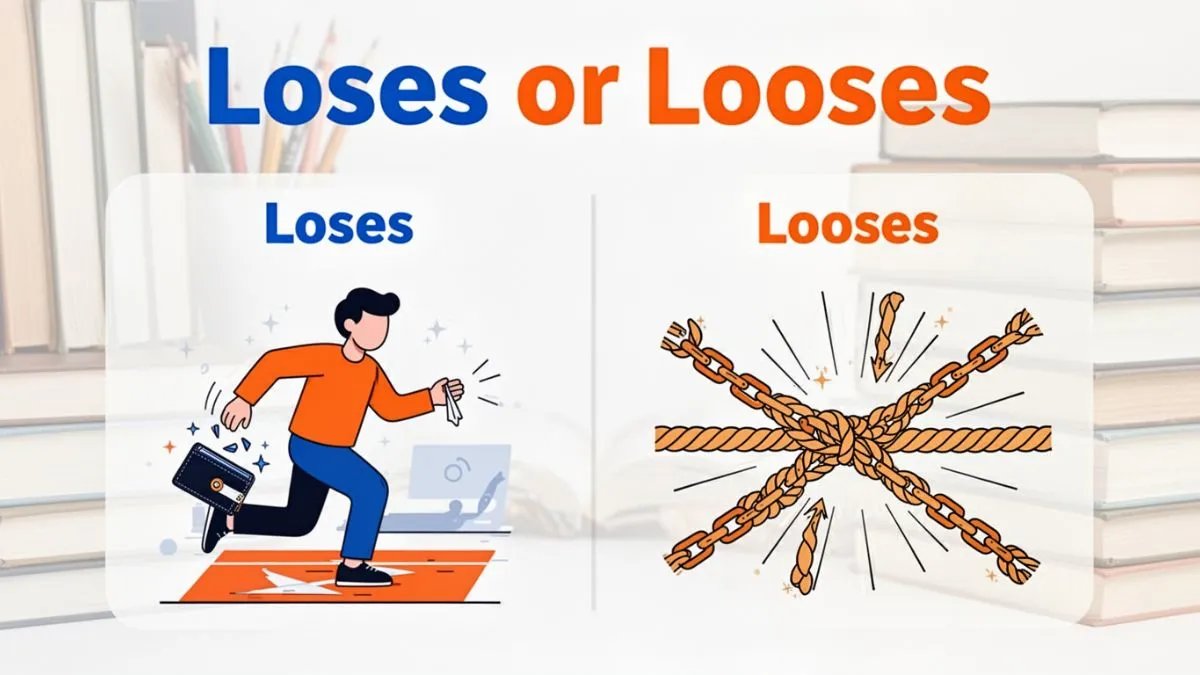
- Loses – Third person singular of the verb “to lose.”
- Looses – Third person singular of the verb “to loose,” meaning to release or set free.
Examples:
- She loses her keys every morning.
- The dog looses from its leash and runs into the yard.
The Origin of Loses or Looses
- Loses: Comes from Old English losian, meaning “to be destroyed or perish.” It has been part of English for centuries as the correct verb form of “lose.”
- Looses: Derives from Old English losian as well, but in the sense of “to release or untie.” Over time, English distinguished “lose” (misplace/fail) from “loose” (set free).
The confusion arises because both words evolved from similar roots but ended up with different meanings and spellings in Modern English.
British English vs American English Spelling
Both spellings exist in both US and UK English, but usage differs slightly.
| Word | Meaning | US Usage | UK Usage |
| Loses | Misplaces or fails | ✅ Common | ✅ Common |
| Looses | Releases or sets free | ✅ Less common | ✅ Less common |
In general, Americans and Brits both use loses for “fails or misplaces,” while looses is rare and mostly formal or literary.
Which Spelling Should You Use?
- Use “loses” if you mean someone misplaces something or fails at an activity.
- Use “looses” if you mean something is released, untied, or set free.
Audience Advice:
- For emails, blogs, and daily communication → almost always loses.
- For formal writing, literature, or historical contexts → looses may appear.
Common Mistakes with Loses or Looses
- Incorrect: He looses his wallet every day.
Correct: He loses his wallet every day. - Incorrect: The captain loses the prisoners.
Correct: The captain looses the prisoners. - Confusing past tense: “He lost/loosed” → Remember, past tense of lose is lost, past tense of loose is loosed.
Loses or Looses in Everyday Examples
- Emails:
“She loses track of deadlines frequently.” - News:
“The team loses the championship after a close match.” - Social Media:
“My dog looses the leash too often!” - Formal Writing:
“The prisoner looses his grip on the ropes during the escape scene.”
Loses or Looses – Google Trends & Usage Data
- “Loses” is far more popular globally. Searches peak in the US, UK, Canada, and Australia.
- “Looses” appears mostly in literary or historical contexts, rarely in everyday search.
- Context matters: Misuse of looses in modern writing can trigger grammar corrections.
Keyword Comparison Table
| Word | Meaning | Example |
| Loses | Misplaces or fails | She loses her keys. |
| Looses | Releases or sets free | He looses the hounds. |
FAQs about Loses or Looses
- Q: Can I use “looses” instead of “loses”?
A: Only if you mean “releases” or “sets free.” Otherwise, use loses. - Q: What is the past tense of loses?
A: The past tense is lost. - Q: Is “looses” common in US English?
A: No, it is less common and often literary. - Q: How do I remember the difference?
A: Think: lose = fail/misplace, loose = free/release. - Q: Are there other confusing words like loses/looses?
A: Yes, like “advice/advise” or “practice/practise.” - Q: Can “looses” ever be used in everyday writing?
A: Rarely; it’s mostly formal, historical, or literary. - Q: Why do people confuse loses and looses?
A: Both sound similar, but meanings are distinct. Mishearing leads to errors.
Conclusion:
The correct use of loses or looses depends entirely on meaning. Use loses when referring to misplacing, failing, or not winning something.
Use looses when describing something being released, untied, or freed. Most modern writing requires loses, while looses is rare and mostly formal.
Understanding these differences prevents embarrassing mistakes in professional and casual contexts. Remembering the origin and meaning of each word can make your writing clearer and more credible.
By mastering this simple distinction, you ensure accurate communication and avoid common spelling errors. If writing emails, reports, or social media posts, applying this knowledge improves readability and professionalism.

I am John Grisham, a bestselling author known for thrilling legal dramas that captivate millions. Discover more about my work at my site, Grammlyx.com.