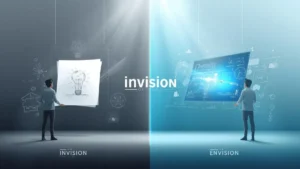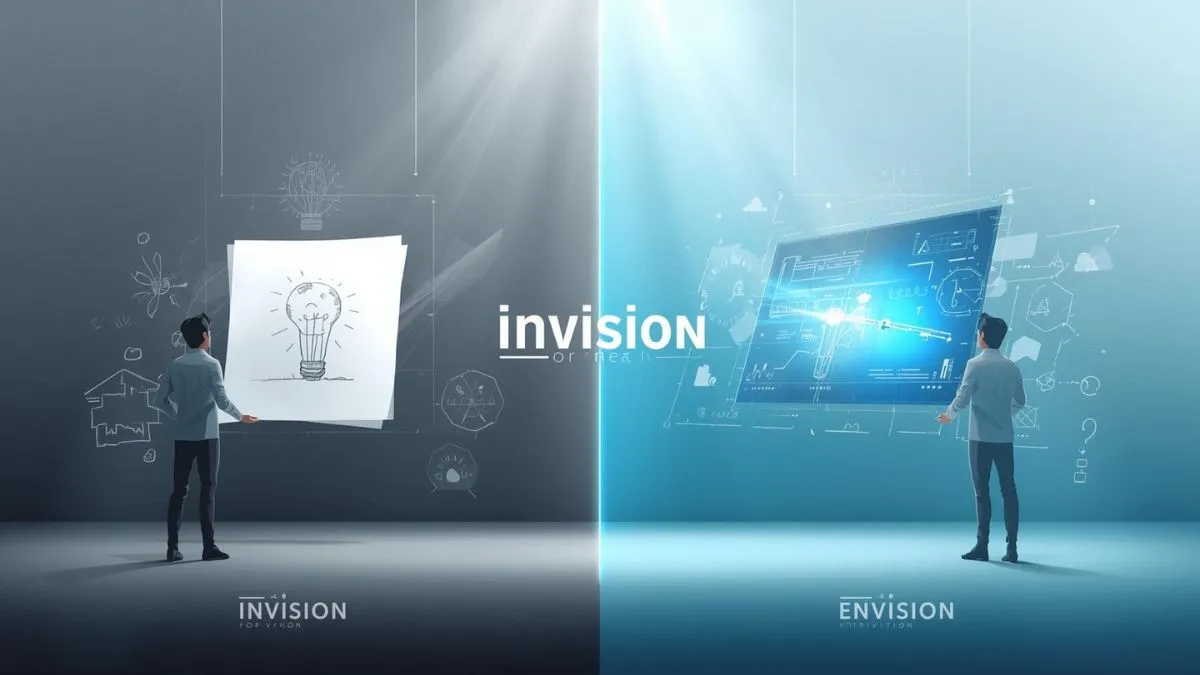
Have you ever wondered the correct spelling is invision or envision? Many writers, students, and professionals often get confused between these two terms.
The confusion arises because both words sound identical when spoken, but only one is widely accepted in standard English.
Choosing the wrong spelling can make your writing look unprofessional or incorrect, especially in emails, reports, and academic work.
People search for “invision or envision” to ensure they are using the proper term in writing. Some may also confuse Invision with the name of companies or software products, while others simply need clarity on spelling rules.
This guide will explain the origin of the word, differences in British and American English, common mistakes, and practical usage examples.
By the end, you will confidently know which spelling to use and in what context.
Invision or Envision – Quick Answer
The correct standard spelling is envision. Invision is often considered a misspelling unless it is a proper noun (like a brand name).
Examples:
- She could envision a world without pollution and worked to make it happen.
- The CEO asked the team to envision the company’s future in five years.
The Origin of Invision or Envision
The word envision comes from the combination of “en-”, a prefix meaning “to make” or “to cause,” and “vision”, from the Latin “videre” meaning “to see.”
- History: The term started appearing in the 17th century to describe imagining or visualizing something mentally.
- Why spelling differences exist: Over time, some people mistakenly added an “i” at the beginning, possibly influenced by words like “invade” or “invent”, leading to invision. However, this spelling is not recognized in formal dictionaries.
British English vs American English Spelling
Both British and American English use envision as the correct standard spelling. The variant invision is not standard in either.
| Spelling | Status | Example |
| envision | Standard | She can envision her career growth clearly. |
| invision | Non-standard | Incorrect: She can invision her career growth clearly. |
Note: In rare cases, InVision is a proper noun (like the prototyping software company), but in general text, envision is correct.
Which Spelling Should You Use?
- For US English: Always use envision.
- For UK/Commonwealth English: Envision is still correct, though some older texts may use alternative forms.
- Global Audience: Stick with envision for clarity and professionalism.
Common Mistakes with Invision or Envision
- Using invision in professional or academic writing is considered incorrect.
- Confusing InVision (software/brand) with the verb envision.
- Forgetting the correct pronunciation while spelling the word can cause typos.
Correct vs Incorrect Examples:
- ✅ I can envision our team’s success next year.
- ❌ I can invision our team’s success next year.
Invision or Envision in Everyday Examples
- Emails: “I can envision the new project timeline being successful.”
- News: “The architect envisions a sustainable urban space.”
- Social Media: “Can you envision a world without single-use plastic?”
- Formal Writing: “The researcher envisions a new model for climate action.”
Invision or Envision – Google Trends & Usage Data
Data shows envision is far more popular globally than invision. Searches for invision often relate to software or company names, while envision is used in writing, leadership, and motivational content.
| Keyword | Popularity | Context of Use |
| envision | High | Writing, business, personal growth |
| invision | Low | Brand names, software tools |
FAQs
1. Is it “invision” or “envision”?
Answer: Correct spelling is envision.
2. Can I use “invision” in formal writing?
Answer: No, it is considered a misspelling.
3. Is “InVision” ever correct?
Answer: Yes, only as a proper noun, like the software company InVision.
4. Does British English prefer “invision”?
Answer: No, envision is standard in both British and American English.
5. How do you remember the correct spelling?
Answer: Think of en- + vision → “to make vision” or “to visualize.”
6. Can “envision” be used in business contexts?
Answer: Yes, it’s commonly used to describe future planning and strategy.
7. Are there synonyms for “envision”?
Answer: Yes – imagine, visualize, picture, foresee.
Comparison Table
| Variant | Correct Usage | Example |
| envision | ✅ Standard verb | She can envision her future clearly. |
| invision | ❌ Non-standard/misspelling | Incorrect: She can invision her future clearly. |
| InVision | ✅ Proper noun/brand | InVision software helps design prototypes. |
Conclusion
In conclusion, the correct spelling is envision, while invision should be avoided unless referencing a specific brand.
This distinction is important for clear, professional, and credible writing. in emails, formal reports, or social media, using envision ensures you communicate your ideas accurately.
Remember, envision is universal across British and American English, and it reflects proper usage when talking about imagining, visualizing, or planning for the future.
Avoid common mistakes by checking your spelling and considering the context. Synonyms like imagine or visualize can also help diversify your writing without confusion.
By sticking with envision, you maintain professionalism and clarity in every piece of communication.

I’m Jim Butcher, and this is my site, Grammlyx.com, where I share my work as an author. I am an expert in my craft, dedicated to delivering the best content.