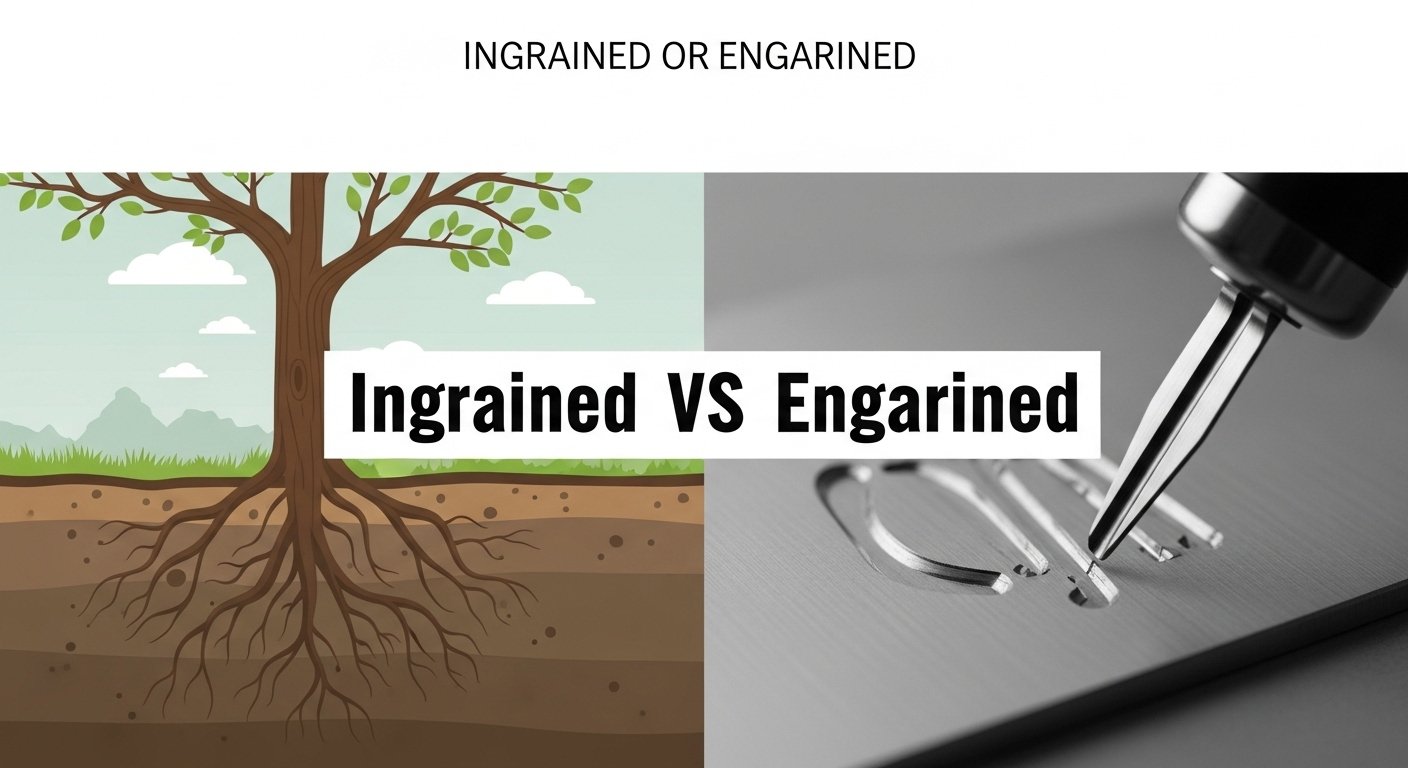
Have you ever paused before writing “Ingrained” or Engrained”? Many people are confused about which spelling is correct.
The truth is, both forms exist, but one is far more common in modern usage. Understanding this difference can help you write confidently, avoid common mistakes, and sound professional in emails, essays, or social media posts.
People search for this keyword because they often see both forms in books, articles, and online content. Knowing which to use will save embarrassment and ensure your writing is accurate.
Let’s explore the differences, origins, and practical guidance on using ingrained or engrained effectively.
Ingrained or Engrained – Quick Answer
The correct and most widely accepted spelling today is ingrained. Engrained is an older form but still occasionally seen in literature.
Examples:
- Her fear of failure was deeply ingrained after years of criticism.
- The tradition of afternoon tea is ingrained in British culture.
The Origin of Ingrained or Engrained
The word comes from the late Middle English “ingrainen”, meaning to implant or fix deeply. Originally, both ingrained and engrained were used interchangeably in English texts. Over time, ingrained became the standard spelling, especially in American and modern British English. The spelling difference arises from the historical influence of French and Old English conventions.
British English vs American English Spelling
Both American and British English recognize ingrained, but engrained is considered archaic in both regions. However, some British dictionaries may list engrained as a variant.
| Feature | Ingrained | Engrained |
| Common in US | ✅ Yes | ❌ Rare |
| Common in UK | ✅ Yes | ⚠️ Rare/archaic |
| Modern usage | ✅ Preferred | ⚠️ Historical |
| Example | His habits are ingrained. | His habits are engrained. |
Which Spelling Should You Use?
- United States: Always use ingrained in writing.
- United Kingdom & Commonwealth countries: Prefer ingrained for modern clarity, though engrained may appear in historical texts.
- Global audience: Stick with ingrained to avoid confusion.
Common Mistakes with Ingrained or Engrained
Many writers mistakenly use engrained thinking it is the “British spelling.” Others might spell it ingrain without the “-ed,” which changes the meaning.
Corrections:
- ❌ She has an engrained habit of checking emails constantly. → ✅ She has an ingrained habit of checking emails constantly.
- ❌ Bad habits get ingrain early. → ✅ Bad habits get ingrained early.
Ingrained or Engrained in Everyday Examples
Emails:
- Our company values are ingrained in every employee’s work ethic.
News articles:
- Racism remains ingrained in some societal structures.
Social media:
- Fitness habits are ingrained after months of consistency.
Formal writing:
- The principles of ethics are ingrained in professional codes.
Ingrained or Engrained – Google Trends & Usage Data
Search data shows ingrained is overwhelmingly more popular than engrained, especially in the US and UK. Social media and academic usage favor ingrained, which confirms it as the preferred modern spelling.
| Keyword | Global Popularity | Notes |
| Ingrained | High | Most searches and usage |
| Engrained | Low | Rare, historical context |
Keyword Variations Comparison
| Variation | Usage | Example |
| Ingrained | Modern, common | Her courage is ingrained. |
| Engrained | Archaic, rare | His loyalty was engrained in old manuscripts. |
FAQs
- Is “engrained” incorrect?
Not technically, but it is archaic. Prefer ingrained. - Can I use “ingrain”?
Only as a verb: “These values ingrain respect in students.” - Which dictionary lists “engrained”?
Some British dictionaries acknowledge it as a variant, but it’s rarely used. - Why are there two spellings?
Historical evolution of English spelling and French influence caused both forms to appear. - Which is better for professional writing?
Always use ingrained for modern, professional clarity. - Is the pronunciation different?
No, both are pronounced the same: /ɪnˈɡreɪnd/. - Does “engrained” appear in literature?
Yes, mostly in texts from the 17th–19th centuries.
Conclusion
In summary, ingrained is the modern, widely accepted spelling, while engrained is historical and rarely used today.Writing for work, school, or online content, using ingrained ensures your writing is clear, professional, and free from spelling confusion.
Remember the quick trick: if unsure, stick with ingrained, and your content will align with modern English conventions worldwide. Avoid dropping the “-ed” or switching to engrained unless referencing historical texts.
With this guidance, you can confidently write sentences like “Respect for teachers is ingrained in our culture” or “Good habits become ingrained over time,” ensuring precision and credibility.
By understanding the origin, spelling differences, and practical usage, you’ll never confuse ingrained with engrained again. Modern usage favors clarity, and this is one case where following the trend makes your writing both correct and respected.

I’m Jim Butcher, and this is my site, Grammlyx.com, where I share my work as an author. I am an expert in my craft, dedicated to delivering the best content.