When writing, you might wonder the sweet golden syrup should be spelled “hunny” or “honey.”
Many people search for this keyword because of confusion caused by informal uses of “hunny” in pop culture, memes, and personal messages, versus the standard English spelling “honey.”
Understanding the difference matters for professional writing, social media, and even recipes.
People often see “hunny” in playful contexts, like cartoon characters or affectionate notes, and assume it is correct.
On the other hand, “honey” is the recognized spelling in dictionaries, books, and formal communication. This article clarifies the spelling, explains its origin, explores regional differences, and provides clear advice for everyday usage.
By the end, you will know exactly when and where to use each form, avoid mistakes, and write confidently whether in the U.S., U.K., or online.
Hunny or Honey – Quick Answer
The correct spelling in standard English is honey.
- Example 1: I drizzled honey over my toast this morning.
- Example 2: She called her little brother “honey” affectionately.
“Hunny” is usually informal, playful, or used for stylistic purposes in media, not standard writing.
The Origin of Hunny or Honey
The word honey comes from the Old English “hunig,” which has been in use for centuries. It originally referred to the sweet substance made by bees. Over time, English spelling standardized to “honey” in dictionaries.
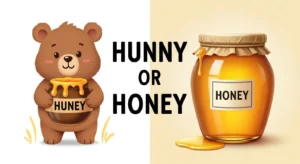
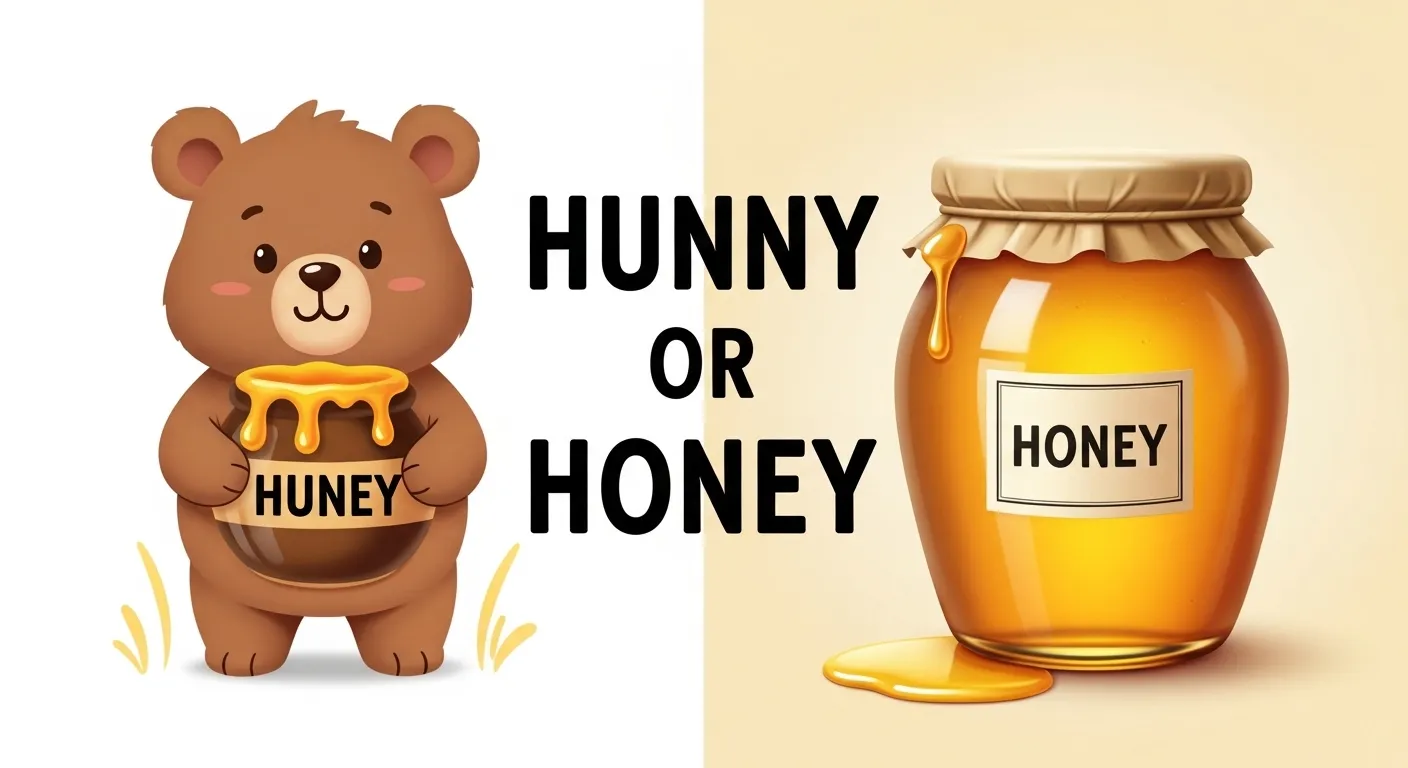
“Hunny” appears in modern culture mainly as a playful or childlike version of the word. For example, Winnie the Pooh often writes “hunny” on his jars, creating a cute, memorable style.
Spelling differences like this happen when informal writing or creative uses break from traditional rules.
British English vs American English Spelling
Interestingly, both British and American English use honey as the correct spelling. “Hunny” is never standard in either.
| Variant | Correct in | Example Sentence |
| Honey | US & UK | I love honey in my tea. |
| Hunny | Informal/Playful | Pooh Bear loves his hunny jars. |
So, the only difference is that hunny is informal and playful, while honey is universally accepted.
Which Spelling Should You Use?
- Professional writing (emails, reports, articles): Always use honey.
- Informal communication (text messages, memes, cartoons): “Hunny” is fine if used playfully.
- Recipes and publications: Stick with honey.
Rule of thumb: If your audience expects standard English, use honey. If your tone is playful or whimsical, “hunny” can add charm.
Common Mistakes with Hunny or Honey
Many writers mistakenly use “hunny” thinking it is correct. Other errors include:
- Honee – ❌ Incorrect spelling.
- Hony – ❌ Missing the “e.”
- Using hunny in formal documents – ❌ Not professional.
✅ Always default to honey unless stylistic reasons dictate otherwise.
Hunny or Honey in Everyday Examples
Emails:
- Correct: Thank you for your help, honey.
- Incorrect: Thank you for your help, hunny.
Social Media:
- Playful: Just grabbed a jar of hunny for breakfast!
- Standard: I love adding honey to my smoothies.
News/Articles:
- Standard: Honey production has increased this year.
- Avoid: Hunny production… ❌
Hunny or Honey – Google Trends & Usage Data
Analysis of Google Trends shows:
- Honey dominates searches globally, especially in the U.S., U.K., and Australia.
- Hunny spikes occasionally around memes, cartoons, and Valentine’s Day posts.
Context matters: If your audience is professional, health-focused, or culinary, use honey. If targeting pop culture fans or playful content, “hunny” may fit.
Comparison Table: Hunny vs Honey
| Feature | Honey | Hunny |
| Correctness | ✅ Standard | ❌ Informal/playful |
| Usage | Professional & everyday | Memes, cartoons, playful |
| Region | Global | Global (informal) |
| Dictionary Entry | ✅ Yes | ❌ No |
| Tone | Neutral | Cute, whimsical |
FAQs
1. Is “hunny” correct English?
No, “hunny” is informal and mainly used playfully. The correct spelling is honey.
2. Can I use “hunny” in professional emails?
No, always use honey for professional communication.
3. Why do people write “hunny”?
It is often used in cartoons, memes, or to add a playful tone.
4. Does British English use “hunny”?
No, British English also uses honey. “Hunny” is informal worldwide.
5. Is “honey” only a food?
No, it can also be a term of endearment or affection.
6. Can “hunny” be used in recipes?
Not recommended. Always use honey in recipes for clarity.
7. How popular is “honey” online?
Globally, “honey” is far more popular than “hunny,” according to search trends and online usage.
Conclusion
In summary, honey is the correct and standard spelling in English for the sweet bee product and as a term of endearment.
Hunny is a playful variant commonly seen in cartoons, social media, or informal messages, but it is not suitable for professional or formal writing.
Understanding when to use each spelling helps avoid embarrassing mistakes, ensures clarity, and maintains professionalism.
If you are writing an article, recipe, email, or social post, default to honey for standard English.
Use “hunny” only for playful, whimsical, or pop culture contexts. By following these guidelines, your writing will look polished, accurate, and audience-appropriate.

I’m Jim Butcher, and this is my site, Grammlyx.com, where I share my work as an author. I am an expert in my craft, dedicated to delivering the best content.