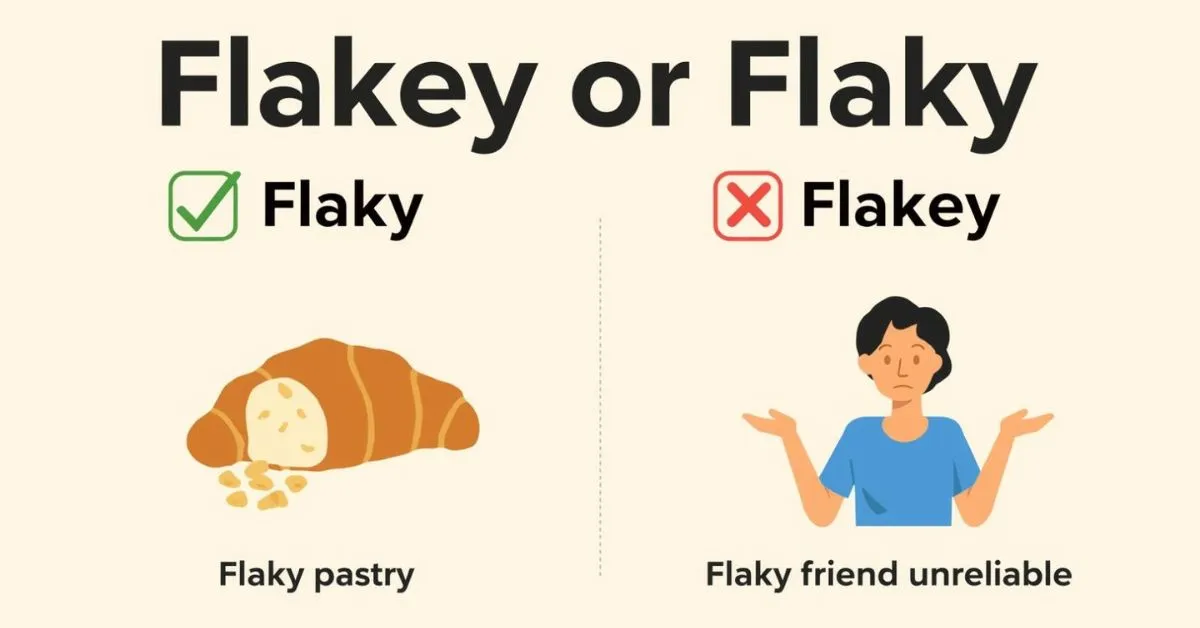
When you see the word Flakey or Flaky, you might pause and wonder which one is right. People search for this keyword because it is commonly misspelled, and both versions are seen online.
Confusion often arises because English spelling rules differ between American and British English, and some words just “look” right but aren’t officially correct.
Knowing the correct spelling matters in writing emails, schoolwork, articles, or social media posts.
In this article, we will clear up the confusion, explain the origin of the word, compare spellings, give real-life examples, and provide professional advice so you always know which form to use.
By the end, you’ll confidently know whether flakey or flaky is appropriate and understand why the difference exists.
Flakey or Flaky – Quick Answer →
The correct spelling in modern English is flaky. “Flakey” is considered a common misspelling, though some people still use it informally.
Examples:
- The croissant was so flaky it melted in my mouth.
- Don’t trust him; he’s a bit flaky with his promises.
The Origin of Flakey or Flaky
The word flaky comes from the noun flake, meaning a thin, flat piece of something. Adding -y turns it into an adjective describing something that easily breaks into flakes.
- History: The word has been in English since the 1600s to describe light, delicate textures.
- Spelling differences: Early English often had flexible spelling. Over time, dictionaries standardized flaky as the correct form, while flakey remained informal or incorrect.
British English vs American English Spelling
The spelling flaky is standard in both British and American English. Flakey is rarely accepted in dictionaries but may appear in informal writing.
| Aspect | Flaky (✅ Correct) | Flakey (❌ Informal/Mistaken) |
| American English | ✅ Preferred | ❌ Not recommended |
| British English | ✅ Preferred | ❌ Rare, informal |
| Common in writing | ✅ Newspapers, books | ❌ Social media, casual notes |
| Formal writing | ✅ Use always | ❌ Avoid |
Which Spelling Should You Use?
- US audience: Always use flaky in formal writing.
- UK/Commonwealth audience: Flaky is also correct; flakey is rarely used.
- Global writing: Stick to flaky for professional and clear communication.
Tip: Only use flakey if quoting informal text or social media posts.
Common Mistakes with Flakey or Flaky
- Writing flakey in a school assignment or professional email. ✅ Correct it to flaky.
- Using flakey as a noun (flake is correct: “a flake of chocolate”).
- Confusing it with flake (noun) vs flaky (adjective).
Examples of corrections:
- ❌ “The pie crust was very flakey.” → ✅ “The pie crust was very flaky.”
- ❌ “He’s a flakey person.” → ✅ “He’s a flaky person.”
Flakey or Flaky in Everyday Examples
Emails:
- “Please don’t be flaky about deadlines.”
News headlines:
- “Meteorologist warns of flaky snow conditions.”
Social media:
- “This cookie is so flaky, I love it!”
Formal writing:
- “The paint formed a flaky texture due to humidity.”
Flakey or Flaky – Google Trends & Usage Data
Search trends show flaky is far more popular than flakey worldwide.
- Top countries searching: US, UK, Canada, Australia
- Context: Recipes, personal behavior descriptions, and technical writing (materials, coatings).
| Keyword Variation | Popularity Index |
| Flaky | 100 |
| Flakey | 15 |
FAQs
1. Is flakey a correct spelling?
No, it is considered a misspelling; flaky is the correct form.
2. Can I use flakey in informal writing?
Yes, but only in casual contexts. Flaky is always safer.
3. What does flaky mean?
It describes something that breaks into thin layers or someone unreliable.
4. Is flaky American or British English?
It is correct in both.
5. How do I remember the correct spelling?
Think of the noun flake + -y, which makes flaky.
6. Can flaky describe food and people?
Yes, it describes textures and behavior.
7. Is flakey used in dictionaries?
Most modern dictionaries mark it as incorrect or informal.
Conclusion
When deciding between flakey or flaky, always choose flaky in professional, formal, and most casual writing. The confusion arises from historical spelling variations, but modern English clearly favors flaky. Whether describing a pastry, paint, or an unreliable friend, using the correct form makes your writing look polished and credible.
Remember: flakey may appear on social media or informal chats, but it is not accepted in official documents, emails, or schoolwork. By sticking to flaky, you avoid common mistakes, ensure clarity, and maintain professionalism. Always check your spelling when in doubt and consider your audience US, UK, or global readers all prefer flaky.
By following these tips, you can confidently write with the right word, impress readers, and avoid embarrassing spelling errors.

I am John Grisham, a bestselling author known for thrilling legal dramas that captivate millions. Discover more about my work at my site, Grammlyx.com.