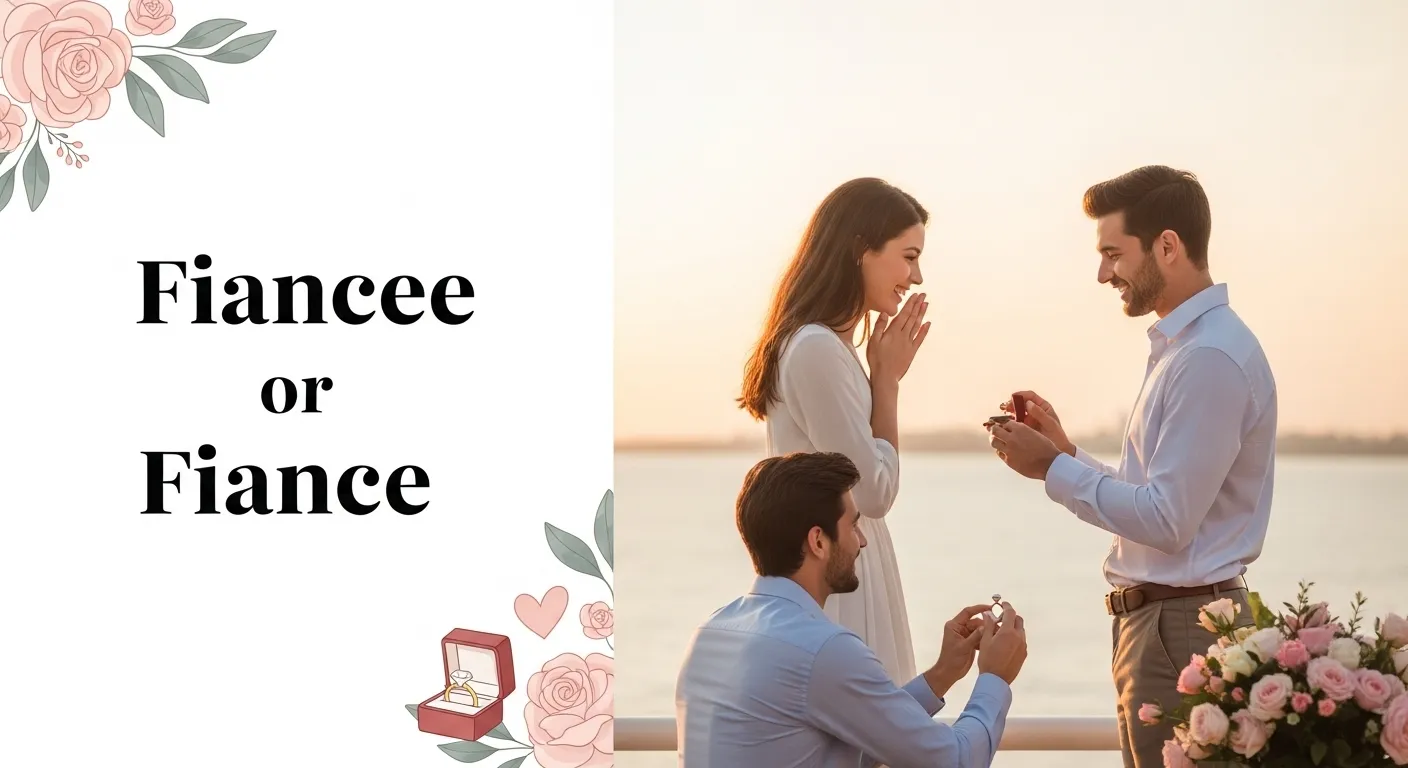
When it comes to English spelling, the words “Fancee” and “Fiance” often confuse people. Many ask, “Which one should I use for my partner?” or “Why does it have two spellings?” This confusion happens because English borrowed the term from French, where gender matters.
Using the wrong spelling can make writing look unprofessional, in emails, social media, or formal invitations.
People search for “fiancee or fiance” to ensure correct spelling for wedding invitations, announcements, or online profiles.
Choosing the right word shows attention to detail and respect for language. In this article, we will break down the differences, origins, usage, and provide practical examples to help you confidently use the correct term.
Fiancee or Fiance – Quick Answer
- Fiance – refers to a man who is engaged to be married.
- Fiancee – refers to a woman who is engaged to be married.
Examples:
- John is my fiance.
- Sarah is my fiancee.
Quickly remember: -ee ending = female, no extra e = male.
The Origin of Fiancee or Fiance
The word comes from French, where “fiancé” (male) and “fiancée” (female) indicate engagement. English adopted the terms, keeping the gender-specific spelling. The accent mark (é) is often dropped in English, but the final e remains for women to show gender.
Historically, this spelling difference has remained because it preserves clarity. Using fiance for a man and fiancee for a woman prevents confusion in communication, especially in invitations or formal announcements.
British English vs American English Spelling
Both British and American English use fiance and fiancee, but accents are often dropped. In formal British English, accents may appear more often.
| Variant | Gender | Example | Region Preference |
| Fiance | Male | My fiance is supportive | US & UK |
| Fiancee | Female | Her fiancee is charming | US & UK |
| Fiancé / Fiancée | Male/Female | Less common in casual writing | UK formal or literary |
American English tends to drop the accent marks more often.- British English sometimes keeps the accents in formal writing.
Which Spelling Should You Use?
- In the US – Use fiance for men and fiancee for women.
- In the UK/Commonwealth – Same usage, accents optional.
- Global audiences – Stick with the clear distinction: fiance = male, fiancee = female.
Using the correct spelling avoids embarrassment and ensures clarity in invitations, emails, and social media.
Common Mistakes with Fiancee or Fiance
- Using fiancee for a man – ❌ Incorrect
- Using fiance for a woman – ❌ Incorrect
- Forgetting the final e for a woman – ❌ Incorrect
- Adding unnecessary accent marks – optional in casual writing ✅
Correct usage:
- My fiance and I are planning a wedding. ✅
- Emily is my fiancee, and we are excited! ✅
Fiancee or Fiance in Everyday Examples
- Emails: “Please RSVP for my fiancee’s engagement party.”
- News: “The actress announced her fiance’s identity today.”
- Social media: “Celebrating my fiancee’s birthday!”
- Formal writing: “The fiance of the bride gave a heartfelt speech.”
Fiancee or Fiance – Google Trends & Usage Data
- Searches for fiancee peaks during wedding seasons (spring and summer).
- Fiance searches are slightly lower but stable year-round.
- Top countries: US, UK, Canada, Australia.
- Most people search to clarify spelling before formal announcements.
Keyword Variations Comparison Table
| Keyword | Gender | Usage Example |
| Fiance | Male | John is my fiance. |
| Fiancee | Female | Sarah is my fiancee. |
| Fiancé | Male | Less common in casual writing |
| Fiancée | Female | Less common in casual writing |
Fiancee or Fiance
- Q: Is a fiancee only for women?
A: Yes, the extra e indicates a female partner. - A: Technically yes, but it may cause confusion.
- Q: Should I include accents in English writing?
A: Optional; commonly dropped in modern writing. - Q: How do I pronounce fiancee?
A: Fee-ahn-say (female), same for fiance (male). - Q: Which is more common in American English?
A: Accent-free forms are more common: fiance (male) and fiancee (female). - Q: Can I use these words in emails?
A: Absolutely! They are standard in professional and personal communication. - Q: What mistakes should I avoid?
A: Avoid swapping genders or dropping the final e for females.
Conclusion:
Using fiance and fiancee correctly is simple once you understand the gender distinction. Fiance refers to a man, fiancee refers to a woman, and remembering the final e can prevent errors.
This knowledge is essential for invitations, announcements, emails, social media, and formal writing.
The words originated in French, and English kept the gender distinction, making it easier to communicate clearly.
In British or American English, the rules are mostly consistent, with accents being optional.
By following this guide, you can confidently write your announcements, posts, and messages without mistakes.
Correct spelling reflects professionalism and attention to detail, which is important for personal and public communication. Always remember: fiance = male, fiancee = female, and you’ll never go wrong.

I am John Grisham, a bestselling author known for thrilling legal dramas that captivate millions. Discover more about my work at my site, Grammlyx.com.