Have you ever paused while writing and wondered: Should I write Especially or Specially? You are not alone. Many students, bloggers, and even professionals get confused between these two words. They look similar. They sound similar. But they do not mean the same thing.
People search for Especially Or Specially because they want a clear and quick answer. They want to know which word fits their sentence. Is it about something important? Or something made for a purpose? That is where the confusion starts.
In daily writing emails, blog posts, social media captions, or formal letters using the wrong word can change the meaning of your sentence. This article will give you a simple explanation. You will learn the meaning, origin, differences, common mistakes, and real-life examples. By the end, you will never mix them up again.
Especially Or Specially – Quick Answer
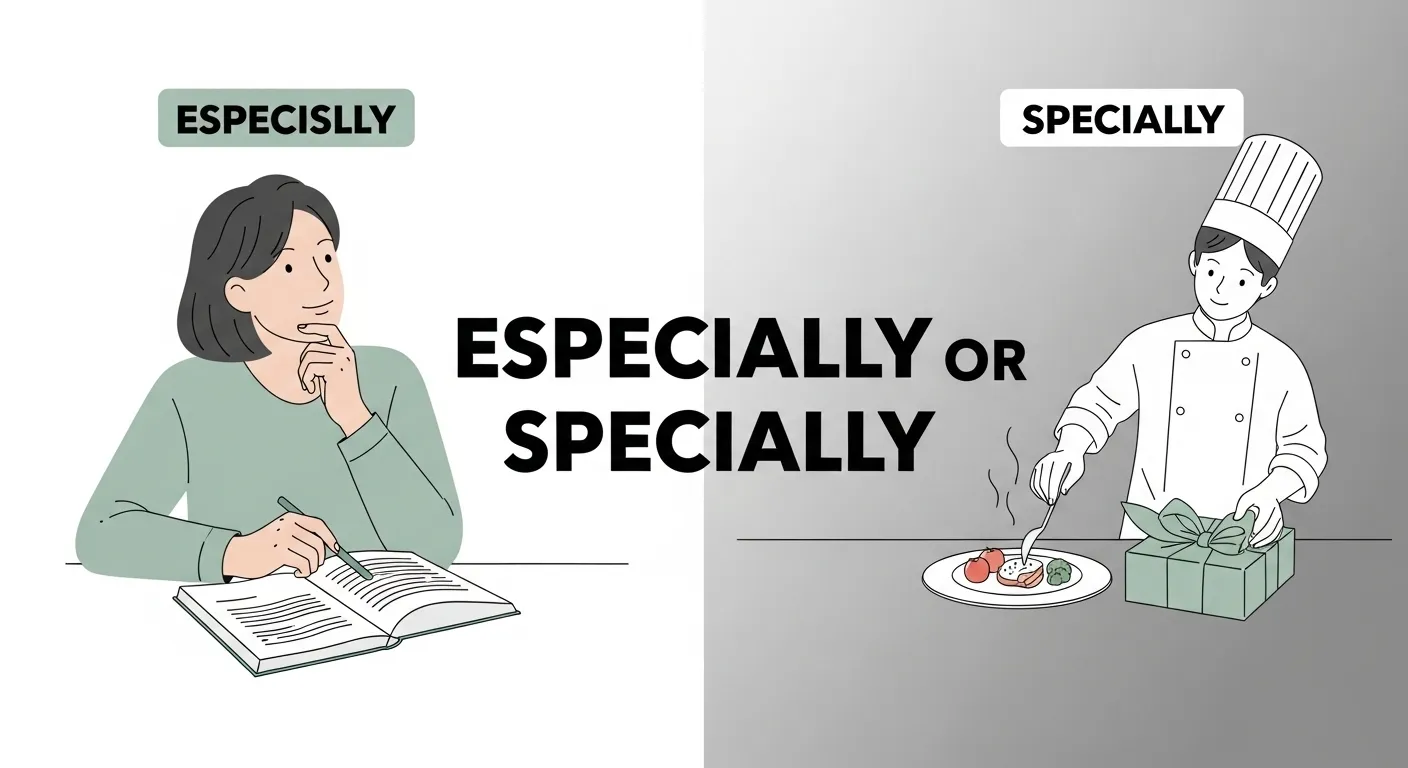
Especially means particularly or more than others.
Specially means for a specific purpose.
Use Especially when something stands out.
Use Specially when something is made or done for a reason.
Examples:
I love fruits, Especially mangoes.
This cake was made Specially for you.
The Origin Of Especially Or Specially
Both words come from the word “special.” The word special comes from Latin specialis, which means “particular” or “distinct.”
Over time, English created two adverbs:
- Especially – formed to mean “in a special way” or “particularly.”
- Specially – formed to mean “for a special purpose.”
The spelling difference exists because English adds -ly to create adverbs. But meanings changed slightly over time. That is why today they are close in form but different in use.
British English Vs American English Spelling
Good news! There is no spelling difference between British and American English for Especially Or Specially. Both countries use the same spelling and meaning.
| Word | American English | British English | Meaning |
| Especially | Especially | Especially | Particularly |
| Specially | Specially | Specially | For a specific purpose |
Unlike words such as “color/colour,” these two words stay the same in both versions of English.
Which Spelling Should You Use?
Choosing between Especially Or Specially depends on your meaning, not your country.
- If your audience is in the US, use the word based on meaning.
- If your audience is in the UK or Commonwealth, same rule applies.
- For global writing, always focus on meaning.
Use Especially for emphasis.
Use Specially for purpose.
Simple rule:
👉 Replace with “particularly”? Use Especially.
👉 Replace with “for a purpose”? Use Specially.
Common Mistakes With Especially Or Specially
Here are frequent errors people make:
❌ I made this gift Especially for you.
✔ I made this gift Specially for you.
❌ I love sports, Specially football.
✔ I love sports, Especially football.
Many people use Especially when they should use Specially for purpose. This is the most common mistake.
Especially Or Specially In Everyday Examples
In Emails
I prepared this report Specially for your meeting.
We value all clients, Especially long-term partners.
In News
The storm affected coastal areas, Especially small towns.
The program was designed Specially for children.
On Social Media
I love weekends, Especially Sunday mornings.
This post is Specially for my best friend.
In Formal Writing
This scholarship is intended Specially for rural students.
The rule applies to all employees, Especially managers.
Especially Or Specially – Google Trends & Usage Data
Search data shows that Especially is used more often than Specially worldwide. Countries like the United States, United Kingdom, Canada, and Australia show higher search volume for “Especially.”
Why?
Because Especially is used more in daily speech and writing. It is common in storytelling, blogging, and conversation.
Specially is less common. It appears more in formal or specific-purpose contexts.
So, in general writing, you will see Especially more often.
Comparison Table – Especially Vs Specially
| Feature | Especially | Specially |
| Meaning | Particularly | For a specific purpose |
| Usage | Emphasis | Purpose |
| Common In | Daily speech | Formal or task-based writing |
| Replace With | Particularly | Specifically for |
FAQs About Especially Or Specially
1. Can I use Especially and Specially interchangeably?
No. They have different meanings.
2. Which word is more common?
Especially is more common in everyday English.
3. Is Specially wrong?
No. It is correct when used for a purpose.
4. Is there a spelling difference in the UK?
No. Both words are spelled the same in UK and US English.
5. How do I remember the difference?
Especially = emphasis.
Specially = specific purpose.
6. Can I say “Especially for you”?
Usually, “Specially for you” is better because it shows purpose.
7. Is “Especially made” correct?
In most cases, “Specially made” is more accurate.
Conclusion
Understanding Especially Or Specially is simple once you focus on meaning. These two words may look alike, but they serve different roles in English. Especially is used when something stands out. It adds emphasis. Specially is used when something is made or done for a specific reason.
Many people confuse them because both come from the word “special.” But remembering one easy trick can solve the problem. If you can replace the word with “particularly,” choose Especially. If you can replace it with “for a purpose,” choose Specially.
In global writing, business emails, blogs, or academic work, using the correct word improves clarity. It also makes your writing look professional and polished. The difference may seem small, but it matters. Now you know the rule. You can write with confidence, Especially when clarity matters most.

I am James Patterson, one of the world’s bestselling authors, known for fast-paced thrillers like the Alex Cross, Women’s Murder Club, and Maximum Ride series that have captivated millions of readers worldwide. I share my passion for storytelling and writing expertise with readers through my work and also feature insights on my site grammlyx.com, where great writing meets creativity.