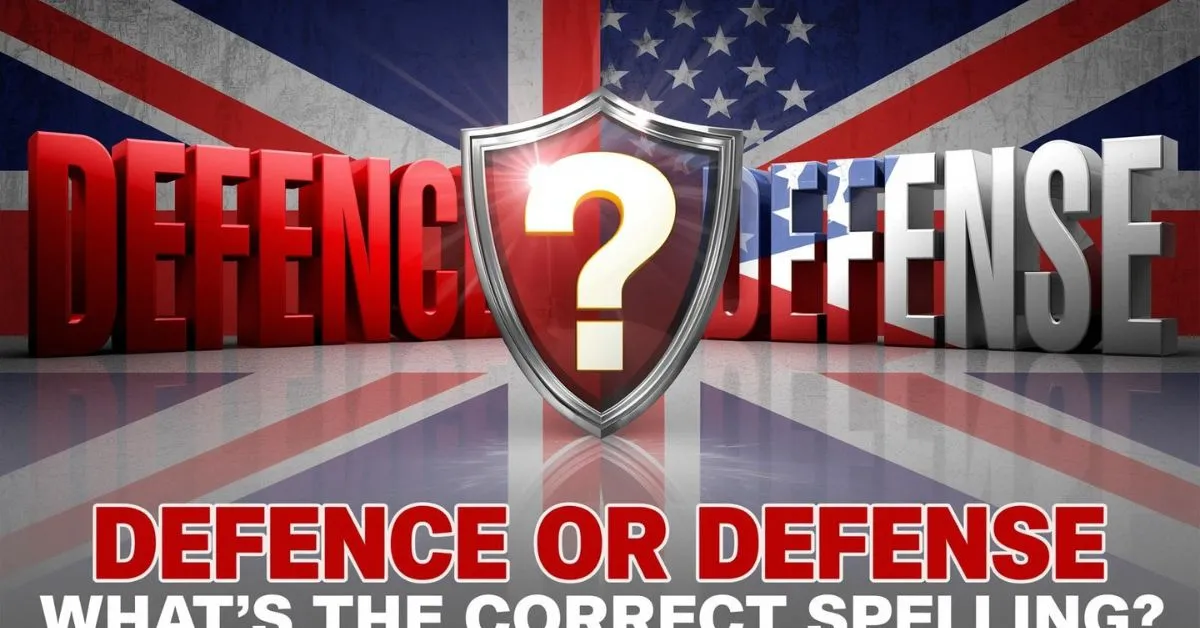
You’re writing an email, an essay, or a news post. Suddenly you stop. Is it Defence or Defense? One word, two spellings, same meaning but which one is right? This small spelling difference confuses students, writers, bloggers, and even professionals every day.
People search for this keyword because they want to avoid mistakes, sound professional, and follow the correct English style.
The confusion happens because English has two main forms: British English and American English. Both use the word, but they spell it differently.
Spell check tools sometimes change it. Teachers correct it. Readers notice it. That’s why understanding the difference matters.
This guide gives a quick answer, explains the history, compares British and American rules, and shows real examples. By the end, you’ll know exactly when to use Defence and when to use Defense.
Defence or Defense – Quick Answer
Defence is the British English spelling. Defense is the American English spelling. Both words mean protection against attack, harm, or criticism. The meaning does not change — only the spelling depends on the region.
Examples: The army strengthened its Defence system. / The lawyer prepared his Defense carefully.
The Origin of Defence or Defense
The word comes from the Latin word defensa, meaning protection. It moved into Old French as defense. When English borrowed the word, spelling was not fixed. Over time, British English kept Defence with “ce.” American English later simplified many words and chose Defense with “se.” This pattern also appears in other words like Licence/License and Practice/Practice.
British English vs American English Spelling
British and American English follow different spelling rules for some words ending in “ce” and “se.”
| British English | American English | Meaning |
| Defence | Defense | Protection |
| Offence | Offense | Crime or wrongdoing |
| Licence | License | Permission |
| Pretence | Pretense | False claim |
Which Spelling Should You Use?
- Use Defense if your audience is in the United States.
- Use Defence if your audience is in the UK, Canada, Australia, or other Commonwealth countries.
- For global business or websites, pick one style and stay consistent.
Consistency looks professional and builds trust.
Common Mistakes with Defence or Defense
- Mixing both spellings in one article ❌
- Using British spelling for an American audience ❌
- Letting autocorrect change your chosen style ❌
- Thinking one spelling is “wrong” ❌
Both are correct — just for different regions.
Defence or Defense in Everyday Examples
Email: Our company focuses on cyber Defense strategies.
News: The country increased its national Defence budget.
Social Media: Good Defense wins games!
Formal Writing: The lawyer presented a strong Defence in court.
Defence or Defense – Google Trends & Usage Data
Search interest shows Defense is more popular in the United States because American English dominates online content. Defence is more common in the UK and Commonwealth countries. Topics include military defense, legal defense, and sports defense.
Comparison Table
| Feature | Defence | Defense |
| English Type | British | American |
| Used In | UK, Australia, Canada | USA |
| Meaning | Protection | Protection |
| Correct? | Yes | Yes |
FAQs
1. Is Defence wrong?
No. It is correct in British English.
2. Is Defense wrong?
No. It is correct in American English.
3. Do they mean the same thing?
Yes, both mean protection.
4. Which spelling should students use?
Follow your school’s English style.
5. What about in sports?
Same rule: US uses Defense, UK uses Defence.
6. Does pronunciation change?
No, both sound the same.
7. Can I use both in one article?
No, choose one style and stay consistent.
Conclusion
The difference between Defence and Defense is simple but important. Both words mean protection, but the spelling depends on location. British English uses Defence with “ce.” American English uses Defense with “se.” The meaning stays the same in legal, military, sports, and everyday contexts.
Writers often make mistakes when they mix both spellings or ignore their audience. The key is consistency. If your readers are American, use Defense. If they are British or from Commonwealth countries, use Defence. For global writing, choose one style and stick with it.
Now you can write with confidence, avoid confusion, and look professional every time you use Defence or Defense.

I am James Patterson, one of the world’s bestselling authors, known for fast-paced thrillers like the Alex Cross, Women’s Murder Club, and Maximum Ride series that have captivated millions of readers worldwide. I share my passion for storytelling and writing expertise with readers through my work and also feature insights on my site grammlyx.com, where great writing meets creativity.