Have you ever wondered why some recipes say “chilli” while others say “chili”? This small difference can confuse writers, cooks, and readers alike.
The reason lies in regional spelling variations between British and American English. People search for this keyword to understand which spelling is correct for their audience or document.
If you’re writing a blog, cooking recipe, or a school essay, knowing the right version ensures clarity and professionalism.
In this article, we’ll break down the differences, explain the origin of the word, show usage examples, and provide expert advice on when to use each spelling. By the end, you’ll know exactly If to use chilli or chili and avoid common mistakes that many make.
Chilli or Chili – Quick Answer
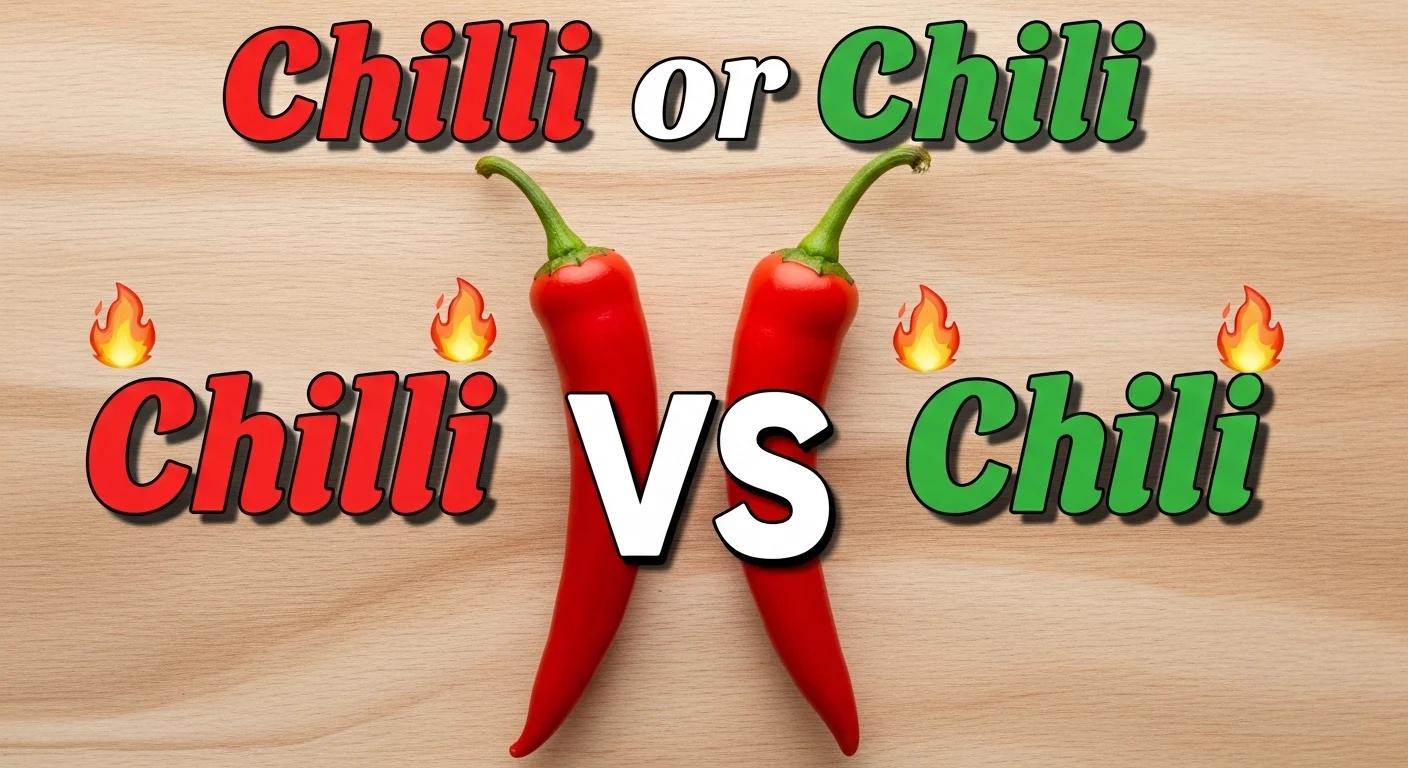
The word refers to the same spicy fruit used in cooking. The difference in spelling is regional:
- Chilli → British English, commonly used in the UK, India, and other Commonwealth countries.
- Chili → American English, used in the US.
Examples
- I added fresh chilli to the curry for extra heat.
- He made a bowl of chili for the game night.
The Origin of Chilli or Chili
The word “chilli” comes from the Nahuatl (Aztec) word chīlli, referring to the spicy pepper. It was introduced to Europe in the 16th century after Spanish explorers brought it from the Americas. Over time, British English adopted the spelling chilli with a double “l”, while American English simplified it to chili. The difference is purely orthographic and doesn’t affect pronunciation or meaning.
British English vs American English Spelling
| Feature | British English | American English |
| Spelling | Chilli | Chili |
| Example | Add chopped chilli to the sauce. | He cooked spicy chili last night. |
| Common Regions | UK, India, Australia, Canada | USA |
| Double “l” rule | Often used in words like “travelling,” “modelling” | Simplified to “traveling,” “modeling” |
British English prefers double consonants in certain words, while American English often simplifies.
Which Spelling Should You Use?
- US audience: Use chili for recipes, blogs, and menus.
- UK/Commonwealth audience: Use chilli to match local spelling conventions.
- Global audience: Consider your readers; for international publications, clarify the spelling once in your text and stay consistent.
Common Mistakes with Chilli or Chili
- Writing chily → incorrect
- Mixing both spellings in the same document → inconsistent
- Confusing with the word chili powder (still follows regional spelling)
Correct Usage Tips: Stick to one regional variant depending on your audience.
Chilli or Chili in Everyday Examples
- Emails: “Please add some chilli to the recipe for tomorrow’s event.”
- News articles: “The restaurant’s signature chili won the national competition.”
- Social media: “Trying out a new chilli recipe tonight! 🌶️”
- Formal writing: “The dish contains dried chili and other spices.”
Chilli or Chili – Google Trends & Usage Data
Search trends show:
- US: “chili” dominates, especially in cooking and recipe searches.
- UK & India: “chilli” is more popular in online articles and menus.
- Global: Mixed usage; context often clarifies the intended audience.
Comparison Table: Chilli vs Chili
| Variant | Usage | Region | Notes |
| Chilli | Spicy pepper | UK, India, Australia | Double “l” preferred |
| Chili | Spicy pepper | USA | Simplified spelling |
FAQs
- Is “chilli” wrong in American English?
Yes, Americans usually use chili. - Can I use both spellings in one document?
No, it’s best to stay consistent with your audience. - Does it affect pronunciation?
No, both are pronounced the same way: /ˈtʃɪli/. - What about chili powder?
Same spelling rules apply: UK → chilli powder, US → chili powder. - Which spelling is more popular online?
“Chili” is more common globally in searches, especially in the US. - Are there any synonyms?
You can also say hot pepper or capsicum depending on the context. - Can I use “chilli” in recipes for US readers?
It’s understood but may look unusual; better to use chili.
Conclusion
Understanding the difference between chilli and chili is simple once you know your audience. British English favors chilli, while American English simplifies it to chili. The choice doesn’t affect meaning or pronunciation but ensures clarity and professionalism in your writing. Always stay consistent, especially in recipes, articles, and social media posts. By following these guidelines, you’ll avoid common mistakes, appear polished in your writing, and make your content audience-appropriate. If you’re cooking a fiery curry in London or preparing a bowl of chili in New York, using the correct spelling will ensure your text is clear, credible, and culturally appropriate.

I am James Patterson, one of the world’s bestselling authors, known for fast-paced thrillers like the Alex Cross, Women’s Murder Club, and Maximum Ride series that have captivated millions of readers worldwide. I share my passion for storytelling and writing expertise with readers through my work and also feature insights on my site grammlyx.com, where great writing meets creativity.