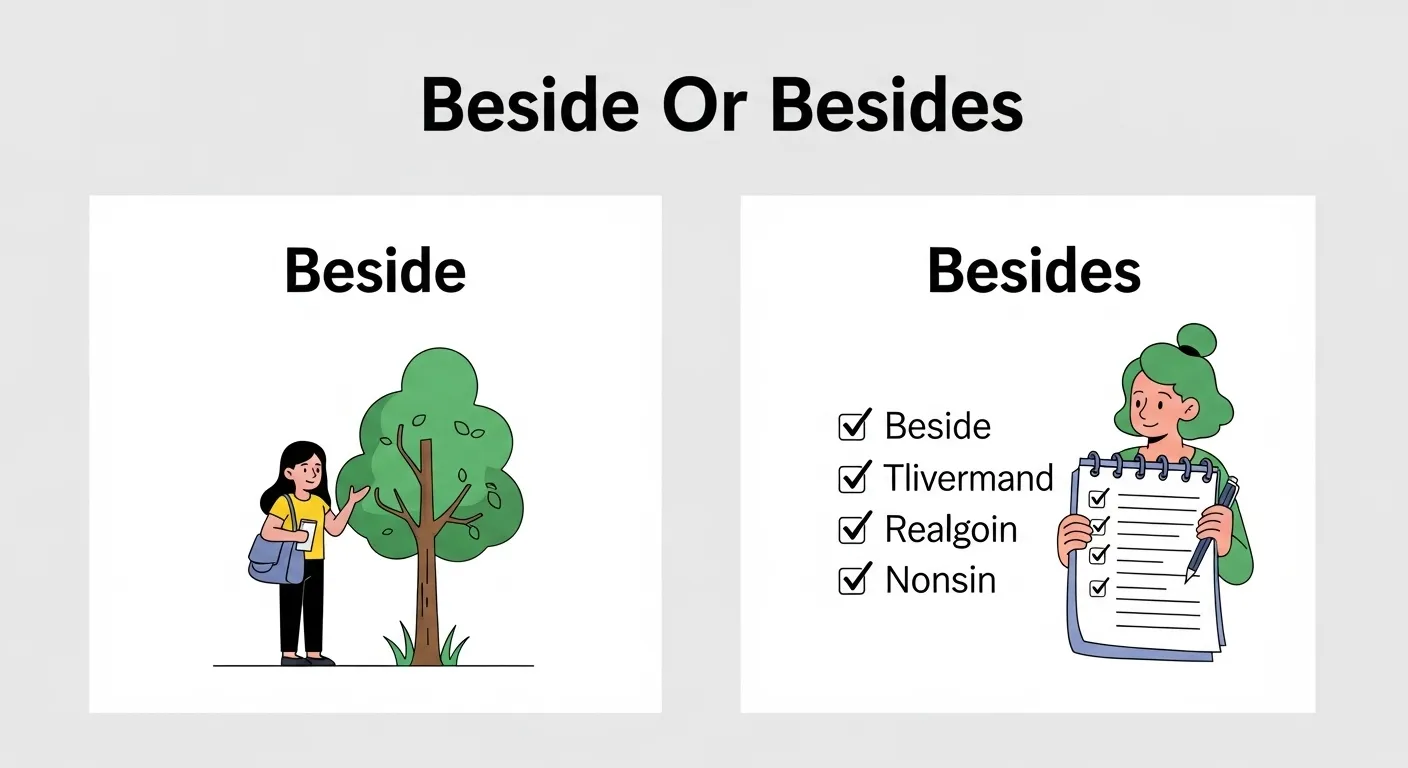
Have you ever paused while writing and wondered about Beside Or Besides? You are not alone.
Many writers search for this keyword because the two words look similar but carry different meanings. This small spelling change can alter the entire sentence.
People often feel unsure if they should use Beside or Besides in emails, essays, or social media posts.
The confusion usually comes from pronunciation. They sound close. However, their grammar roles are not the same.
This guide solves that confusion clearly and quickly. You will learn the direct difference, real examples, spelling rules, and expert advice.
By the end of this article, you will confidently use Beside Or Besides without second-guessing yourself.
Beside Or Besides – Quick Answer
Beside means next to or at the side of something. It shows position.
Besides means in addition to or apart from. It adds extra information.
The key difference is simple: Beside is about place, while Besides is about addition.
Examples:
- The chair is beside the table.
- Besides English, she speaks Spanish.
The Origin of Beside Or Besides
The word Beside comes from Old English “besīdan,” meaning “by the side of.” It always described physical position.
Later, people added the letter “s” to create Besides. This new form began to show addition instead of location. Over time, grammar rules made the meanings separate.
The spelling difference exists because English evolved through usage. Even though the words share roots, their meanings changed.
British English vs American English Spelling
There is no spelling difference between British and American English for Beside Or Besides. Both regions use the same forms.
However, usage style may differ slightly in tone. British English sometimes prefers formal phrasing, while American English may use simpler expressions.
Comparison Table
| Word | Meaning | British English | American English |
| Beside | Next to | Same spelling | Same spelling |
| Besides | In addition to | Same spelling | Same spelling |
Example in British English:
- The park is beside the river.
Example in American English:
- Besides math, I enjoy science.
Which Spelling Should You Use?
Use Beside when talking about position.
Use Besides when adding information.
If your audience is in the US, UK, or Commonwealth countries, the rule stays the same. There is no regional variation.
For global writing, follow this simple memory trick:
- No “s” = side (place).
- With “s” = plus (addition).
Always check your sentence meaning first. That will guide your spelling choice.
Common Mistakes with Beside Or Besides
Here are frequent errors people make:
❌ Incorrect: Beside English, she speaks French.
✔ Correct: Besides English, she speaks French.
❌ Incorrect: The dog sat besides me.
✔ Correct: The dog sat beside me.
Many writers confuse the two because they sound similar. Reading your sentence aloud can help. Ask yourself: Is this about location or addition?
Beside Or Besides in Everyday Examples
Email:
- Besides the report, I attached the invoice.
News Writing:
- The statue stands beside the museum entrance.
Social Media:
- Besides coffee, I need sleep.
Formal Writing:
- The office is located beside the main building.
Using the correct word makes your writing clear and professional.
Beside Or Besides – Google Trends & Usage Data
Search data shows that many users type Beside Or Besides when unsure about grammar.
English-speaking countries such as the United States, United Kingdom, Canada, and Australia show steady interest in this keyword.
Students and professionals often search for it before exams or formal writing tasks. The confusion appears across all age groups.
The trend proves one thing: grammar clarity matters worldwide.
Keyword Comparison Table
| Feature | Beside | Besides |
| Meaning | Next to | In addition to |
| Grammar Type | Preposition | Preposition / Adverb |
| Talks About | Position | Addition or inclusion |
| Example | Sit beside me. | Besides me, others came. |
FAQs About Beside Or Besides
1. Is Beside the same as Besides?
No. Beside shows position, while Besides adds extra information.
2. Can I use Besides at the beginning of a sentence?
Yes. Example: Besides, I already finished the task.
3. Is Beside formal or informal?
It works in both formal and informal writing.
4. Is there a spelling difference in the UK?
No. Both spellings stay the same in British English.
5. Can Besides mean “except”?
Yes. In some contexts, it can mean apart from.
6. Why do people confuse Beside Or Besides?
They sound alike and differ by only one letter.
7. How can I remember the rule easily?
Think: “S” stands for “sum” or addition.
Conclusion:
Understanding Beside Or Besides is easier than it seems. The confusion comes from similarity in sound, not meaning. Once you remember that Beside refers to place and Besides refers to addition, the rule becomes simple.
This small spelling change can improve your writing clarity. It helps in emails, academic work, business communication, and daily conversation. Many people search for this keyword because they want quick answers and reliable grammar rules. Now you have both.
The most important takeaway is this: Focus on the meaning of your sentence before choosing the word. If you talk about location, choose Beside. If you are adding information, choose Besides.
Clear grammar builds confidence. And confident writing builds trust.

I’m Jim Butcher, and this is my site, Grammlyx.com, where I share my work as an author. I am an expert in my craft, dedicated to delivering the best content.