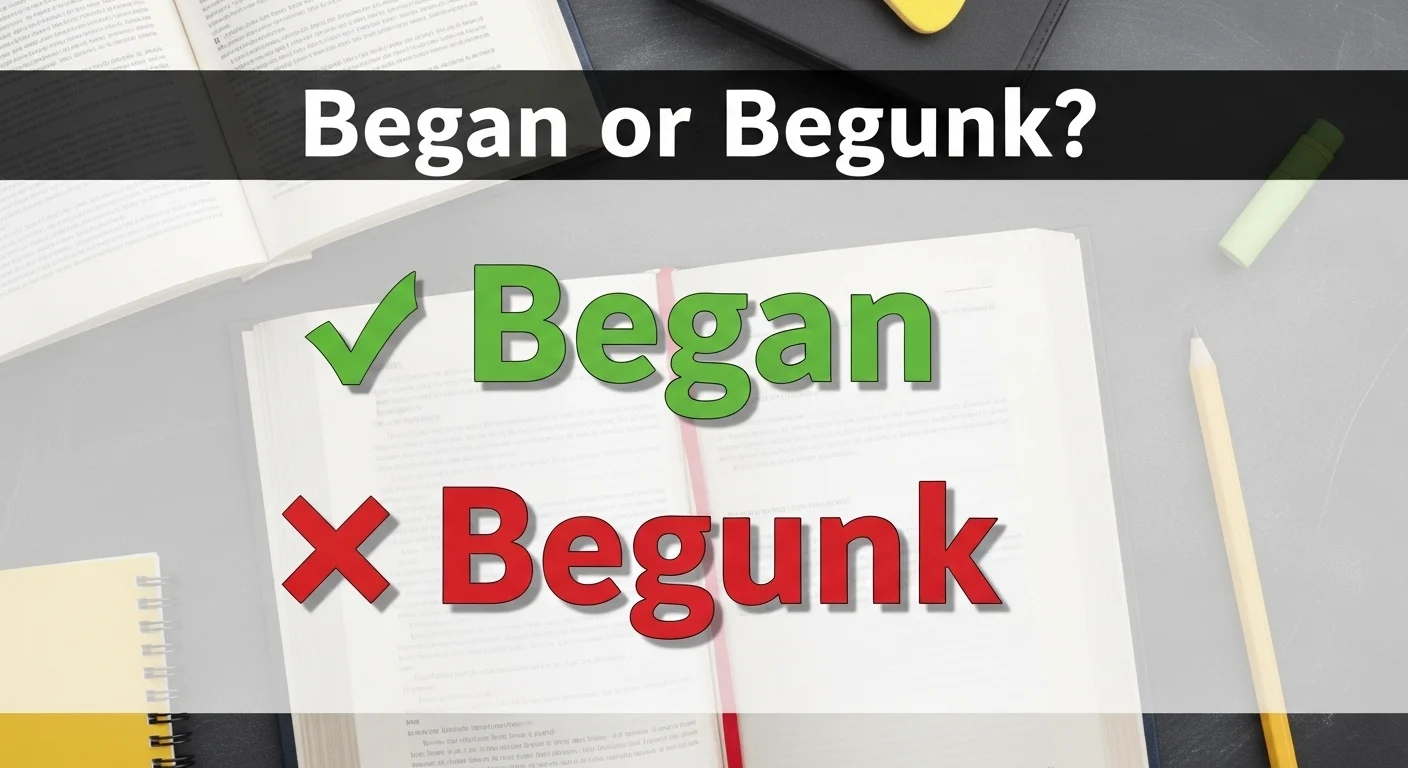
English learners and writers often get confused between began and begun. Both are past forms of the verb begin, but they are not interchangeable. Using the wrong one can make your writing seem unprofessional or grammatically incorrect.
People search for “began or begun” because it’s a common question in grammar guides, exams, and everyday writing.
If you’re drafting an email, writing a blog, or posting on social media, knowing the difference ensures your sentences are accurate and polished.
In this guide, we’ll explain the difference clearly, provide examples, compare British and American English usage, highlight common mistakes, and give practical advice on which form to use.
Began or Begun – Quick Answer
- Began → Simple past tense of begin. Use when no auxiliary verb is needed.
- Begun → Past participle of begin. Use with auxiliary verbs like has, have, or had.
Examples:
Examples of Began
- She began her journey early in the morning.
- They began learning Spanish last year.
Examples of Begun
- She has begun a new project at work.
- By the time I arrived, the movie had already begun.
The Origin of Began or Begun
The verb begin comes from Old English beginnan, meaning “to start or undertake.” Over time, English developed separate forms for simple past (began) and past participle (begun) to clarify tense usage. These forms have remained consistent in modern English, though learners still confuse them because they look similar.
British English vs American English Spelling
Both British and American English use began and begun the same way. Unlike words such as travelling/traveling, there is no spelling difference. The rules of usage are identical in both dialects.
| Form | Usage | Example |
| Began | Simple past | He began his work yesterday. |
| Begun | Past participle (with auxiliary) | She has begun her new course. |
Which Spelling Should You Use?
- US & UK/Commonwealth → Use began for simple past, begun with has/have/had.
- Global writers → Stick to this rule to avoid mistakes; it is universally understood.
Common Mistakes with Began or Begun
- ❌ She begun her work yesterday. → ✅ She began her work yesterday.
- ❌ I began a new hobby last month. (Correct in context?) ✅ Yes, began is correct.
- ❌ They have began the project. → ✅ They have begun the project.
Remember: began never follows have/has/had. Begun never stands alone without an auxiliary verb.
Began or Begun in Everyday Examples
- Emails: “I have begun drafting the report.”
- News articles: “The festival began at noon.”
- Social media: “She has begun her new fitness routine!”
- Formal writing: “The investigation began last month and has begun to show results.”
Began or Begun – Google Trends & Usage Data
Search data shows that began vs begun spikes during back-to-school periods and exam seasons, mainly in the US, UK, Canada, and India. People often search it for homework, essays, and professional writing.
| Keyword | Popularity by Country |
| Began | US, UK, Canada, India |
| Begun | US, UK, India, Australia |
Keyword Variations Comparison Table
| Form | Function | Example |
| Began | Simple past | He began his journey early. |
| Begun | Past participle (with auxiliary) | She has begun her studies. |
FAQs
- Can I use “begun” without “have/has/had”?
❌ No. Always pair begun with an auxiliary verb. - Is “began” British or American English?
✅ It’s the same in both dialects. - Which is correct: “I have began” or “I have begun”?
✅ “I have begun” is correct. - Can I say “The project begun last week”?
❌ Incorrect. Use “began” instead. - Why do people confuse began and begun?
✅ Because they look similar and both indicate past action. - Is “begun” used in formal writing?
✅ Yes, especially with perfect tenses like has begun. - Are there mnemonic tricks to remember?
✅ Think: “Begun needs a helper” (auxiliary verb).
Conclusion
Understanding the difference between began and begun is simple once you remember the rules: began for simple past, begun with has/have/had. If you’re writing emails, social media posts, or formal documents, using these correctly makes your English clear and professional. British and American English use the same rules, so this guidance works globally. Avoid common mistakes by checking an auxiliary verb is present before choosing begun, and you’ll never confuse the two again. With practice, correct usage will become second nature, improving both your writing accuracy and confidence.

I am John Grisham, a bestselling author known for thrilling legal dramas that captivate millions. Discover more about my work at my site, Grammlyx.com.