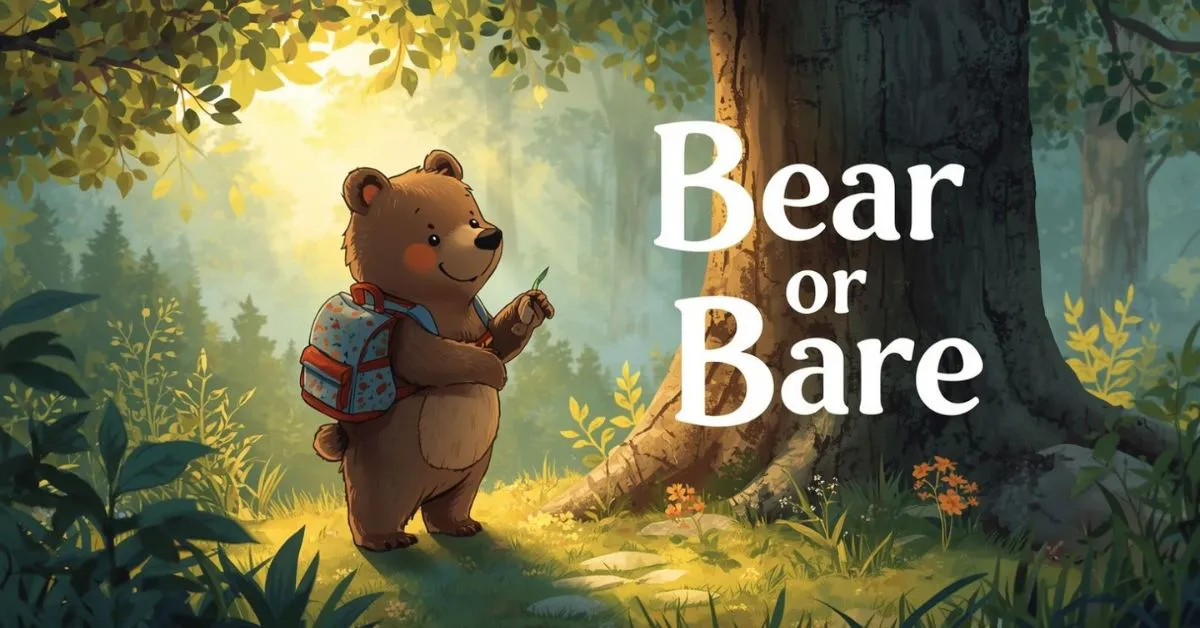
English has many confusing word pairs, and Bear Or Bare is one of the most searched ones online. These two words sound the same, but their meanings are very different.
That’s why many people make mistakes while writing emails, school work, social media posts, and even professional documents. One small spelling error can completely change the meaning of a sentence.
For example, saying “bare with me” instead of “bear with me” is a very common mistake that people notice quickly.
People search for Bear Or Bare because both words are pronounced the same (homophones) The confusion usually happens.
when someone wants to talk about being patient, carrying something, or describing something uncovered. Since English spelling rules are not always simple, learners and even native speakers mix them up.
This guide will give you a quick answer, clear rules, examples, and professional advice. By the end, you will easily know when to use Bear and when to use Bare, without guessing.
Bear Or Bare – Quick Answer
Bear means to carry, hold, support, or tolerate. Bare means uncovered, empty, or plain.
Examples:
I can’t Bear the noise.
He walked on Bare feet.
The Origin of Bear Or Bare
The words Bear and Bare come from different Old English roots.
Bear comes from the Old English word “beran,” which meant “to carry” or “to bring.” Over time, it kept meanings related to holding, supporting, and tolerating. It is also the name of the animal, but that meaning developed separately.
Bare comes from the Old English word “bær,” meaning “naked” or “uncovered.” Its meaning stayed close to describing something without covering or decoration.
The spelling difference exists because English kept sounds but changed letter forms over time. So today, they sound the same but mean different things.
British English vs American English Spelling
Good news! Bear Or Bare have the same spelling in both British and American English. The confusion is about meaning, not region.
| Word | Meaning | British English | American English |
| Bear | Carry, tolerate, support | Bear | Bear |
| Bare | Uncovered, empty | Bare | Bare |
Which Spelling Should You Use?
Use Bear when talking about:
- Tolerating something
- Carrying weight
- Responsibility
Use Bare when talking about:
- No clothes
- Empty space
- Plain or simple things
For global writing (emails, websites, business), always check the meaning, not the country.
Common Mistakes with Bear Or Bare
| Wrong Sentence | Correct Sentence |
| Bare with me | Bear with me |
| He can’t bare the pain | He can’t bear the pain |
| She bear feet | She has bare feet |
| The room was bear | The room was bare |
Big tip: If you mean patience, it is always Bear.
Bear Or Bare in Everyday Examples
Email: Please Bear with us during maintenance.
News: The trees stand Bare in winter.
Social Media: I can’t Bear this heat!
Formal Writing: The facts Bear importance.
Casual Text: He walked Barefoot.
Bear Or Bare – Google Trends & Usage Data
Search data shows people often look up Bear Or Bare when writing phrases like “bear with me” and “bare minimum.” The confusion is common in English-speaking countries like the US, UK, Canada, and Australia. Most searches come from students, writers, and professionals who want correct spelling in communication.
Comparison Table – Bear Or Bare
| Feature | Bear | Bare |
| Part of speech | Verb / Noun | Adjective / Verb |
| Main idea | Carry or tolerate | Uncovered |
| Memory tip | Bear = burden | Bare = naked |
| Example use | Bear pain | Bare skin |
FAQs
1. Is it Bear with me or Bare with me?
It is Bear with me.
2. What does Bare mean?
It means uncovered or empty.
3. Can Bear mean animal?
Yes, Bear is also an animal name.
4. Why do Bear and Bare sound the same?
They are homophones in English.
5. Is Bare ever a verb?
Yes, it can mean to reveal, like “bare your soul.”
6. Is Bear used in formal writing?
Yes, like “facts bear significance.”
7. How can I remember the difference?
Bare = naked. Bear = burden.
Conclusion
Understanding Bear Or Bare is important for clear communication. These two words may sound the same, but they serve very different purposes in English. Bear connects with ideas like carrying weight, showing patience, or handling responsibility. It appears in both everyday speech and professional writing. Bare, on the other hand, describes something uncovered, empty, or simple. It often appears in physical descriptions, like bare hands or a bare room.
Many mistakes happen because people write what they hear instead of thinking about the meaning. That’s why learning the context is the best solution. If your sentence is about tolerance or support, choose Bear. If it describes exposure or lack of covering, choose Bare.
With this guide, you now have a quick answer, examples, rules, and memory tips. Keep practicing, and you will never mix up Bear Or Bare again.

I am James Patterson, one of the world’s bestselling authors, known for fast-paced thrillers like the Alex Cross, Women’s Murder Club, and Maximum Ride series that have captivated millions of readers worldwide. I share my passion for storytelling and writing expertise with readers through my work and also feature insights on my site grammlyx.com, where great writing meets creativity.