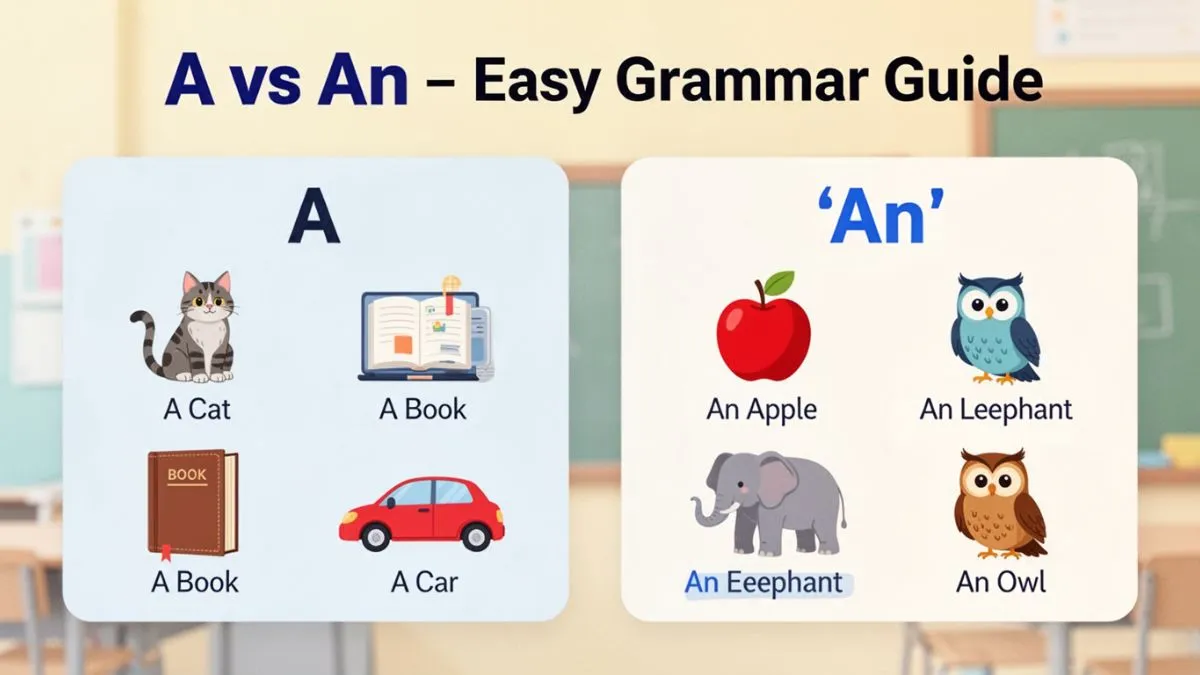
Choosing between “an” or a is a common confusion in English. Many people wonder which article to use before words, especially when speaking or writing quickly.
Using the wrong one can make sentences sound awkward or grammatically incorrect. This guide will explain the rules, origins, and examples so you can confidently use “an or a” in any context.
If you are writing emails, posting on social media, or drafting formal content, knowing the difference is essential.
By the end, you will understand how to use “an or a” correctly, recognize common mistakes, and apply these rules in both British and American English.
An or A – Quick Answer
Quick Answer:
- Use “a” before words that begin with a consonant sound.
- Use “an” before words that begin with a vowel sound (a, e, i, o, u).
Examples:
- I saw a cat in the garden.
- She is an engineer at a tech company.
The Origin of An or A
The articles “a” and “an” have been used in English for over a thousand years.
- Old English used “an” as the singular indefinite article.
- Over time, pronunciation changes led to “a” before consonants and “an” before vowels for smoother speech.
- This distinction is still present in modern English and helps make sentences flow naturally.
British English vs American English Spelling
Interestingly, the rules for “an or a” do not differ between British and American English. Both varieties follow the vowel/consonant sound rule.
| Feature | British English | American English | Example |
| Before consonant sounds | a | a | a dog, a university (sounds like “yoo”) |
| Before vowel sounds | an | an | an apple, an hour (silent h) |
| Special cases | Words starting with “h” can vary | Words starting with “h” can vary | an honest man, a historic event |
Which Spelling Should You Use?
Since “an or a” does not change in spelling, focus on pronunciation and context:
- US English: Standard use follows the vowel/consonant sound rule.
- UK/Commonwealth English: Same rules, minor variation with “h” words (historic → a historic).
- Global English: Stick to the sound-based rule, it is universally understood.
Common Mistakes with An or A
- Using “a” before a vowel sound → ❌ a apple → ✅ an apple
- Using “an” before a consonant sound → ❌ an cat → ✅ a cat
- Confusing silent letters → ❌ a hour → ✅ an hour
- Mispronouncing acronyms → a FBI agent → ✅ an FBI agent (pronounced “eff-bee-eye”)
An or A in Everyday Examples
Emails:
- Correct: “Please review an attachment.”
- Incorrect: “Please review a attachment.”
News articles:
- Correct: “A new policy will be introduced next week.”
Social media:
- “I met an influencer today.”
Formal writing:
- “A study conducted by Harvard shows significant results.”
An or A – Google Trends & Usage Data
According to Google Trends:
- Both “a” and “an” are frequently searched for clarification in the US, UK, India, and Canada.
- Most searches occur around academic writing, ESL learning, and grammar rules.
- Confusion is highest with silent letters and acronyms.
Keyword Variations Comparison
| Variation | Usage | Example |
| a | Before consonant sounds | a book, a university |
| an | Before vowel sounds | an egg, an hour |
| a/an with silent letters | Based on pronunciation | an honest man, a historic event |
| acronyms | Depends on pronounced sound | an MBA, a NASA project |
FAQs
1. Can “an” be used before consonants?
Only if the consonant is silent and the word begins with a vowel sound (e.g., an hour).
2. Should I always say “a university” or “an university”?
A university is correct because it starts with a “yoo” sound.
3. What about acronyms?
Use “a” or “an” based on how the acronym is pronounced:
- an FBI agent, a NASA mission
4. Is “a historic” or “an historic” correct?
Both are accepted; a historic is more common in modern usage, especially in American English.
5. How do I choose between “a” and “an” in fast speech?
Focus on the sound of the first letter. Vowel sound → an, consonant sound → a.
6. Are there exceptions?
Yes, silent letters and acronyms are the main exceptions.
7. Why do people get confused?
Pronunciation changes over time and silent letters make it unclear which article to use.
Conclusion
Using “an or a” correctly is simple once you focus on sounds rather than spelling. Always use “a” before consonant sounds and “an” before vowel sounds. Watch out for silent letters and acronyms, which can change the choice.
Understanding these rules improves writing clarity in emails, articles, social media, and formal documents. British, American, and global English all follow this principle, so mastering it ensures you communicate clearly worldwide. Practicing with real-life examples and common mistakes will make using “an or a” second nature.
By applying these rules, you will avoid common grammar pitfalls and make your English writing sound natural and professional.

I am James Patterson, one of the world’s bestselling authors, known for fast-paced thrillers like the Alex Cross, Women’s Murder Club, and Maximum Ride series that have captivated millions of readers worldwide. I share my passion for storytelling and writing expertise with readers through my work and also feature insights on my site grammlyx.com, where great writing meets creativity.