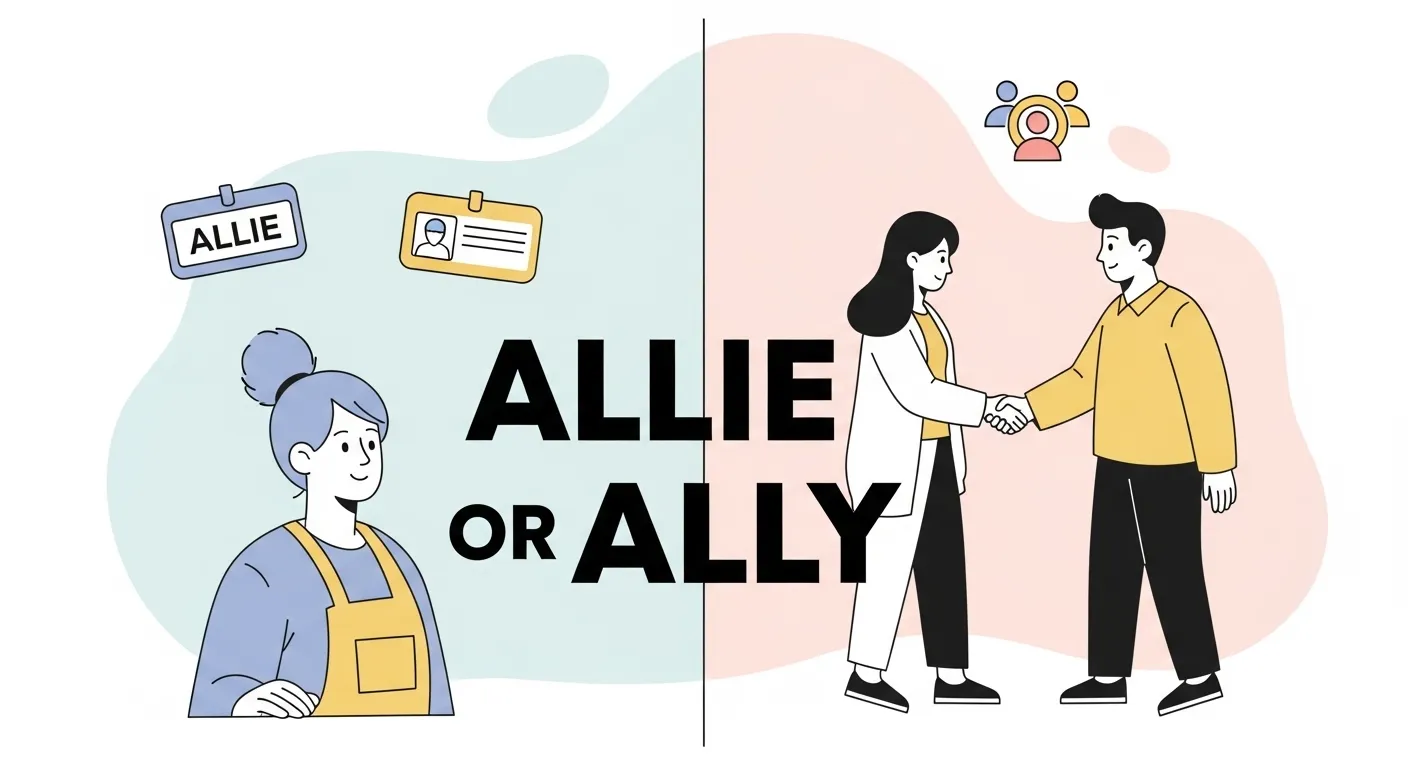
You are writing a sentence. You stop. Should it be Allie or Ally?
Many people search for “Allie Or Ally” because both words sound the same. But they do not mean the same thing. One is usually a name. The other is a common English word with a clear meaning. This small spelling change can totally change your sentence.
For example, if you write, “She is my Allie,” it may look like you are talking about a person named Allie. But if you mean a supporter or partner, the correct word is Ally. This confusion happens often in emails, school writing, blogs, and even news articles.
In this guide, you will get a quick answer, clear examples, spelling rules, and expert advice. By the end, you will know exactly when to use Allie and when to use Ally.
Allie Or Ally – Quick Answer
Ally is a common noun. It means a supporter, partner, or friend who helps you.
Allie is usually a personal name, often short for names like Allison or Alexandra.
Examples:
She became a strong Ally in the fight for justice.
Allie is coming to dinner tonight.
The Origin Of Allie Or Ally
The word Ally comes from the Old French word alier, which means “to unite.” It entered English in the 14th century. It has always meant someone joined to another for support or common goals.
The name Allie is a modern nickname. It is short for longer names such as Allison, Alexandra, or Alice. Over time, people started using Allie as a full first name too.
So, the spelling difference exists because:
- Ally is a traditional English word with historical roots.
- Allie is a personal name or nickname.
They sound the same, but their meanings are very different.
British English Vs American English Spelling
There is no spelling difference between British and American English for these words. Both use:
- Ally (noun and verb)
- Allie (name)
However, usage context may differ slightly in writing style.
Comparison Table
| Word | Type | Meaning | US English | UK English |
| Ally | Noun/Verb | Supporter or partner | Ally | Ally |
| Allie | Proper Noun | A personal name | Allie | Allie |
Examples
US: Canada is a close Ally of the United States.
UK: France remained a strong Ally during the conflict.
Which Spelling Should You Use?
Use Ally when:
- You mean supporter, partner, or helper.
- You are writing formal or academic content.
- You are discussing politics, social justice, or teamwork.
Use Allie when:
- You are writing someone’s name.
- You are referring to a specific person named Allie.
Audience-Based Advice
- US audience: Use Ally for support meaning.
- UK/Commonwealth audience: Same rule — use Ally.
- Global audience: Stick with Ally for professional writing.
Simple rule:
If it’s a name → Allie.
If it means supporter → Ally.
Common Mistakes With Allie Or Ally
Here are frequent errors:
❌ She is my Allie in this project.
✅ She is my Ally in this project.
❌ The country became our Allie.
✅ The country became our Ally.
❌ Ally is coming over tonight. (if it’s a name spelled Allie)
✅ Allie is coming over tonight.
Most mistakes happen because the words sound identical.
Allie Or Ally In Everyday Examples
In Emails
“I appreciate you being such a strong Ally during this transition.”
In News
“The nation remains a key Ally in the region.”
On Social Media
“Be an Ally, not a bystander.”
In Formal Writing
“An Ally supports equal rights through action and advocacy.”
Personal Message
“Allie, happy birthday! Wishing you the best.”
Allie Or Ally – Google Trends & Usage Data
Search data shows that Ally is more common in news, politics, and social issues. Countries like the United States, United Kingdom, Canada, and Australia often use it in diplomatic and social justice contexts.
Allie appears more in baby name searches, entertainment content, and personal profiles.
So in professional and academic writing, Ally is far more frequent.
Comparison Table – Allie Vs Ally
| Feature | Allie | Ally |
| Word Type | Proper Noun | Noun / Verb |
| Meaning | Person’s Name | Supporter or Partner |
| Used In | Personal Context | Politics, Social Issues, Teams |
| Formal Usage | Rare | Very Common |
| Example | Allie won the award. | She is a trusted Ally. |
FAQs About Allie Or Ally
1. Is Allie ever used as a common noun?
No. Allie is almost always a name.
2. Can Ally be a verb?
Yes. Example: Countries may Ally with each other.
3. Is Ally gender-neutral?
Yes. Anyone can be an Ally.
4. Is Allie short for Allison?
Yes, often. It can also be short for Alexandra or Alice.
5. Why do people confuse Allie and Ally?
Because they sound the same when spoken.
6. Which spelling is correct in professional writing?
Use Ally when you mean supporter.
7. Is Ally used in LGBTQ+ discussions?
Yes. It describes someone who supports the community.
Conclusion
Understanding Allie Or Ally is simple once you know the difference. The confusion happens because both words sound the same. But their meanings are not the same at all.
Ally is a common English word. It means supporter, partner, or helper. It is widely used in politics, social justice, business, and teamwork. You will often see it in news headlines and formal writing.
Allie, on the other hand, is a personal name. It is usually short for longer names like Allison or Alexandra. It is not used as a common noun.
So here is the final tip:
If you are talking about support or partnership, always write Ally. If you are talking about a person’s name, use Allie.
This simple rule will keep your writing clear and professional.

I am John Grisham, a bestselling author known for thrilling legal dramas that captivate millions. Discover more about my work at my site, Grammlyx.com.