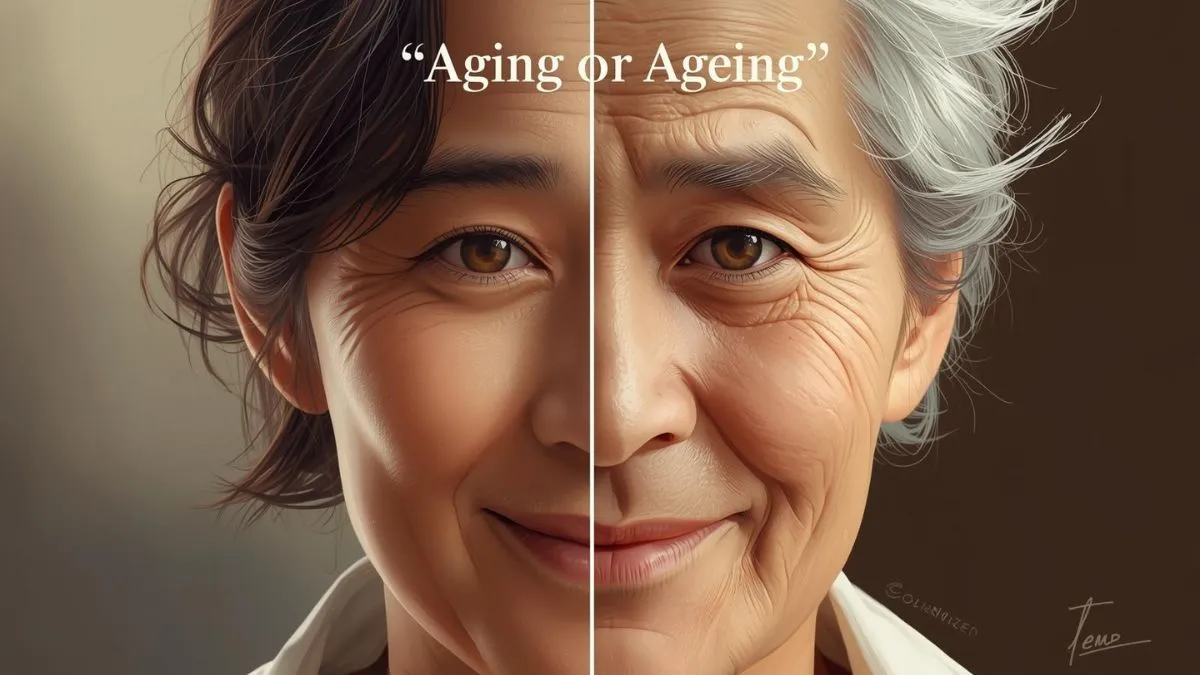
Language is full of small nuances that can confuse even the most careful writers. One common dilemma is If to write “aging” or “ageing.”
This question often arises because both spellings exist, but their usage depends on geography and style preferences.
People search for this keyword to ensure their writing looks correct in professional documents, social media posts, academic papers, or casual emails. Misusing the spelling can lead to subtle mistakes that affect credibility or clarity.
Understanding the difference is not just about spelling—it’s about aligning your writing with your audience.
For example, American readers expect “aging,” while British readers are more familiar with “ageing.”
By clarifying this, writers can avoid confusion, maintain consistency, and communicate effectively.
This article will provide a clear, step-by-step explanation, with examples, origins, common mistakes, and advice on which spelling to use depending on your audience.
Aging or Ageing – Quick Answer
The spelling “aging” is used in American English, while “ageing” is used in British English. Both mean the process of growing older, whether referring to people, animals, wine, or cheese.
Examples:
- American English: The company focuses on products for aging skin.
- British English: The ageing process affects everyone differently.
The Origin of Aging or Ageing
The word “age” comes from the Latin word aetas, meaning “era” or “lifetime.” Over centuries, English added the suffix -ing to indicate the process or action of aging. The variation in spelling arose in the 18th and 19th centuries when British and American English started to diverge. American English simplified certain spellings, dropping extra letters like e, resulting in “aging”. British English retained the original spelling, “ageing.”
British English vs American English Spelling
| Feature | American English | British English | Example |
| Dropped “e” before -ing | Yes | No | aging / ageing |
| General usage | US publications, websites | UK, Australia, Canada | Aging population / Ageing population |
| Formal style | Chicago Manual of Style | Oxford English Dictionary | Aging wine / Ageing wine |
Which Spelling Should You Use?
- US audience: Always use “aging.”
- UK/Commonwealth audience: Prefer “ageing.”
- Global or mixed audience: Choose based on context or follow the style guide of your publication.
Consistency is more important than the variant itself—pick one spelling and stick to it throughout your content.
Common Mistakes with Aging or Ageing
- Mixing spellings in a single text → Correct: The aging population is increasing. Incorrect: The ageing population is increasing. (if writing in US style)
- Using “ageing” in American publications → Can confuse readers or appear incorrect.
- Confusing the word with “aged” → “Aged” describes a completed state (e.g., aged cheese), while “aging/ageing” refers to an ongoing process.
Aging or Ageing in Everyday Examples
Emails: We are concerned about the effects of aging on productivity.
News: The ageing population is reshaping healthcare systems worldwide.
Social media: Tips for aging gracefully!
Formal writing: Studies show aging affects cognitive abilities differently across populations.
Aging or Ageing – Google Trends & Usage Data
Google Trends shows “aging” is most searched in the US, while “ageing” is most searched in the UK, Australia, and Canada. In global scientific publications, “aging” is increasingly used due to American research dominance. This data confirms that geography strongly influences the preferred spelling.
Comparison Table: Keyword Variations
| Variation | Audience | Usage Example |
| Aging | American English | Aging population, aging wine |
| Ageing | British English | Ageing population, ageing cheese |
FAQs
1. Is “aging” or “ageing” correct?
Both are correct depending on your audience—US vs UK/Commonwealth.
2. Can I use “aging” in UK writing?
Yes, but it may appear as an Americanism. Use “ageing” for formal British writing.
3. What about “aged” vs “aging”?
“Aged” refers to something already matured, while “aging” is the ongoing process.
4. How do dictionaries list it?
American dictionaries list aging; British dictionaries list ageing.
5. Which is better for SEO?
Use the variant that matches your target audience. For global content, American English may rank higher.
6. Is “ageing gracefully” correct?
Yes, both in US and UK, though the spelling differs.
7. Does scientific writing prefer one?
Yes, “aging” is more common due to US-dominated research publications.
Conclusion:
In summary, the choice between “Aging” and “Ageing” is simple once you know your audience. American English favors aging, while British English favors Ageing.
Both words describe the process of growing older, applicable to people, animals, wine, or other contexts.
Knowing the origin and usage patterns ensures consistency and professionalism in your writing. Common mistakes, such as mixing spellings or confusing with “aged,” can easily be avoided by following style guidelines.
In digital content, emails, social media, and formal writing, aligning your spelling with your reader’s expectations improves clarity and engagement. When in doubt, check style guides or consider your target market’s location.
Using a consistent form demonstrates attention to detail and credibility.If you writing for a US, UK, or global audience, this guide helps you make the right choice effortlessly.

I am John Grisham, a bestselling author known for thrilling legal dramas that captivate millions. Discover more about my work at my site, Grammlyx.com.